
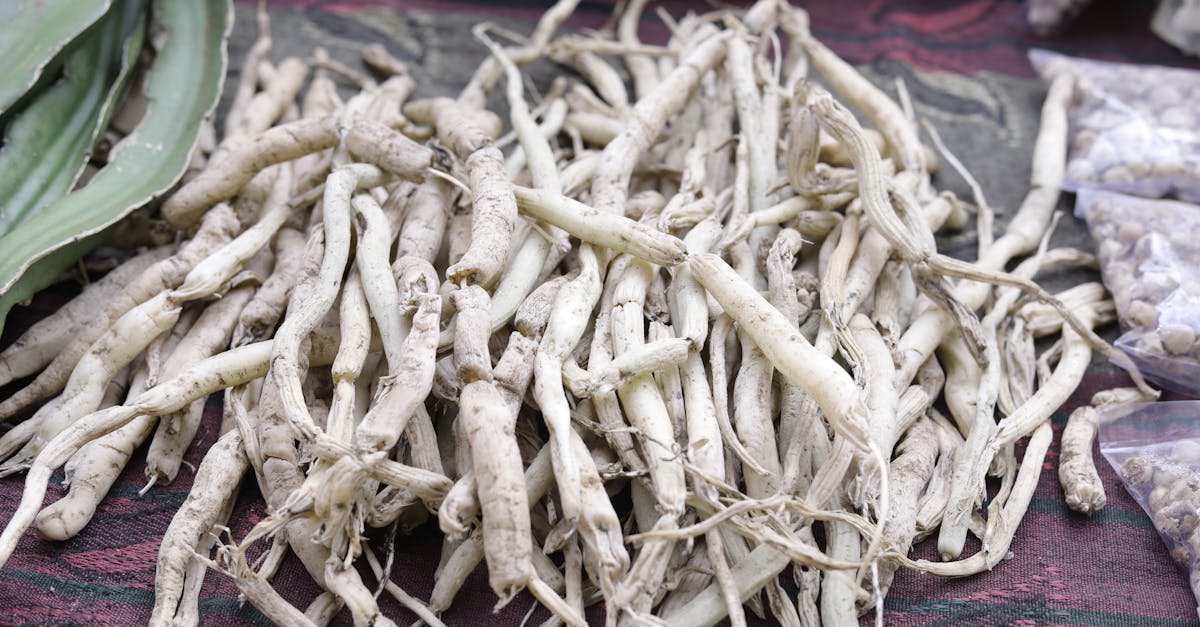
Safed musli (Chlorophytum borivilianum) works as a monsoon crop in the warm, well-drained areas of Gujarat, Rajasthan, Madhya Pradesh and Maharashtra, with some cultivation in Karnataka. It takes 4 to 4.5 months in the field, needs a large quantity of planting material, and pays only if the roots are peeled and dried properly and a buyer has agreed to take them.
ICAR-DMAPR (Anand) puts typical yield at 2 to 3 tonnes of fresh root per hectare, which dries to 0.4 to 0.6 tonne of marketable root. Since the price swings widely and planting roots cost a lot, begin on a small plot and keep buyer and price discussions separate from the plant seller.
Where it grows and what it needs
- Growing belt: ICAR-DMAPR describes commercial cultivation as mostly in its traditional areas, southern Rajasthan, western Madhya Pradesh, north Gujarat and parts of Karnataka. It occurs wild in hilly parts of Gujarat, Rajasthan, Madhya Pradesh and Maharashtra, and the wild stock is now threatened by over-collection.
- Climate: altitudes up to 1,500 m, day temperatures of 30 to 35°C and rainfall of 500 to 1,500 mm, grown in the rainy season.
- Soil: well-drained sandy loam or loam rich in organic matter, pH 6.0 to 8.0. Waterlogging damages the roots, so use raised beds or ridges of 10 to 15 cm in heavy rain areas.
- The plant tolerates partial shade and has low water need, so DMAPR suggests it can be intercropped with pigeon pea, cowpea, green gram, black gram and ashwagandha.
Varieties and planting material
- DMAPR notes that, because seed germinates poorly and plants from seed vary, commercial planting uses the fleshy roots ("fingers") with a piece of the crown disc, and that no widely adopted improved variety exists. Tissue-cultured plants give uniform stock but cost more.
- In a DMAPR trial of 52 collections at Anand, the best lines gave 105 to 129 g fresh root per plant (DCB-48 highest at 129 g). These are research accessions, not varieties you can buy.
- Named lines in circulation, from a secondary source, include RC series (RAU Udaipur), Jawahar Safed Musli 405 and Rajvijay Safed Musli 414. Ask the seller for the origin, a root sample and a written guarantee before paying.
- Preparing planting stock: keep roots from the March to April digging in boxes with sand or sawdust in a cool, humid place; they sprout in May to June. Split the disc so each piece has 1 to 3 fingers and weighs at least 5 g. Using one root per hill gave the best economic return in DMAPR work.
Spacing and planting
- Plant on the first or second rain of the monsoon (June to August), on ridges or raised beds.
- Spacing of 30 cm between rows and 10 or 15 cm between plants gives about 3.33 lakh plants per hectare (about 1.35 lakh per acre) at 30 x 10 cm. Planting material needed is 600 to 1,000 kg per hectare (about 240 to 400 kg per acre), depending on spacing.
- A planting-method trial at Anand (2002 to 2004) found the double-row raised bed gave a fresh root yield of 2.337 tonnes, 31.65% more than a triple-row bed and 14.85% more than ridge and furrow.
Nutrition and irrigation
- 10 to 15 tonnes per hectare of well-rotted cow dung at land preparation (4 to 6 tonnes per acre), with green manure; DMAPR gives 50:40:40 kg N:P2O5:K2O per hectare (about 20:16:16 kg per acre) as the optimum chemical dose.
- Rain normally supplies water. Give at least 6 to 8 irrigations at 10 to 15 day intervals if the monsoon fails or is delayed; the crop needs water even after the leaves fall. Drip on raised beds is called viable for commercial plots (see drip irrigation).
- Do 2 to 3 weedings with hoeing and earth up the ridges so roots are not exposed. Nipping off the flower stalks as they appear can raise root yield by about 35%, DMAPR says.
Pests and diseases
- DMAPR reports no serious pests or diseases, but leaf-eating caterpillar, leaf spot or blight and leaf rot in continuous heavy rain do occur. Drainage is the main protection against root damage, and Trichoderma can be applied at sowing and during weeding.
- For any spray, follow the label and ask your KVK, since the product goes into medicines. See pests.
Harvest, processing and yield
- Plants wither 4 to 4.5 months after planting. Wait a gap for roots to mature, then dig in December to January after a light irrigation (earlier digging in March to April only for planting stock).
- Shade-dry freshly dug roots for 3 to 4 days, then wash and peel straight away by scraping with a knife, and dry in partial shade at 35 to 40°C for 3 to 4 days, stirring, so the roots stay white and fetch the premium price. Pack in poly bags. Peeling is labour heavy.
- PDKV Akola advises that peeling lowers the saponin content and recommends unpeeled root for medicinal use, so ask the buyer whether they want peeled or unpeeled root. It also advises storing dried roots in an airtight container.
- Yield: 2 to 3 tonnes fresh per hectare gives 0.4 to 0.6 tonne dry root (about 160 to 240 kg dry per acre). A Birsa Agricultural University trial at Ranchi found 43 to 76 g of fresh root per plant depending on spacing and vermicompost dose, so yields vary a lot.
💡 Tip: Buy planting roots only against a written statement of species (C. borivilianum), weight, price per kg and delivery date. Get the buy-back terms separately, from a processor or trader, not from the person selling planting material.
Cost and returns
- Price: ICAR-DMAPR gives ₹1,400 per kg of dry root as the current price in 2023, and the same article cites ₹1,600 to ₹1,800 per kg for dry peeled roots. Prices vary by grade, whiteness and year; check with traders in Neemuch, Indore or Jabalpur before planting.
- Arithmetic: 400 to 600 kg dry root per hectare x ₹1,400 = ₹5.6 to ₹8.4 lakh gross per hectare (₹2.3 to ₹3.4 lakh per acre). DMAPR states ₹6 to 7 lakh gross and ₹3 to 4 lakh net per hectare.
- What the net depends on: 600 to 1,000 kg of planting roots per hectare is the biggest single cost. No verified current price for planting roots was found; get quotes, then subtract it, peeling labour, manure, irrigation and 7 to 8 months of land use from the gross.
- If the price is half, or yield is at the low end, net falls sharply. That is why a small first plot is advised.
Market and risks
- Dry roots and root powder are traded in Delhi, Neemuch, Jabalpur and Indore. DMAPR estimates India's annual trade at 150 to 250 tonnes. Ayurvedic and herbal manufacturers are the end buyers. Global demand estimates (35,000 to 50,000 tonnes a year) far exceed supply (under 5,000 tonnes) in ICAR papers, but these are estimates, and a farmer still needs a named buyer.
- Avoid "buy-back" offers from planting-root sellers. Sell through a trader, a processor or a group (FPO) and compare with export buyers only after quality is proven.
- National Medicinal Plants Board has listed safed musli as a priority species for promotion; ask your state medicinal plants board or horticulture department about support, and check the subsidy finder. No current subsidy rate was verified.
Sources
- ICAR-DMAPR, Production technology of safed musli (Indian Horticulture, Sept-Oct 2023)
- ICAR-DMAPR, multivariate analysis of safed musli genotypes (Indian Journal of Horticulture, 2017)
- Birsa Agricultural University, spacing and vermicompost on safed musli var. ASM1 (J. Pharmacognosy and Phytochemistry, 2018)
- PDKV Akola, safed musli agronomy recommendations
- ICAR, planting methods for safed musli (Indian Journal of Agricultural Sciences)
- Krishi Jagran, safed musli cultivation (secondary source)