
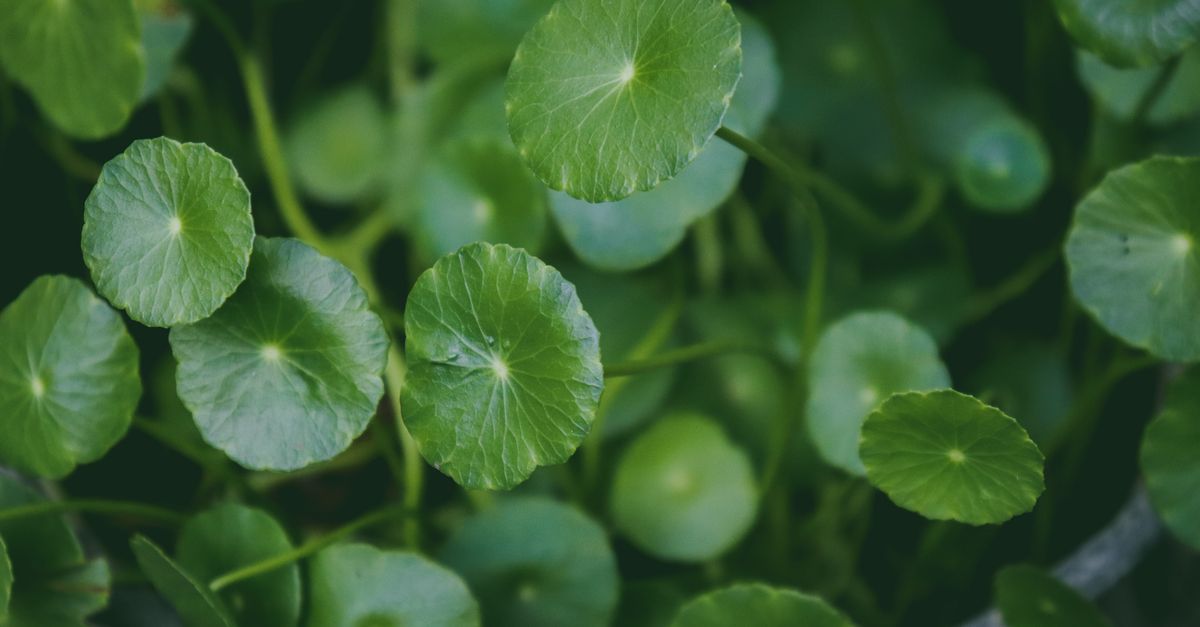
Brahmi (Bacopa monnieri) is a creeping marsh herb that grows well in warm, humid, wet places across India, and it is sold as dried whole herb to Ayurvedic and herbal-extract makers. It is easy to grow on wet or well-irrigated land, but it is a low-price, bulky crop, so it pays only when a buyer has agreed to take your dried herb.
The plant tolerates standing water and poor drainage and does best in alluvial, marshy soil. A national herbal trade survey cited in a 2023 Indian field study put annual consumption at about 140 tonnes of dry herb, a small market that a few hundred acres of new planting could flood.
Where it grows in India
- Natural range: wet and marshy ground, canal and pond margins and paddy bunds across the plains and the south.
- Field trials: CSIR-CIMAP (Lucknow) breeds and distributes the improved varieties. A 2023 trial at Visva-Bharati University, Sriniketan (West Bengal; sub-humid, soil pH 5.8, about 33 to 35 degrees C maximum, 82 to 85% humidity) grew the crop from August to January.
- Soil and water: clay loam to alluvial soil that stays moist; low-lying fields with assured water suit it. It is not a crop for dry, sandy, water-short land.
- Intercrop: an ICAR summary reports it can also be grown as an intercrop with paddy.
Varieties
| Variety | Released by | Reported traits |
|---|---|---|
| Subodhak | CSIR-CIMAP | About 47 q/ha dry herb per harvest, 1.6% bacoside A |
| Pragyashakti | CSIR-CIMAP | About 65 q/ha dry herb per harvest, 1.8% bacoside A |
| CIM-Jagriti | CSIR-CIMAP | About 40 q/ha dry herb, with potential of 85 kg/ha bacoside A |
Bacoside A content decides the price an extract maker will pay. Ask the buyer which variety and what minimum bacoside level they want before buying cuttings, and buy from CIMAP or a nursery it supplies.
Planting material and spacing
- Propagation is by stem cuttings, not seed. The Visva-Bharati trial used cuttings 15 to 20 cm long with 4 to 7 nodes, pushed 5 cm deep, and about 40 kg of cuttings planted one hectare (about 16 kg per acre).
- Spacing: 50 x 50 cm in that trial, which is about 40,000 plants per hectare (about 16,000 per acre). An ICAR article on medicinal crops on degraded land gives 40 x 40 cm, about 62,500 per hectare (about 25,000 per acre).
- Season: the trial planted in August, in the monsoon, with irrigation straight after planting.
Nutrition and irrigation
- The Visva-Bharati trial compared fertiliser and manure on CIM-Jagriti. FYM at 5 t/ha plus vermicompost at 2.5 t/ha (about 2 t plus 1 t per acre) gave the best growth and returns, ahead of 50:25:25 kg NPK per hectare (20:10:10 per acre) and FYM alone at 10 t/ha.
- Keep the field wet. Brahmi does not need drainage; it needs the soil never to dry out. Drip or sprinkler systems are not required in marshy plots, but where water is limited, see drip irrigation.
- Serious pest problems are not reported in the Indian trials used here. For any spray, follow the label and your local KVK, since the herb is taken as medicine and buyers test residues.
Harvest and yield
- The crop regrows after cutting, so a planting gives at least two harvests a year (CIMAP varieties are described as perennials with two or more cuts yearly). Cut above the base and dry the whole herb in shade; sun-bleached or mouldy herb is rejected.
- CIMAP varieties: 40 to 65 q/ha dry herb per cut, about 16 to 26 q per acre.
- ICAR article: about 150 q/ha dry herb from three harvests (about 61 q per acre) plus 15 to 20 q/ha from ratoon crops.
- General package figure: about 22.5 t/ha fresh herb, drying to about 5.5 t/ha (about 9 t fresh and 2.2 t dry per acre).
- Fresh herb dries down to roughly a quarter of its weight, so drying space is part of the plan.
Cost and returns
- The Visva-Bharati trial (CIM-Jagriti, organic nutrition) recorded gross returns of ₹2,36,728 per hectare (about ₹95,800 per acre) and a benefit-cost ratio of 2.88.
- The ICAR article reports net returns of about ₹2,49,000 per hectare per year (about ₹1.0 lakh per acre) for brahmi as a sole crop in low-lying fields, with a benefit-cost ratio of 2.99.
- Both figures come from research plots and were priced at the time of the study. Every ₹10 per kg of dry-herb price is worth about ₹16,000 to ₹61,000 per acre at those yields (1,600 to 6,100 kg per acre). Check the current rate with your buyer, and see mandi bhav for listed herbs. No current verified farm-gate price per kg is given here.
- Main costs: cuttings, labour for planting, weeding, cutting and shade drying, and water.
Market and risks
- Buyers are Ayurvedic drug makers, herbal extract and supplement companies and herb traders. Because total demand is small, a rush of planting can drop prices.
- Selling a perishable bulky herb without a buyer is the main risk. Do not pay for cuttings on a promise of guaranteed buy-back.
- Pool dried herb through an FPO to reach extract makers. The National Medicinal Plants Board supports some medicinal crops; confirm the current rate for brahmi with your state horticulture department or subsidy finder.