
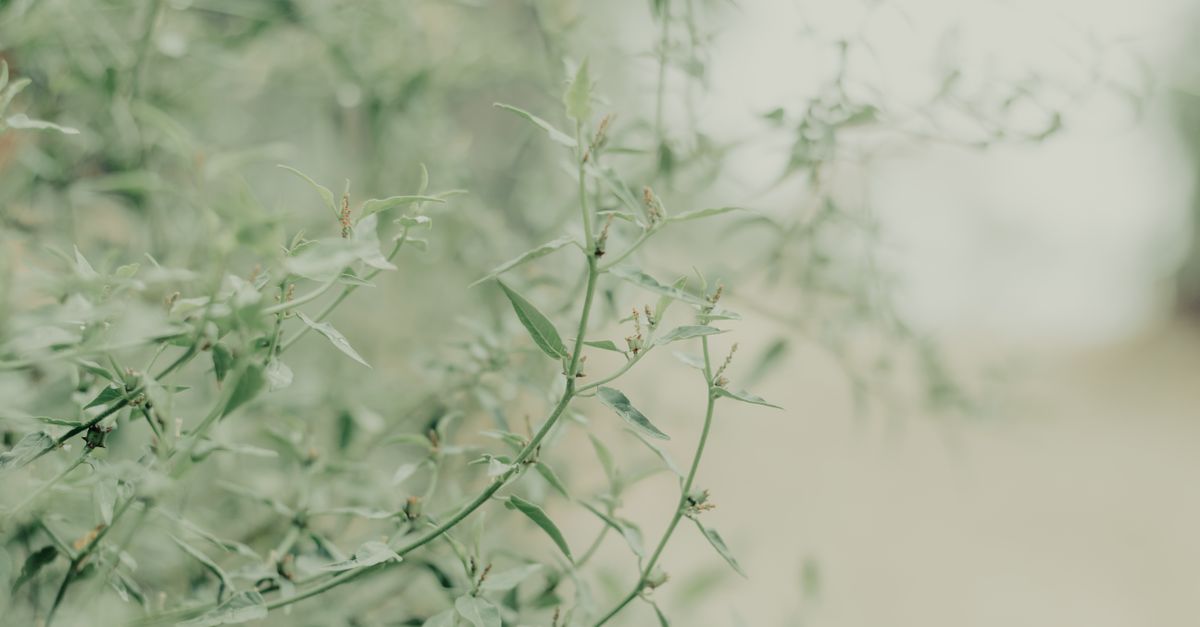
Kalmegh (Andrographis paniculata) is a short-season, rainy-season medicinal herb that can be grown on ordinary well-drained soils across central, north and south India, and it pays only when an extract maker or Ayurvedic company has agreed to buy the dried herb. The crop is in the field for about 4 to 5 months and is sold as dried whole plant, priced on andrographolide content, so the price is low per kg and income depends on yield and a confirmed buyer.
The National Medicinal Plants Board lists kalmegh among its prioritised medicinal plants, and CSIR-CIMAP promotes its cultivation. Farm-gate price reports in Indian mandis are patchy and swing widely, so budget conservatively.
Where it grows in India
- States: the plant occurs naturally across Chhattisgarh and Madhya Pradesh and is cultivated in several states. Field trials have been run in Madhya Pradesh, at Hisar (Haryana) and at Rajendranagar (Hyderabad, Telangana). Ask your KVK which nearby buyers take kalmegh.
- Season: grown as a Kharif (rainy season) crop in the north and central plains; the Hyderabad trial was a Rabi (winter) crop, so it also works in warm southern winters.
- Soil: it tolerates many soils, but well-drained loam or sandy loam with organic matter suits it best. Avoid water-logged fields.
- Frost: it is a warm-season plant. Plan the crop to finish before cold nights.
Variety and planting material
| Variety | Source | Notes |
|---|---|---|
| CIM-Megha | CSIR-CIMAP, Lucknow | Used in the Rajendranagar trial; buy seed only from CIMAP or a licensed seed source and ask for a stated andrographolide level |
| Local or forest-collected seed | Open market | Andrographolide varies widely between plants; ask your buyer before using it |
- Seed is soaked in water for 24 hours before sowing. State packages describe a nursery sown in a soil, sand and farmyard manure mix, with seedlings of 10 to 25 cm transplanted about 6 weeks after sowing. A nursery for one hectare needs roughly 650 to 750 g of seed; direct sowing needs about 1.5 kg per hectare (about 0.6 kg per acre).
- Spacing: 30 x 15 cm is the commonly used spacing, about 88,000 plants per acre (2.2 lakh per hectare).
Spacing, nutrition and care
- Spacing trial (CCS HAU, Hisar): four spacings (30 x 15, 30 x 10, 20 x 15 and 20 x 10 cm) were compared. The best dry herb yield and the highest andrographolide content came from 30 x 15 cm harvested 135 days after planting.
- Manure: state packages describe about 20 t/ha of farmyard manure (8 t per acre) as basal dressing and 75 kg N, 75 kg P2O5 and 50 kg K2O per hectare (about 30, 30 and 20 kg per acre) in two splits, at planting and 40 days later. Treat these as a guide and confirm with your KVK and a soil test.
- Organic option: at Rajendranagar, 30 t/ha farmyard manure plus a liquid organic input at 7.5 l/ha at 15 x 15 cm gave the best dry herb yield in that trial.
- Water: the crop is mostly rainfed in the rainy season; give light irrigation in dry spells and drain standing water.
- Weeds: keep the field weed free for the first 40 to 50 days, by hand weeding.
- Pests: leaf spots and some caterpillar or sucking pest damage can occur. Because the herb goes into medicine, avoid chemical sprays unless your KVK advises one; follow the label and the buyer's residue limits.
Harvest and yield
- When: at Hisar, the 135-day harvest gave the highest andrographolide (2.63% of dry herb) and herbage yield. Harvest at flowering to early pod stage and cut the plant a few cm above the ground; a second (ratoon) cut is possible in warm conditions.
- Drying: dry the whole plant in shade on a clean floor until it snaps. Sun bleaching and mould lower the grade.
- Yield: Hisar trial: 5.14 t/ha dry herb (about 2.1 t per acre) at 30 x 15 cm. Rajendranagar trial: 34.7 quintals per hectare (about 14 quintals per acre). A Madhya Pradesh Kharif trial using a growth regulator recorded 46.6 quintals per hectare. Farm yields are normally lower than trial plots, so plan on 1 to 1.5 t per acre until your own field proves otherwise.
💡 Tip: Get a written purchase note from an extract or herbal company before sowing, with the andrographolide percentage they will test for, the moisture limit, the price and the payment date. Start on 0.5 to 1 acre.
Cost and returns
- Price: Agmarknet-based reports for 29 September 2026 show ₹4,800 per quintal (₹48 per kg) at Neemuch APMC on 1.02 tonnes, while another site averages about ₹100 per kg for Madhya Pradesh. Individual mandi entries are thin and noisy, so take the buyer's written price rather than a mandi quote.
- Arithmetic (illustration): 1 t per acre x ₹48 to ₹100 per kg = ₹48,000 to ₹1,00,000 gross per acre. At the trial yield of 2 t per acre the gross would double, which field-scale growers rarely reach.
- Costs: seed or nursery, land preparation, manure, weeding, harvest labour and drying. Add up your own local rates; no current published cost-of-cultivation figure for Indian conditions was found.
Market and risks
- Buyers are herbal extract makers, Ayurvedic drug manufacturers and traders who supply them. Prices are quoted per kg of dried herb and depend on andrographolide content and cleanliness.
- Prices are low, so a poor crop or a drop in demand can leave little margin. Do not buy seed or plants from anyone who guarantees a buy-back price without a written contract.
- Join an FPO or contract group to find buyers. Check the subsidy finder for medicinal-plant support through the National Medicinal Plants Board; confirm the current rate with your state medicinal plants board before relying on it. See also Kisan Credit Card for crop loans and ashwagandha as a related medicinal crop.
Sources
- Journal of Agriculture and Rural Development in the Tropics and Subtropics, kalmegh spacing and harvest time trial at CCS HAU Hisar
- Journal of Pharmacognosy and Phytochemistry, organic treatments and spacing on CIM-Megha, Rajendranagar
- Vikaspedia, Andrographis paniculata package of practices
- FRLHT ENVIS, Andrographis paniculata taxon data sheet
- ACROP, kalmegh mandi price, Madhya Pradesh (Agmarknet data)