
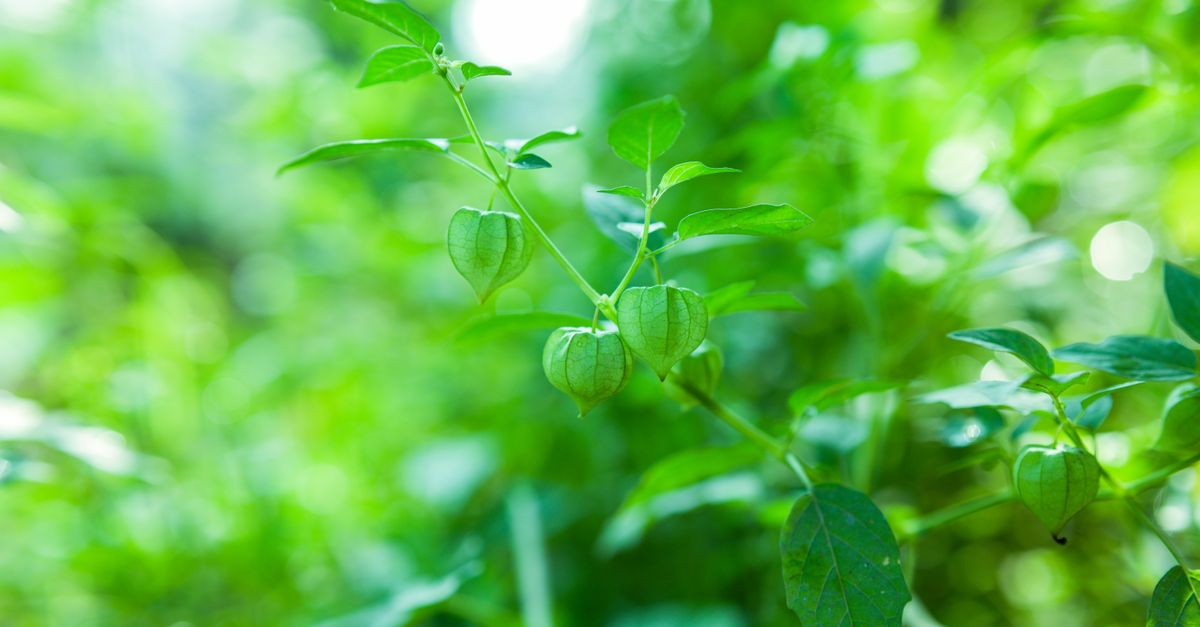
Ashwagandha (Withania somnifera) is a realistic dryland crop in India: it grows on light, well-drained, even poor soils with little water or fertiliser, and its dried root has a steady Ayurvedic and nutraceutical market. The catch is price: it swings widely, and the root only earns well when the grade is good and the buyer is reliable.
Madhya Pradesh's Neemuch and Mandsaur belt is the trading centre; the crop is also grown in Rajasthan and a few other states. The agronomy below is from the TNAU Agritech portal; price figures are dated.
Where it grows and what it needs
- Temperature: 20 to 35 degrees Celsius is most suitable; TNAU gives an altitude range of 600 to 1,200 m for the crop.
- Soil: sandy loam or light red soil, slightly alkaline, pH 7.5 to 8.0. Heavy clay and waterlogged fields are unsuitable and cause root rot.
- Rain: it does best as a rainfed or lightly irrigated crop. Dry weather at maturity helps the root. Frost and standing water harm it. No verified rainfall range from a state university was found, so none is stated.
- Madhya Pradesh: Neemuch, Mandsaur (Manasa, Javad) markets lead the trade. Prices at these mandis are reported on AgMarkNet.
Varieties
| Variety | Source | Note |
|---|---|---|
| Jawahar Asgandh-20 (JA-20) | Madhya Pradesh (JNKVV) | Cultivated in Madhya Pradesh |
| Poshita, Rakshita | CSIR-CIMAP | High-yielding releases listed by TNAU |
| WSR | CSIR regional laboratory (Jammu) | Listed by TNAU |
| Nagori | Local, Rajasthan type | Traditional |
TNAU lists these varieties but does not give a per-variety yield or withanolide content, so none is claimed here. Buy seed of a named release from a research institute or an agricultural university rather than from unlabelled lots.
Sowing, seed and spacing
- Season: TNAU says the crop is planted late in the rainy season, around August to September, and harvested the following year.
- Seed rate: 10 to 12 kg per hectare (about 4 to 5 kg per acre) for broadcasting; about 5 kg per hectare (about 2 kg per acre) if you raise a nursery.
- Transplanting: six-week-old seedlings at 60 cm x 60 cm, which is about 11,000 plants per acre (27,800 per hectare) by arithmetic.
- Prepare a fine seedbed with two or three ploughings.
Nutrition and water
- TNAU states the crop mainly lives on residual fertility and recommends no manure or fertiliser. A small basal dose of farmyard manure before sowing is commonly added; no verified quantity from an Indian university was found, so none is given. Do a soil test first (see fertilizers).
- Irrigation: mostly residual moisture, with a light irrigation at germination if needed. TNAU does not specify a schedule. Avoid over-watering.
Pests and diseases
- Damping-off and seedling rot: TNAU suggests Trichoderma viride and Pseudomonas fluorescens at 2 kg per hectare each.
- Leaf blight and die-back: TNAU lists a mancozeb spray at 0.3 percent. Follow the label and ask your KVK before spraying; root herbs go to buyers who test residues.
- Avoid waterlogging, which is the main cause of seedling and root losses.
Harvest and yield
- Roots are ready 150 to 170 days after sowing; TNAU gives January to March as the harvest window. Pull whole plants, cut the roots from the crown and dry them.
- Yield: 400 to 1,200 kg of dried roots per hectare (about 160 to 485 kg per acre) and 200 to 500 kg seed per hectare (about 80 to 200 kg per acre), per TNAU. The range is wide, and light soil with good management sits at the upper part.
- Roots are graded A to D by length, diameter, colour and solidity. Better grades fetch more, so sort and dry cleanly.
Cost and returns
- Price (dated): AgMarkNet data, as shown on acrop.app, had Neemuch APMC at about Rs 18,600 per quintal (Rs 186 per kg) on 1 October 2026, Mandsaur at Rs 9,960 on 18 September, and Neemuch spiking to Rs 28,900 on 8 May 2026 (aggregator figures, single-day and single-mandi readings; grades are not stated).
- Revenue arithmetic at TNAU yields (dried root only): 160 kg x Rs 150 per kg is Rs 24,000 per acre; 485 kg x Rs 186 per kg is about Rs 90,000 per acre. Add seed sales at your own price.
- Seed, land preparation, labour for weeding, pulling and drying vary by region; no verified cost-of-cultivation figure from NMPB or a state university is available, so work out your own cost before planting. The Rs 1 to 3 lakh per acre profit claims on commercial websites are unverified.
Market and selling
- Sell at Neemuch, Mandsaur and Javad APMC mandis or to herbal processors. Check live rates on mandi bhav.
- The price halves or doubles within months, so do not rely on the highest reading; the same mandi has shown Rs 9,960 to Rs 28,900 this year.
- Reported figures from the Ministry of Ayush say exports rose about eight times in six years; the numbers were not confirmed against the full release.
- Join an FPO or find a buyer with a written rate and grade before sowing. Be careful of buy-back schemes that ask you to pay for seed or training up front.
Crop insurance may be available; see PMFBY, and for subsidy on medicinal plants through NMPB ask your state medicinal plant board; current rates are not verified.