
A recirculating aquaculture system (RAS) can grow fish in a small footprint almost anywhere in India, but it is the most expensive and technically demanding way to farm fish, and it works only with reliable power, trained operators and a buyer who pays for steady supply. A small unit is costed at ₹7.5 lakh, a medium one at ₹25 lakh and a large one at ₹50 lakh under the government scheme, and a power cut of a few hours can kill a full tank.
In RAS, water from the fish tanks passes through a mechanical filter that removes solids and a biofilter that converts toxic ammonia, then is aerated and returned. Because water is reused, very little fresh water is needed, and temperature and water quality can be controlled. The trade-off is cost, electricity and the skill needed to run the filters.
Where RAS is being set up
- Under PMMSY, the Department of Fisheries reports 11,995 RAS units approved at ₹887.85 crore across 31 States in four years.
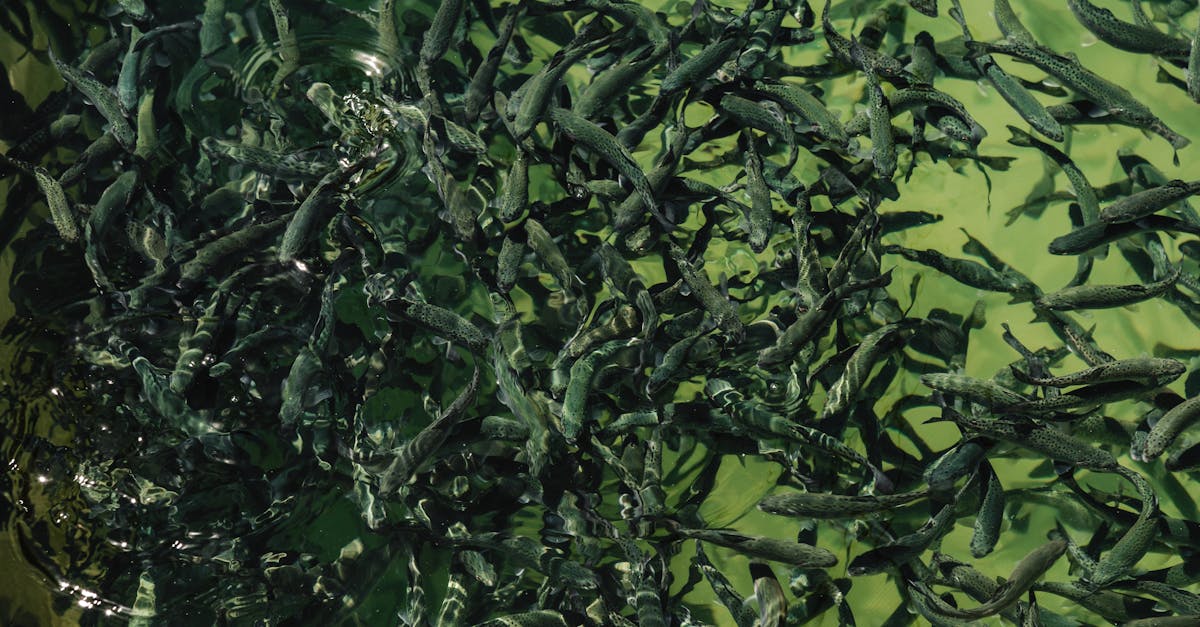
- In India, farmers mainly grow pangasius and GIFT tilapia in RAS; medium and large units in the North East and Himalayan states are aimed at cold-water fish such as rainbow trout.
- ICAR-CIBA runs India's first marine finfish hatchery with RAS facilities (Asian seabass, Chennai) and offers hands-on exposure for farmers and entrepreneurs; ICAR-CIFA (Bhubaneswar) works on freshwater RAS. Both are good places to get training before investing.
System design
- Tanks: a large unit under PMMSY needs at least 8 tanks of 90 cubic metres each, reported as capable of about 40 tonnes per crop cycle (Haryana Fisheries Department scheme page). A 90 m3 tilapia tank is described as 6.7 x 6.7 x 2 m.
- Components: solids filter (sand or drum), biofilter, UV or other disinfection, aeration blower, pumps, standby generator and oxygen backup. A research RAS for catla used 250 cm diameter tanks of about 4,000 litres each with sand filters, a biofilter, a UV filter and a 3 HP air blower serving 12 tanks.
- Water monitoring: dissolved oxygen, pH, ammonia, nitrite, nitrate and temperature must be checked daily. In the catla trial, dissolved oxygen was kept at 5.4 to 7.9 mg/l and ammonia at 0.02 to 0.08 mg/l.
Species and stocking
| Species | Indian RAS information | Note |
|---|---|---|
| Pangasius | Commercial RAS study in Varanasi, UP stocked 5 to 6 g fish at 86 to 115 per m3 | Check state rules on pangasius culture and market access |
| GIFT tilapia | One model: 6,000 fingerlings in a 90 m3 tank at 90% survival | Low-priced fish; margins are tight |
| Catla (research trial) | 25 fish per m3 from 10 g, fed 28% protein feed at 2 to 3% body weight; reached about 340 to 425 g in 180 days with 78 to 83% survival and FCR 1.61 to 1.81 | Trial at Pantnagar, Nov 2015 to Apr 2016; cool water slowed growth |
| Rainbow trout | Targeted for Himalayan and North East RAS units | Needs cold, clean water |
- From the catla trial, 25 fish per m3 at 80% survival and about 0.38 kg each is roughly 7.6 kg of fish per m3 in 6 months, which shows that a food-fish RAS of low-value carp does not give a high output per tank volume.
- Higher densities are possible in species such as tilapia and pangasius, but they leave less margin for error in oxygen and ammonia.
Feed and power
- FCR of 1.6 to 1.8 in the catla trial means about 1.6 to 1.8 tonnes of feed for each tonne of fish. Feed is usually the largest running cost.
- Electricity for pumps and blowers is the second major cost and a major challenge in RAS. One tilapia model estimated electricity at ₹0.40 lakh for the set-up, but unit rates and run times differ by state, so work out your own load before committing.
- A standby generator is not optional; if the blower stops, oxygen drops within hours.
Cost, subsidy and returns
- Unit cost under PMMSY: ₹7.5 lakh (small), ₹25 lakh (medium), ₹50 lakh (large). Subsidy is reported as 40% for general category and 60% for SC, ST and women beneficiaries; the Haryana page lists 20% (general) and 25% (SC and women) for a large unit, so the rate depends on unit size and state. Confirm current rates with your state fisheries department before you apply.
- Returns: no verified current Indian profit figure was available. Calculate with your own quotations for equipment, feed, power and labour, and your confirmed farm-gate price. A simple check: income must cover feed at FCR 1.6 to 1.8 per kg of fish, electricity, seed, labour, loan interest and equipment replacement.
- Check with your bank about a KCC for fisheries working capital and use the subsidy finder. Solar power can cut the electricity bill; see solar pump.
Market and risks
- Buyers are local fish markets, traders and, for trout, hotels and restaurants. Agree on price and lifting schedule before stocking, because a full tank must be harvested on time.
- Risks: power failure, biofilter crash, disease spreading quickly in dense tanks, wrong species for the local market, and loan repayment while the first crop is growing.
- Smaller farmers can look at pond fish culture or biofloc first, which have lower capital cost. Group purchase of equipment and joint marketing through an FPO can reduce cost.