
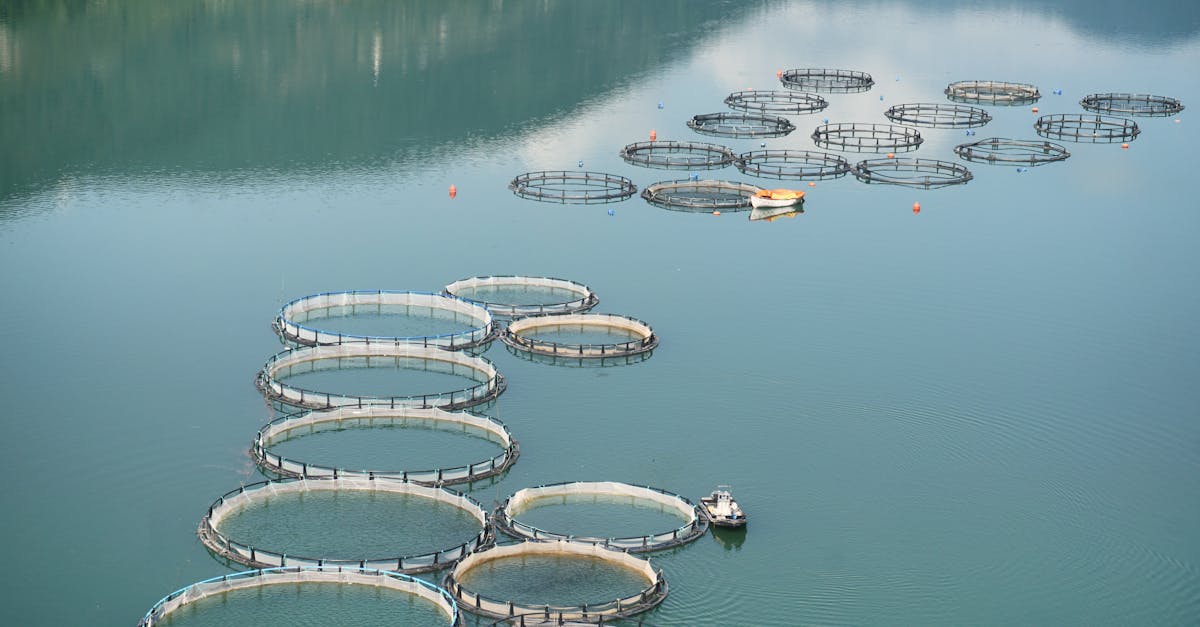
Biofloc fish farming works in India as a technical, power-dependent tank system that suits trained farmers with reliable electricity, a buyer for live or fresh fish, and money to absorb a failed batch. It uses far less water than a pond, but it is not a low-cost way to make quick money: feed is 40 to 60% of production cost, aeration runs 24 hours a day, and a power cut of a few minutes can crash a tank.
In biofloc, a carbon source such as molasses or jaggery is added so that heterotrophic bacteria take up the fish's waste ammonia and form floc, which the fish can eat. Water exchange is near zero (0.5 to 1% a day in one review). No verified Indian commercial cost, price or profit data was found, so this guide gives research values and the arithmetic to do yourself.
Where it works
- Climate and power: tropical species grow best at 28 to 30 degrees C, which many Indian regions reach for much of the year, but the technology is described as not viable where electricity is expensive or unreliable. In cold-winter areas, keeping the water in the warm range will need a shed or heating.
- Tank and site: Indian research trials use 1,000 L FRP tanks, 10,000 and 20,000 L tanks. Place tanks under a roof or shade net, with a backup power source for the aerators and an area for sludge disposal.
- Water use is small: one review cites about 0.071 m3 of water per kg of tilapia, against 16.9 m3 per kg in a traditional system.
Species
- Reviews list tilapia, carps and shrimp as well suited, and some catfish as workable. Species that cannot tolerate high suspended solids (for example giant freshwater prawn) are listed as unsuitable.
- Indian trials have used stinging catfish (Heteropneustes fossilis), striped catfish (Pangasianodon hypophthalmus), silver barb (Puntius gonionotus), pengba (Osteobrama belangeri) and Labeo gonius.
- Not every species in overseas biofloc papers is automatically allowed in India (African catfish is an example named in the literature). The rules were not verified for this guide; confirm the species and seed source with your State Fisheries Department before buying seed.
Water quality and daily management
| Parameter | Target in the reviews | Why it matters |
|---|---|---|
| Dissolved oxygen | Above 4 mg/L (at least 60% of saturation); another review says above 5 mg/L | Fish and the floc bacteria both use oxygen; a stopped aerator is the main cause of whole-tank loss |
| pH | 6.8 to 8.0 | Below 7 is common in biofloc but can slow nitrification |
| Alkalinity | Above 100 mg/L as CaCO3 (100 to 150 in one review) | Nitrification uses it up, so it needs topping up |
| Total ammonia nitrogen | Below 1 mg/L | Toxicity rises with pH |
| Nitrite | Below 1 mg/L | Called the hardest parameter to control |
| Suspended solids | Below 500 mg/L (below 1,000 at most) | High solids irritate skin and block gills |
| Settled floc (Imhoff cone) | 20 to 50 mL/L for adult tilapia; 5 to 20 for fingerlings | Guides when to remove sludge |
| Temperature | 28 to 30 degrees C is optimal for tropical species | Colder water slows fish and bacteria |
| C:N ratio | Above 10; trials used 10:1 and 15:1; reviews cite 15 to 20:1 | Carbon (molasses, jaggery, starch, wheat flour, fermented rice bran) is added so bacteria take up ammonia |
- Start-up: establishing the nitrifying bacteria can take up to four weeks; inoculating with fermented carbon aerated for 24 to 48 hours is one way to speed it up. A review stresses continuous monitoring of floc volume, oxygen, pH, alkalinity, ammonia, nitrite and nitrate.
- Aeration: must run continuously; intermittent aeration is only being researched. Biofloc ponds are reported to need at least 25 HP of aeration per hectare, against about 3 HP for a conventional pond, so power is a major running cost.
- A review reports that biofloc lets tilapia work at lower dietary protein (28% instead of 36%) and can cut feed input by up to 50%, though not every trial reaches this.
Stocking density and results from trials
| Trial | Setting | Result |
|---|---|---|
| Stinging catfish (ICAR-CIFRI, Barrackpore) | 750 L water in 1,000 L FRP tanks, 800 fish/m3, jaggery at C:N 15:1, 91 days | Final weight 8.7 g, FCR 1.21 (best group); nitrite reached 1.37 mg/L |
| Striped catfish + silver barb + stinging catfish (ICAR-CIFA, Bhubaneswar) | 800 L working volume, 187.5 juveniles/m3, molasses at C:N 10:1, 90 days | 100% survival, FCR 1.66, 5.4 kg biomass per tank |
| Pengba juveniles (ICAR-CIFA) | 20,000 L tanks, 20 to 50 fish/m3, 210 days | Survival 94.7 to 97.7%, FCR 2.04 to 2.72, benefit-cost ratio only 1.25 at best density |
| Red tilapia (Egypt) | 1 m3 tanks, 50 to 200 fish/m3, six months | Survival 87.7 to 95%, final weight 195 to 261 g, FCR 0.87 to 1.92; best profit at 18 ppt salinity |
Densities differ by species and size: reviews mention tilapia juveniles up to 1,000 per m3 and carp around 250 per m3 in research, but trial results at high density in the table show worse FCR and lower profit, so start lower and increase only if water quality holds.
Cost and returns
- Reported cost structure: a review cites implementation costs of US$7.56 to US$48.76 per m2 or m3 globally, feed at 40 to 60% of total production cost, and electricity for aeration at 6.39 to 21.52% of total cost. No Indian rupee costs for tarpaulin or FRP tank units were verified.
- Trial economics are thin: in the ICAR-CIFA pengba study the juvenile stage returned a benefit-cost ratio of only 1.25 at its best density (net profit about US$17.61 in the trial), while the shorter fry and fingerling stages did better (3.36 and 2.38). Seed production and nursery work can pay better than grow-out in that trial.
- Arithmetic you can do: the ICAR-CIFA polyculture trial gave 5.4 kg from 0.8 m3 in 90 days, about 6.8 kg per m3. A 10,000 L (10 m3) tank at that rate is about 68 kg per cycle; each ₹100 per kg of selling price is ₹6,800 per tank per cycle before feed, power, carbon source, seed and labour. Use your own market price and your own costs; commercial yields may be higher or lower.
Market and risks
- No buyer or price data for biofloc fish was found. Check wholesale rates on mandi bhav where fish is listed, and agree a buyer before stocking.
- Main risks: power or aerator failure (a few minutes can be fatal), ammonia or nitrite spikes, alkalinity running low, disease, and a thin local market. The technology is called not yet entirely predictable, and staff skill is a recognised barrier.
- Be careful of sellers who sell tanks, seed and a promised buy-back as a package with big profit claims; ask for the farm figures of a working unit and verify them at the farm.
- Subsidies exist under the Department of Fisheries scheme (PMMSY) for some biofloc units, but the current unit cost and rate could not be verified here. Ask your district fisheries officer, and see subsidy finder and Kisan Credit Card.
Sources
- Biofloc Technology (BFT) in aquaculture: what goes right, what goes wrong, PMC
- Biofloc technology: emerging microbial biotechnology for the improvement of aquaculture productivity, PMC
- Sustainable utilization of aquaculture waste: review of biofloc technology and aquamimicry, PMC
- A review on biofloc system technology, history, types and future economical perceptions in aquaculture, PMC
- Microbial inoculums and Heteropneustes fossilis in biofloc, ICAR-CIFRI, PMC
- Freshwater biofloc polyculture of Puntius gonionotus, Pangasianodon hypophthalmus and Heteropneustes fossilis, ICAR-CIFA, PMC
- Stocking density in biofloc-reared pengba, ICAR-CIFA, PMC
- Salinity and stocking density for red tilapia in a zero-water-exchange biofloc system, PMC