
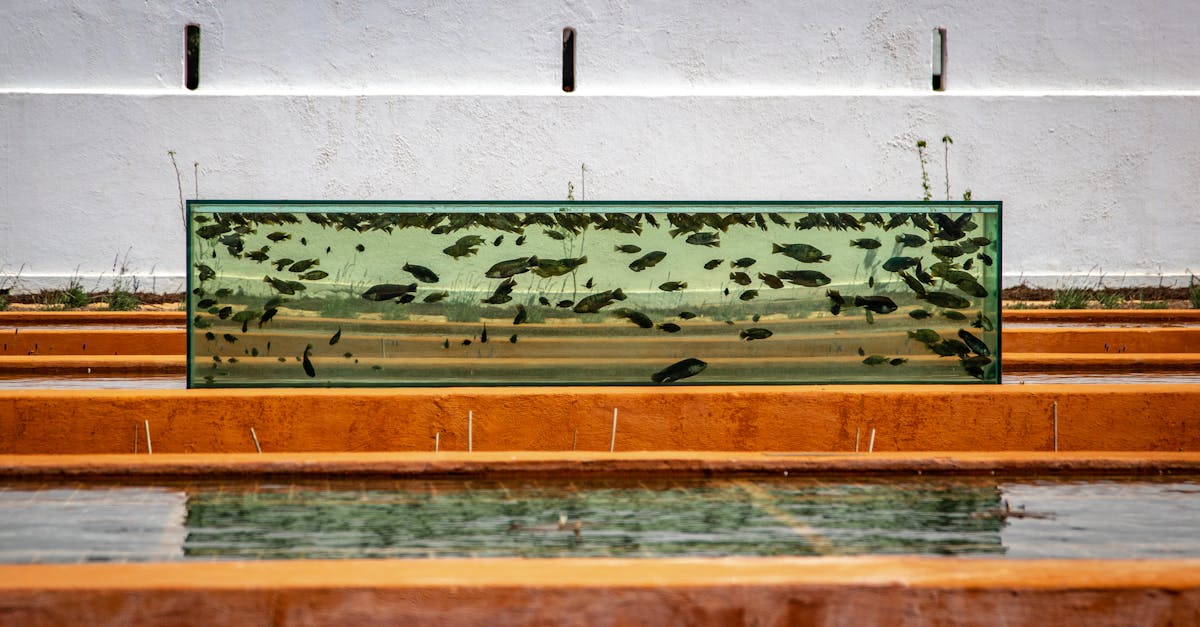
Ornamental fish breeding works in India as a small home or backyard business in any state with a warm climate and clean water, and it pays only if you have buyers: aquarium shops, hobbyists or a wholesaler who takes your fry. Livebearers (guppy, platy, swordtail, molly) are the usual starting point because they breed easily, but each fish sells for very little, so profit comes from volume, healthy stock and steady buyers.
Most ornamental fish bred in India are exotic species. Most exports are wild-caught native fish, mainly from the North-East and the southern states, so a small breeder mostly sells into the domestic aquarium trade.
Where and how it works
- Market: about 90% of India's ornamental fish trade is freshwater species and about 10% marine. Goldfish is the most popular among hobbyists. Most breeders work with exotic freshwater species, and few breed native, marine or brackish water fish (Ministry of Fisheries, 2024).
- Exports: about 85% of ornamental fish exports are wild varieties collected from rivers in the North-East and southern states, per the same note. Ask MPEDA or your state fisheries department about export rules before planning to ship.
- Climate and water: livebearers breed mainly in summer and the monsoon, and slow down in winter. Keep water at 20 to 28 °C for guppy and 23 to 28 °C for platy, swordtail and molly. Well or borewell water is preferred as a source, with filtration and aeration. Test pH and hardness; most livebearers do well in moderately soft water of 50 to 100 mg CaCO3 per litre.
Species to start with
- Livebearers (hard-water group): mollies, guppies, platies and swordtails. They give birth to free-swimming young, which makes them easy for beginners.
- Egg layers: nest builders (gourami, fighter), egg scatterers (barbs, tetras, danios) and egg depositors (angelfish, cichlids). Goldfish, barbs, danios and gouramis tolerate a wide range of water; angels, cichlids and tetras need softer water. Egg layers give far more young per spawning (up to 3,500 for blue gourami) but need a spawning set-up and live-food rearing.
Breeding livebearers
| Species | Gestation | Young per female | Temperature |
|---|---|---|---|
| Guppy | 21 to 35 days | 20 to 100 | 20 to 28 °C |
| Platy | 28 to 42 days | 10 to 100 | 23 to 28 °C |
| Swordtail | 28 to 42 days | 20 to 100 | 23 to 28 °C |
| Black molly | 40 to 70 days | 30 to 70 | 23 to 28 °C; salt at 0.5 to 1.0 g per litre of water |
- Use 1 male to 2 or 3 females. Platy and swordtail mature in 6 to 8 weeks and molly in 12 to 16 weeks.
- Put gravid females (swollen belly) singly or in pairs in a small breeding tank of about 30 x 20 x 20 cm. For mass breeding of guppy, a 100 x 100 x 60 cm tank with a perforated basket system is used, so that newborn fry fall through, away from the adults that eat them.
- Feed fry on infusoria, then Artemia, Daphnia, mosquito larvae, tubifex and blood worm, then formulated feed in two meals a day as they grow (TNAU enterprise note).
- Select good-looking, disease-free breeders. Compatible pairs breed better. Buy breeding stock from a known breeder and quarantine new fish before adding them to your tanks.
Tanks, feeding and disease
- Cement tanks, glass aquaria and plastic tubs all work. A commercial model project quoted 330 sq m of area with about 60 m3 of tank volume.
- Keep stocking light, siphon waste, change part of the water regularly and aerate. Most losses come from poor water. Ask the state fisheries department or a KVK for a disease and treatment guide before using any chemical, and follow their advice.
- Never release unsold aquarium fish into ponds, canals or rivers.
Cost and returns
- Model project (older, TNAU enterprise note): investment ₹6,76,000 for construction, equipment and start-up; yearly running cost ₹35,500 (brood stock, feed, electricity, labour); output of 2 lakh fry a year. Revenue ₹2,75,000 a year from 1,50,000 monsoon-species fry at ₹1 and 50,000 goldfish at ₹2.50. It assumed about 60% of pairs breeding and 50% survival through 40 days of rearing. Prices are old; ask local wholesalers for today's rate before relying on them.
- A study of ornamental fish farms (Asian Journal of Agricultural Extension, Economics and Sociology) found a benefit-cost ratio of 1.35 on total cost and 2.03 on variable cost. Marginal cost was 23 to 38% lower than the selling price for ordinary platy, guppy and ordinary molly.
- Per-fish margins are small, so a tiny unit gives pocket money, not a full income. Work out your own numbers from the price per fry your buyer will pay.
Subsidy and training
PMMSY supports ornamental fish units at 40% of unit cost for general applicants and 60% for women and SC/ST applicants. Apply through the state fisheries department; rates and guidelines can change.
| PMMSY unit | Unit cost | 40% (general) | 60% (women, SC/ST) |
|---|---|---|---|
| PMMSY backyard ornamental fish rearing unit (fresh or marine water) | ₹3.0 lakh | ₹1.2 lakh | ₹1.8 lakh |
| Medium-scale rearing unit | ₹8.0 lakh | ₹3.2 lakh | ₹4.8 lakh |
| Integrated unit, breeding and rearing, freshwater | ₹25.0 lakh | ₹10.0 lakh | ₹15.0 lakh |
| Integrated unit, breeding and rearing, marine | ₹30.0 lakh | ₹12.0 lakh | ₹18.0 lakh |
- ICAR-CIFA (Bhubaneswar) built the Rangeen Machhli app, launched in September 2024 with PMMSY support. It has information in eight Indian languages on aquarium care and ornamental breeding, and a directory of aquarium shops.
- See the subsidy finder, the Kisan Credit Card for working capital and FPO for group selling.
Market and risks
- Buyers are aquarium shops, hobbyists and wholesalers. Ask for a standing order before expanding.
- Risks: water crashes, power cuts that stop aeration, disease from new stock, and price competition from large breeders. Do not buy from sellers who promise guaranteed buy-back of fish.
- Wild native fish may not be collected or traded without checking state and central wildlife and fisheries rules.
Sources
- Ministry of Fisheries, Animal Husbandry and Dairying (PIB), Rangeen Machhli App and ornamental fisheries (17 September 2024)
- PMMSY backyard ornamental fish rearing unit, subsidy summary
- TNAU Agritech Portal, Ornamental fisheries (farm enterprise)
- KAU, Livebearers of ornamental fishes
- Economics of ornamental fish farming (Asian Journal of Agricultural Extension, Economics and Sociology)