
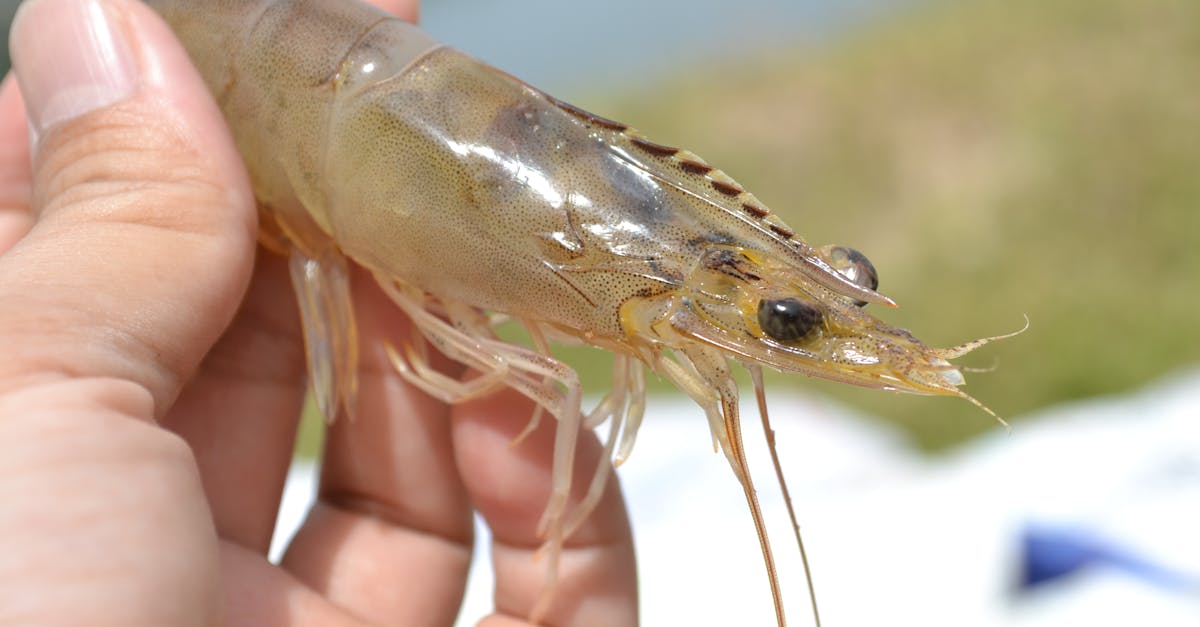
Scampi, the giant freshwater prawn (Macrobrachium rosenbergii), can be farmed in freshwater ponds in Odisha, Gujarat, Kerala and other states with warm water, but it is a slow, 6 to 8 month crop with a modest yield, and it only pays if seed quality, a feed supply and a buyer are settled first. An ICAR carp-scampi polyculture demonstration in Odisha gave 950 kg of scampi per hectare alongside 7,530 kg of carps in seven months.
ICAR-CIFA reports that scampi farming declined in recent years and that it is working with the PMMSY scheme to revive it, including a genetically improved strain, CIFA-GI Scampi. Indian published economics is scarce and dated, so the figures here are limited to what ICAR and TNAU report.
Where it is farmed
- States: the ICAR revival note names Gujarat, Kerala and Odisha. The CIFA-GI on-farm study covered 46 farmers in 14 districts of Odisha (2019 to 2020), and a stocking-density trial was run in Tamil Nadu.
- Climate limits: TNAU gives the workable water temperature as 18 to 34 °C, with 27 to 31 °C best. Water that falls below 18 °C in winter is outside that range, which is a limit for cold-winter districts.
- Water: freshwater, free of pollution, with enough supply for weekly or fortnightly exchange; pH 7 to 8.5 and dissolved oxygen above 75% saturation (TNAU).
Pond and preparation
- Pond: TNAU suggests 0.5 to 1.5 ha, rectangular, 30 to 50 m wide, average depth 0.9 m (minimum 0.75, maximum 1.2 m) and freeboard of at least 60 cm. Clay-silt or sandy loam that holds water is best.
- Liming is stressed as even more important than in fish culture. Where pelleted feed is used, TNAU advises limiting fertilizer, with cow dung, single superphosphate or urea added only as productivity requires. Ask your fisheries officer for the lime dose for your soil.
Seed and stocking
- Seed: ICAR-CIFA released CIFA-GI Scampi on 4 October 2021 and passed it to three commercial hatcheries by MoU for brooder development, with five multiplier hatcheries selected under PMMSY. Buy post-larvae only from a hatchery CIFA or the state fisheries department confirms, and ask for the strain and batch details.
- Nursery: TNAU describes rearing post-larvae for 4 to 5 weeks to 40 to 50 mm (1 to 3 g) before grow-out.
- Stocking: TNAU gives 4,000 to 50,000 per hectare in monoculture and 2,500 to 20,000 per hectare in polyculture with carps. A Tamil Nadu trial compared 5 and 10 per m² for 180 days: it gave 984 kg per hectare at 5 per m² and 1,662 kg per hectare at 10 per m², but with smaller prawns (31 g versus 28 g average) and poorer growth rate at the higher density.
Feeding and water management
- TNAU lists feeds from wet rice-bran and oil-cake mixes to formulated pellets, at about 5% of body weight. The Tamil Nadu trial fed a supplementary feed of 22% crude protein with cow dung and inorganic fertilizer.
- Keep dissolved oxygen high and exchange water on schedule; scampi is sensitive to water quality. Ask CIFA or the state fisheries department for a disease plan, and call them early if mortality starts.
Harvest and yield
- Duration: 6 to 8 months in monoculture and 8 to 12 months in polyculture (TNAU).
- Size and survival: TNAU reports average harvest weight of 50 to 200 g depending on management, and survival of 50 to 70%.
- Yield: 950 kg per hectare (about 380 kg per acre) of scampi with 7,530 kg of carps in a seven-month Odisha carp-scampi demonstration; 984 to 1,662 kg per hectare in the 180-day Tamil Nadu trial. Treat brochure yields above these with caution.
- CIFA-GI versus ordinary seed: in the 14-district Odisha study, CIFA-GI farmers recorded 53% higher growth rate, 68% higher yield and 13% higher farm-gate price than non-GI farmers, with about ₹0.62 lakh per hectare of extra profit per crop. Stocking density, size at stocking and survival did not differ significantly between the two groups.
Cost and returns
| Item per hectare (TNAU, undated) | ₹ |
|---|---|
| Capital cost (pond, equipment) | 2,07,500 |
| Operating cost for 6 to 8 months | 1,08,075 |
| Total investment | 3,15,575 |
- That table carries no selling price or yield and the figures are undated, so update them with local quotes.
- Arithmetic check: if scampi yield is about 1,000 kg per hectare, the operating cost alone works out to about ₹108 per kg before the pond cost, so the farm-gate price must be clearly higher than that. In the carp-scampi demonstration the carps (7,530 kg) carried most of the volume, so carp income matters as much as scampi income.
- The only verified profit figure is the ₹0.62 lakh per hectare per crop that CIFA-GI strain added over ordinary seed in Odisha. Obtain current farm-gate prices from buyers and your state fisheries department.
Market and selling
- Scampi sells to local fish markets, hotels and traders; ask the buyer for size grades and price by count before stocking.
- Risks: slow growth and mixed harvest sizes, sensitivity to water quality and cold, poor-quality seed from unverified hatcheries, and a low yield per hectare compared with carps. Treat scampi as a premium add-on to a carp pond rather than a stand-alone bet until you have a full cycle of experience.
- Support: ICAR notes PMMSY funding for the scampi seed value chain. Pond and input assistance differs by state, so ask the district fisheries officer; see also subsidy finder, Kisan Credit Card for working capital, and FPO for group sales.
Sources
- ICAR: The Scampi Returns, ICAR-CIFA under PMMSY poised to revive scampi farming in India
- ICAR: ICAR-CIFA aims to boost scampi farming through the genetically improved strain CIFA-GI Scampi
- Indian Journal of Fisheries (ICAR): On-farm performance of CIFA-GI scampi in 14 districts of Odisha
- Indian Journal of Fisheries (ICAR): Stocking density of Macrobrachium rosenbergii, Tamil Nadu
- TNAU Agritech Portal: Prawn culture