
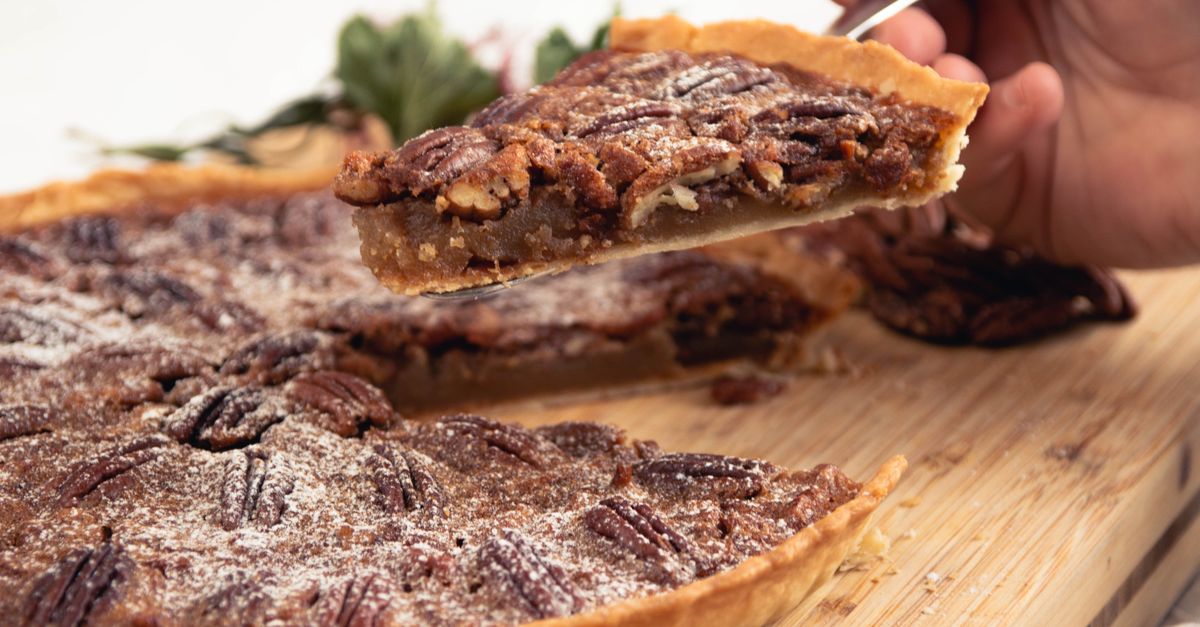
Pecan is a niche, long-wait tree crop in India. It is grown in the mid-hills of Himachal Pradesh and Jammu and Kashmir (mainly Rajouri and Poonch), and in smaller pockets of Uttarakhand and the Nilgiris, on a few hundred hectares in each. Trees take 5 to 10 years to bear, they grow into very large trees, and most existing orchards in Jammu are unnamed seedlings, so plant only grafted trees of known varieties from a state horticulture department or university.
The Indian Farming journal (February 2026) quotes farm-gate prices of ₹500 to ₹700 per kg, but actual district production figures are far below the optimistic yield claims in the same literature, so treat pecan as a small diversification plot, not a main income.
Where it grows in India
- Himachal Pradesh: about 700 hectares, mainly in Kangra, Kullu, Mandi and Solan (Indian Farming, 2026). Pecans were planted at Government Fruit Farm, Palampur, in the 1930s (eight cultivars), and that became the source of planting material for the Himalaya.
- Jammu and Kashmir: 464.68 ha in the Jammu region in 2015-16, producing about 104 tonnes; Rajouri had 163 ha producing 62 tonnes and Poonch 125 ha producing 7.5 tonnes. The district administration now puts Poonch at about 507 ha and 75 tonnes a year, with a GI tag application underway. Local names include Khori, Shimla akhrot and Bachh Doon.
- Other: Uttarakhand and the Nilgiri hills of Tamil Nadu have scattered trees. A 2025 SKUAST paper puts the Indian total at about 1,000 ha.
- Climate: mid-hill belts that are warmer than walnut and apple country. A SKUAST trial site at KVK Poonch (about 992 m) has annual rainfall of 1,200 to 1,400 mm and temperatures from about -2.6 °C in winter to 28.7 °C in summer. The trees need about 400 chilling hours in winter, and the Himachal article lists 5.5 to 7.5 soil pH and deep, fertile, well-drained loam. Waterlogged or heavy clay soils bring root disease.
- Good nut filling needs a long, warm season, so high, cold sites and frost-prone hollows are poor choices.
Varieties and pollination
| Variety | Source | Traits | Suited to |
|---|---|---|---|
| Desirable, Western, Wichita, Forket | US selections | Protandrous: pollen is shed before the female flowers are receptive | Pair with a protogynous variety |
| Pawnee, Caddo, Cheyenne, Cape Fear, Sioux | US selections | Protogynous: female flowers are receptive before pollen is shed | Pair with a protandrous variety |
| Mahan, Mohawk, Caddo | US selections | Reported as adapted to mid-hill Himalayan conditions with good management | Himachal Pradesh mid-hills |
| Mahan, Nellish, Burkett | US selections | Grafted or budded in Jammu and Kashmir nurseries; grafted trees give larger, thinner-shelled nuts than seedlings | Rajouri, Poonch and other mid-hills of J&K |
| SKJPP 25 (Jammu Pecannut) | SKUAST-Jammu, selected from seedling trees | Chosen on yield and nut characters among 60 bearing seedling trees; release committee approval | Jammu division |
- Pecan is wind pollinated, and each tree is either protandrous or protogynous. Plant a mix of both types so that pollen is available when the female flowers open; single-variety blocks set poorly.
- Seedling trees give very variable nuts, often small and thick-shelled. In a SKUAST survey of 60 bearing seedling trees (12 to 15 years old) in Rajouri and Poonch, nut weight ranged from 3.56 to 8.63 g and shell thickness from 0.30 to 1.89 mm. That spread is the reason to use grafted plants.
- Source scion wood and plants from the horticulture department or a university nursery, and confirm the variety and pollination type before buying.
Propagation, planting and spacing
- Method: patch budding on seedling rootstocks in June to July in Himachal. In a SKUAST trial at KVK Poonch on two-year-old pencil-thick rootstocks, patch budding in the second week of August gave the best graft take (63.29%) and the quickest bud sprouting (18 days); whip grafting in the second week of March gave the best survival (44.38%). Four-flap grafting in February gave only 31.62% take. Expect to lose a good share of grafts, so buy from nurseries that guarantee survival.
- Transplanting: December to January in Himachal, when the soil is moist and the weather cool.
- Spacing: at least 8 to 10 m between trees. That is 100 to 156 trees per hectare, or about 40 to 63 per acre, for example 40 trees per acre at 10 x 10 m.
- Training: central leader system with the lowest branch about 1 m above ground; avoid heavy pruning and remove only dead, broken or diseased wood.
- Intercrops in the first 3 to 4 years: pea, French bean, garlic, clover, cowpea or soybean give income and protect hill soil.
Nutrition and irrigation
- Pecan needs more water than other nut trees, especially at flowering, nut setting and kernel filling. Use basins at first and move to drip or sprinklers; see drip irrigation.
- No verified Indian fertiliser schedule per tree was found. Ask the state horticulture university (YSPUHF Nauni for Himachal, SKUAST for Jammu) for the age-wise dose, and test the soil before applying; see fertilizers.
Pests and diseases
- Aphids and mites in the vegetative stage, caterpillars on leaves, thrips at flowering, and nut borer and stink bugs during nut formation are the main problems listed in the Himachal IPM table; humid conditions bring leaf spots.
- Control is mostly cultural: encourage ladybird beetles, hand-pick caterpillars, use light and pheromone traps, collect and destroy damaged nuts, keep the orchard sanitary and prune for air flow. Neem-based sprays and Bordeaux mixture are the listed options. Follow the label and ask your KVK. See pests.
Harvest, yield and storage
- Years to bearing: 5 to 10 years, depending on cultivar and care. A 10-year-old tree in good condition is about 5 m tall.
- Tree yield: mature trees give 15 to 35 kg of nuts a year under good management. At 40 trees per acre that is about 600 to 1,400 kg per acre (1,500 to 3,500 kg per hectare at 100 trees).
- Reality check: the Jammu figures above (464.68 ha and 104 tonnes in 2015-16) work out to only about 0.2 tonne per hectare, because most trees are scattered seedlings and many orchards are young. The Himachal article's 1.5 to 2 tonnes of kernel per hectare and net ₹9 to ₹12 lakh per hectare is a mature, well-managed orchard estimate, not an average.
- Harvest: from the first week of November in Himachal, when the husk turns brown and splits; collect fallen nuts by hand.
- Storage: pecans turn rancid because of their high oil content. Dry the nuts to a safe moisture, then store at 1 to 5 °C and 75 to 80% humidity. Unshelled nuts keep about 4 months at 21 °C and nearly 2 years under refrigeration.
💡 Tip: Plant 20 to 30 grafted trees of two or three compatible varieties first, with a pollination mix, and visit an existing orchard in Rajouri, Poonch or Kangra before scaling up.
Cost and returns
- Price: the Himachal article gives metro retail prices of ₹1,200 to ₹1,500 per kg and farm-gate prices of ₹500 to ₹700 per kg; it does not say if that is in-shell nut or kernel, so ask buyers before using it.
- Arithmetic (illustration, mature orchard): 40 trees per acre x 15 to 35 kg = 600 to 1,400 kg nuts. At a nut price of ₹500 per kg that is ₹3 lakh to ₹7 lakh gross per acre in a good year (counting the price as for in-shell nut); if the price applies to kernel, which is only a fraction of the nut weight, the figure is lower. Nothing is earned for 5 to 10 years.
- No verified Indian orchard cost sheet was found. Ask the district horticulture office for the plant cost, labour and irrigation costs before you commit land.
Market and support
- Buyers are dry-fruit traders, bakeries, confectioners and gifting shops. India's market is small and still forming, and local volumes are low, so sales are by direct contact with traders.
- Risks: wrong variety or poor pollination mix, grafts that fail, late spring frost, long wait for income.
- Support: the MIDH scheme and the state horticulture department help with planting material and training; no pecan-specific rate was verified, so ask your district horticulture office. Poonch and Rajouri have SHGs and FPOs; see FPO and the subsidy finder. For other nuts, see walnut.
Sources
- Dhiman et al., Pecan nut cultivation in Himachal Pradesh (Indian Farming, February 2026)
- Kumar et al., Optimizing propagation techniques and timing for pecan under Poonch conditions (Indian Journal of Agricultural Sciences, 2025)
- Rani et al., Evaluation of genetic diversity of pecan nut in Jammu region (Indian Journal of Horticulture, 2017)
- Sharma et al., Genetic divergence in pecan nut, release of SKJPP 25 (Indian Journal of Horticulture, 2022)
- District Poonch, One District One Product: pecan nut