
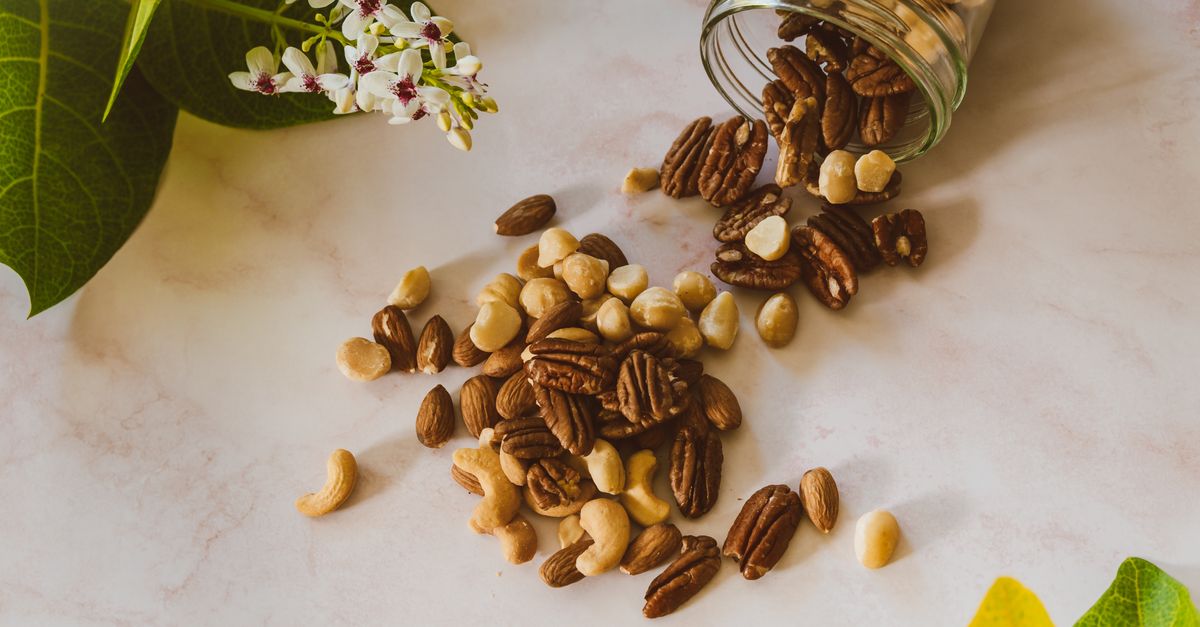
Macadamia is still an experimental crop in India. It grows on a small scale in a few cool, well-watered hill and plateau pockets of Karnataka (around Tiptur in Tumakuru district, about 200 hectares reported in 2026), with trials in Kerala, Tamil Nadu, Andhra Pradesh, Odisha and the Northeast, and it needs frost-free, evenly rainy land, patience of 4 to 5 years before a first crop, and a buyer you have lined up before you plant.
India has no ICAR package of practices, Coffee Board recommendation or official yield statistics for macadamia that could be found. The price figures in circulation (₹4,000 per kg) are retail e-commerce prices for shelled kernels, which are not what a farmer receives. Treat every Indian number below as a single-grower report, not an established norm.
Where it can grow
- Climate: optimum about 25 degrees C in the growing season, a narrow temperature range, minimum 1,000 mm rainfall spread through the year, and no more than short mild frost (World Agroforestry / PROSEA profile of Macadamia integrifolia). Krishi Jagran gives 18 to 30 degrees C and at least 6 to 8 hours of sun.
- Altitude: East African plantings succeed at 1,000 to 1,600 m with a seasonal climate. India-specific altitude limits are not documented.
- Soil: deep, well-drained, slightly acidic soil, pH 5.0 to 6.0 with 3 to 4% organic carbon. Avoid heavy clay, saline and calcareous soils. Waterlogging brings Phytophthora root rot.
- Wind: trees break in strong wind; plant windbreaks before the orchard.
- Where yields are not verified: Kerala growers are still testing; the Onmanorama report (July 2026) says there is no established domestic market structure there.
Varieties and planting material
| Type | Source | Traits | India status |
|---|---|---|---|
| M. integrifolia (smooth shell) | Australian and Hawaiian selections | Round nuts; main commercial species | Tiptur grower reports cultivar "849", described as self-pollinating |
| M. tetraphylla (rough shell) | Australia | Spiny leaves, elongated nuts, tolerates cooler sites | Present in trials |
| Hybrids | Australia, Hawaii, South Africa | Mix of both species | No verified Indian-released variety |
- Grafted plants are preferred worldwide over seedlings. Onmanorama reports grafted plants fruit in 4 to 5 years, air-layered trees by year 3, and wild seedlings can take up to 15 years.
- There is no national plant certification for macadamia. Ask the nursery which parent trees the grafts came from and visit an orchard of the same plant age before paying.
Spacing and planting
- Indian practice reported: 12 x 12 feet (3.7 m), about 300 trees per acre (about 740 per hectare), with drip irrigation and organic manure.
- Standard overseas spacing: 10 m between rows and 4 to 5 m within rows, i.e. 200 to 250 trees per hectare (80 to 100 per acre), per the PROSEA profile. Mature trees reach 45 kg of nuts each in that system.
- That means the Indian layout is about three times as dense as the world standard. A close planting may give early yield, but it will crowd within 8 to 10 years and need heavy thinning or pruning. Decide your thinning plan before planting.
Nutrition and irrigation
Macadamia is sensitive to nutrient deficiency and imbalance and responds to nitrogen, phosphorus, potassium and micronutrients; excess nitrogen is discouraged. No Indian per-tree fertiliser schedule has been published that could be verified, so base doses on a soil and leaf test and your KVK's advice. Keep the soil moist and well drained; drip irrigation is what Indian growers use. Use mulch and organic matter, since the roots are shallow.
Pests and diseases
- Overseas yield-reducers are the macadamia flower caterpillar, fruit-spotting bugs, nut borer and felted coccid. The FAO lists rats as capable of destroying up to half the crop in some orchards.
- Diseases to expect: Phytophthora root rot in wet soil and bacterial canker; root decay by Ganoderma has been recorded in Taiwan.
- Indian recommendations for chemicals do not exist for this crop. Follow the label and ask your KVK; do not apply chemicals not registered for the crop.
Harvest, processing and yield
- First crop: air-layered trees about year 3, grafts year 4 to 5; FAO states seedlings bear at 6 to 7 years and mature trees give 27 to 68 kg of nuts per year.
- Reported Indian yield: a Tiptur grower says about 5 kg per tree in year 3 and 15 to 20 kg by year 5. Be careful: 300 trees x 15 to 20 kg is 4,500 to 6,000 kg per acre, which is 11 to 15 t per hectare, far above the 3.2 to 3.5 t per hectare average of commercial orchards quoted by PROSEA. Plan on the lower, orchard-benchmark figure (about 1,300 to 1,400 kg per acre) until local data exists.
- Harvest season: reported as April to June in Karnataka. Nuts fall when ripe and are picked up from the ground.
- Processing: husk is removed immediately; nuts are dried in stages from about 45% moisture to 1.5 to 5% (FAO), roughly a week of air drying then 7 to 10 days at 38 to 54 degrees C. Cracking needs special equipment; the Onmanorama report says Kerala growers lack it.
Cost and returns
- Price reported: ₹600 to ₹1,200 per kg for unshelled (nut-in-shell) nuts in the Bengaluru market, depending on grade, per one Tiptur grower in July 2026. Retail kernels above ₹4,000 per kg are not a farm-gate price; kernel recovery from the shell is only a fraction of the nut weight.
- Arithmetic at benchmark yield: 1,300 kg per acre x ₹600 = about ₹7.8 lakh; x ₹1,200 = about ₹15.6 lakh per acre per year at maturity, gross. At the grower's claimed 4,500 kg per acre, the same prices would give ₹27 to ₹54 lakh per acre, which no Indian record supports.
- Not available: No verified Indian cost of cultivation, NHB project report or subsidy rate for macadamia was found. Plants, drip, windbreak, labour and processing equipment must be priced locally.
- Global prices fell in 2023-24, and Onmanorama notes the India-Australia trade agreement (AI-ECTA, 2022) cuts macadamia import duty from 30% to zero by 2028, which will put Indian growers against Australian supply.
Market and risks
- Much of the activity around Tiptur is selling plants to new growers, so the current price may rest on demand for saplings and not on kernel sales. Ask any seller who will buy your nuts, at what price, and ask to see a contract.
- There are only a few processors; shelled-kernel marketing and grading are unproven in India.
- Beware of promoters offering high buy-back prices, plant rates per acre in lakhs, or guaranteed returns.
- Crop insurance availability for macadamia is unverified; ask your bank about PMFBY notification in your district and see drip irrigation subsidy and KCC for financing.