
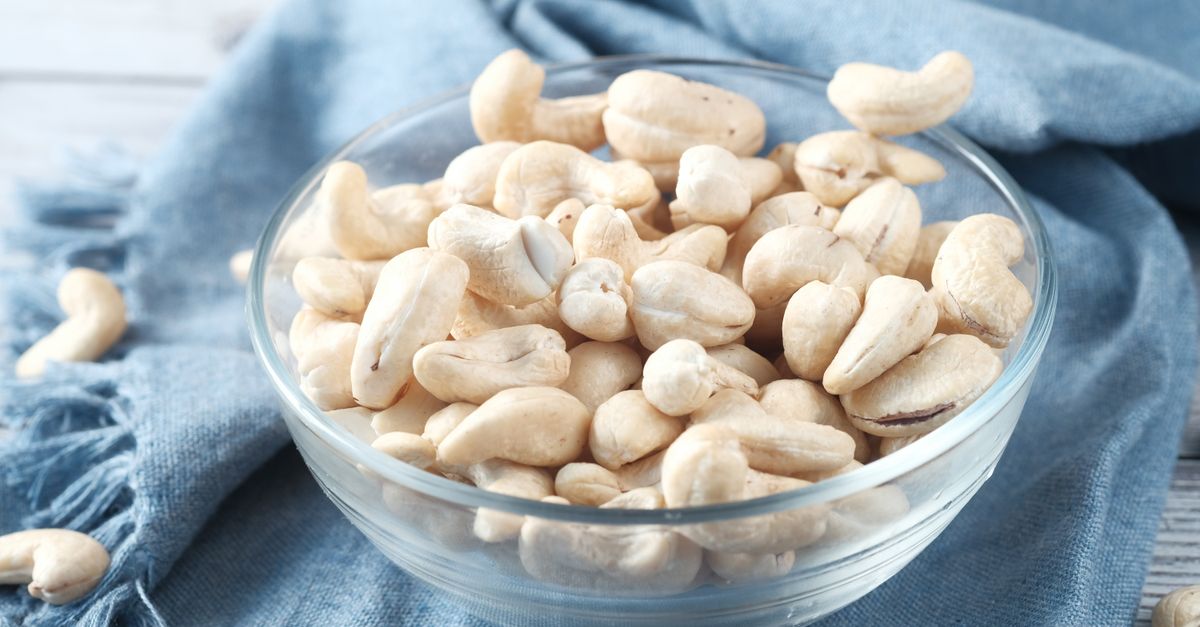
Cashew is a coastal and low-hill tree crop for Andhra Pradesh, Goa, Karnataka, Kerala, Maharashtra, Odisha, Tamil Nadu and West Bengal, up to about 700 m altitude. It tolerates poor lateritic and sandy soil but needs a dry season of at least four months, grafted planting material, and 3 years before the first nuts and about 10 years to full bearing. The "premium" in the price comes from kernel grade (large whole white kernels), which is decided in the processing factory, not on your farm; the farmer sells raw nut and is paid by weight and quality.
Yield, not demand, is the weak point. Indian processing capacity has outrun local raw nut supply, so a well-run orchard is easy to sell, but an unimproved seedling orchard gives less than 1 kg of raw nut per tree. The figures below come from the NABARD model project for cashew (an older document, so its costs and prices are outdated and are used here only for yields and practices), TNAU and ICAR trial data, and a March 2026 trade report for prices.
Where it grows in India
- States: commercial cultivation is in eight states of the east and west coasts: Andhra Pradesh, Goa, Karnataka, Kerala, Maharashtra, Odisha, Tamil Nadu and West Bengal, with a few pockets in Assam, Chhattisgarh, Gujarat, Meghalaya, Nagaland and Tripura. In the NABARD model, India had 9.53 lakh ha under cashew in 2010-11 and over 70% of the area was with small and marginal farmers.
- Climate: altitudes up to about 700 m, 20 to 30°C, rainfall of 1,000 to 2,000 mm. Temperatures above 36°C during flowering and fruiting hurt nut set, and young plants are frost-sensitive.
- Rain at flowering: heavy rain and high humidity during flowering cause flower and fruit drop and fungal disease; at least four dry months give the best yield.
- Soil: deep, well-drained sandy loam, red sandy loam, laterite or coastal sand with slightly acidic pH. Waterlogged or heavy clay soil and soil with pH above 8.0 are unsuitable.
Varieties
Cashew is cross-pollinated, so seedlings vary widely in nut size and yield. Buy grafts of a released variety from a certified nursery and ask for the variety, age and rootstock to be written on the bill. The NABARD model lists these recommended varieties by state.
| State | Recommended varieties |
|---|---|
| Andhra Pradesh | BPP 4, BPP 6, BPP 8 |
| Karnataka | Chintamani 1 and 2, Dhana, NRCC Selection 2, Bhaskara, Ullal 1, 3 and 4, UN 50, Vengurla 4 and 7 |
| Kerala | Dhana, K 22-1, Madakkathara 1 and 2, Kanaka, Amrutha, Priyanka |
| Maharashtra and Goa | Vengurla 1, 4, 6 and 7; Goa 1 and 2 |
| Tamil Nadu | VRI 1 and VRI 5 (NABARD list); TNAU also lists VRI 2, 3 and 4 |
| Odisha and West Bengal | Bhubaneswar 1, BPP 8, Dhana; Jhargram 1, BPP 8 |
| Madhya Pradesh | T No. 40, Vengurla 4 |
Elite material is reported to have a potential of 20 to 25 kg nuts per tree; real orchards give far less, as the yield section shows. Air-layered plants are weaker in drought and cyclones than grafts.
Planting and spacing
- Normal spacing: 7.5 m x 7.5 m gives 178 trees per ha (about 72 per acre); 8 m x 8 m gives 156 per ha. TNAU uses 7 m x 7 m (about 200 per ha).
- High density: 4 m x 4 m (625 per ha) with thinning in stages to 8 m x 8 m by year 10, or 5 m x 4 m (about 500 per ha) per TNAU. On slopes, triangular planting fits about 15% more trees.
- Pits: 60 cm cube in normal soil (1 m cube in hard laterite), dug in May to June, filled with topsoil, 5 kg FYM or compost and 200 g rock phosphate. TNAU uses 45 cm pits with 10 kg FYM and 1 kg neem cake.
- Planting time: at the onset of monsoon, with stakes and temporary shade; give one or two pot waterings if rain fails.
- Mulch: essential on dry wasteland; grass, weeds, stones or black polythene all work.
- Intercrops: groundnut, cowpea, horse gram and beans in the young orchard; avoid tall sorghum and millet that shade the plants.
Nutrition, water and pruning
- Mature tree (NABARD model, ICAR): 10 to 15 kg FYM plus 500 g N (1.1 kg urea), 125 g P2O5 (750 g single super phosphate) and 125 g K2O (200 g muriate of potash) per tree per year. For 178 trees this is about 89 kg N, 22 kg P2O5 and 22 kg K2O per ha, or roughly 36, 9 and 9 kg per acre.
- Young trees: urea / SSP / MOP of 375 / 275 / 75 g in year 1, 750 / 525 / 150 g in year 2 and 1,100 / 750 / 200 g in year 3. TNAU gives a different schedule (year 5 onwards 50 kg FYM, 500 g N, 200 g P, 300 g K) and 1,000:125:250 g NPK per tree for the east coast. Follow the schedule for your state's university and a soil test.
- How and when: split into May to June and September to October doses, in a trench along the drip line with soil moisture present. Do not fertilise on dry soil.
- Water: mostly rainfed. TNAU says one irrigation a week from flushing to nut maturity raises yield; the NABARD model budgets for irrigation in the first years.
- Training: remove rootstock sprouts, keep a single stem to 0.75 to 1 m, strip the lower branches in years 1 to 4, and remove flowers in years 1 and 2. After 4 to 5 years the model advises detopping at 4 to 5 m and removing dead and criss-cross wood every 2 to 3 years, in August to September, with Bordeaux paste on cuts.
- Old unproductive trees: top-working (beheading and grafting a high-yielding variety) is reported to give 3 to 5 kg per tree at first bearing within two years. See fertilizers for product basics.
Pests and diseases
- About 30 insects feed on cashew; tea mosquito bug, flower thrips, stem and root borer, and fruit and nut borer are the main ones and together are reported to cost around 30% of yield.
- Tea mosquito bug (Helopeltis): sucks tender shoots, flowers and young nuts; the toxic saliva scorches panicles. Populations build up at the start of rains when new flush appears. Spray three times: at flushing, early flowering and fruit set (TNAU says vegetative flush, panicle initiation and nut formation).
- Stem and root borer: grubs tunnel in bark; look for small collar holes, gum and yellowing. Cure is hard, so swab the trunk before the monsoon and after it, and remove and burn dead trees.
- Thrips and nut borers: thrips give leaves a silvery look in the dry season; nut borers hit at flowering and fruit set.
- Diseases: powdery mildew in cloudy weather, die-back and anthracnose; TNAU advises 1% Bordeaux mixture for die-back and anthracnose.
- Do not copy chemical names and doses from older packages, since some listed products are no longer allowed. Ask the KVK or ICAR-DCR Puttur for currently registered products and follow the label. See pests.
Harvest and yield
- Timeline: bearing starts in year 3, full bearing is reached in year 10, and orchards stay productive for about 20 more years.
- Harvest: February to May (peak March to May in Tamil Nadu). Collect fallen nuts weekly, twist off the apple, and sun-dry nuts for 2 to 3 days to about 9 to 10% moisture. Mature nuts sink in water; floaters are unfilled.
- Yield per tree in the NABARD model: 1, 3, 5, 6, 7, 8, 8.5 and 9 kg in years 3 to 10, which is about 178 to 1,600 kg per ha (72 to 650 kg per acre). It also says 8 to 10 kg per tree is achievable with elite grafts and good practice. TNAU quotes 3 to 4 kg per tree a year for ordinary management.
- Trial result: in a trial published in the Indian Journal of Agricultural Sciences, variety H-130 at 2.5 m x 2.5 m with pruning gave 1,248, 2,234 and 2,432 kg per ha in years 2 to 4, but ultra-dense planting needs pruning skill and is not a farm-wide recommendation.
- Cashew apple: used for jam, juice, syrup and feni; it must be picked before it falls.
Cost and returns
The NABARD model costs 1 ha at ₹83,800 for years 1 to 4 and about ₹20,000 a year thereafter, but it assumed ₹200 labour a day, ₹65 per kg for nuts and ₹5.70 per kg urea, so those costs are out of date. Do your own budget at today's wage and input rates.
| Mature orchard, 1 ha, 178 trees | Raw nut | Gross at ₹100 per kg | Gross at ₹125 per kg |
|---|---|---|---|
| Plain seedlings, 1 kg per tree | 178 kg | ₹17,800 | ₹22,250 |
| Improved, 5 kg per tree | 890 kg | ₹89,000 | ₹1,11,250 |
| Model year 10, 9 kg per tree | 1,602 kg | ₹1,60,200 | ₹2,00,250 |
Per acre, divide by about 2.5. A March 2026 trade report quoted raw cashew at ₹12,000 to ₹12,500 per quintal (₹120 to ₹125 per kg) in Indian markets. Prices swing with African supply and harvest timing, so check local rates before budgeting. The model's own result, an IRR of 44% and benefit-cost ratio of 1.66, used the old ₹65 per kg price and a 12-year horizon and should not be quoted as today's return.
Market and selling
- Raw nut is sold to traders and processors, mostly in Kerala, Andhra Pradesh, Maharashtra and Karnataka. India imports a large share of its raw nut (the March 2026 report puts raw material dependency at 60 to 70%), which supports demand for local nut.
- Shelling gives 20 to 25% kernel by weight. Factories grade kernels by count per pound: whole kernels come in counts such as 210, 240, 280, 320, 400, 450 and 500, and 320 is the popular export grade. Fewer kernels per pound means larger and dearer kernels. Premium grades depend on nut size, variety and processing quality.
- Whole kernel recovery is higher with manual shelling. Small groups can add value by processing and by using the apple and shell liquid, but this needs a licence and food-safety compliance. Compare rates on mandi bhav and consider an FPO for bulk sale and export buyers.
Subsidy and support
The Directorate of Cashewnut and Cocoa Development (DCCD) and state horticulture departments run planting material and area expansion schemes. Scheme rates change, so ask the district horticulture office, and check the subsidy finder and KCC for credit. The NABARD model assumes a 90% bank loan with 10% margin money.