
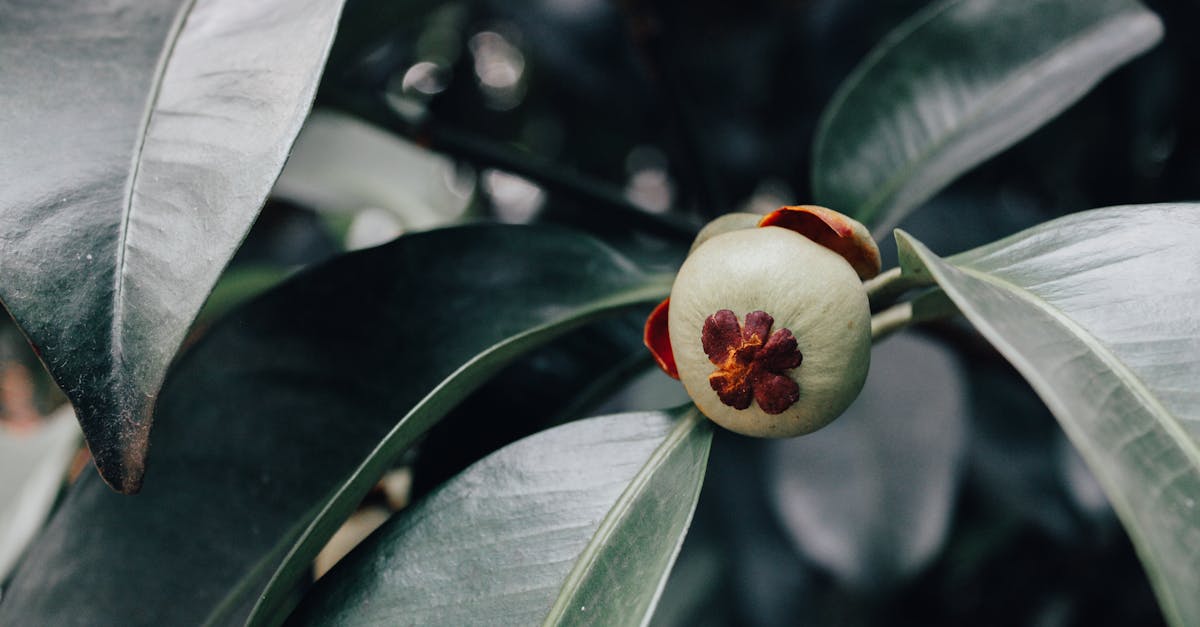
Mangosteen works in India only in a narrow belt: frost-free, very humid, high-rainfall land in Kerala, Tamil Nadu and Karnataka, at low to mid elevation. It is a very slow crop: ICAR's Indian Horticulture magazine says seedling trees start flowering 8 to 10 years after planting and grafted ones after 7 to 8 years, with full fruiting only from about 15 years. If you cannot wait a decade with no income and do not already have suitable wet land, this is the wrong crop.
The fruit does sell at a high price, but there is almost no organised Indian research or extension on it, so much of what circulates online is journalism and anecdote. This guide separates what is documented from what is only reported.
Where it grows in India
- States: ICAR says it is grown in the humid tropical areas of Kerala, Tamil Nadu and Karnataka, and that the area is very limited because of its strict climate needs while the demand and price are high.
- Climate: frost-free equatorial climate, up to 400 to 900 m altitude, 180 to 250 cm rainfall (ICAR, 2021). Dry spells, cold and drying wind hurt it.
- Soil: deep, well-drained and rich in organic matter. Waterlogged or shallow soils do not suit it.
- Known pockets: a 2019 Modern Farmer report describes Pariyaram in Kerala, where about 50 families grow it, picking in April and May and selling mostly to Chennai and Bangalore rather than locally. Elsewhere, Tamil Nadu's Kanyakumari and Nilgiri foothills are often named, but no official figure for area was found.
Varieties
ICAR states plainly that there is no recommended variety in India. Plants are mostly seedlings from older orchards, and the fruit is variable. The seed is apomictic (the embryo comes from mother tissue, not pollination), so seedlings are generally true to the parent tree. Grafted plants fruit about a year or two earlier than seedlings (ICAR). Buy from an orchard or nursery whose mother tree you have seen fruiting, and do not pay for named "varieties" with no record.
Planting material, spacing and plants per acre
- Seedlings spend 1 to 2 years in a shaded nursery before field planting at the start of the monsoon.
- Young trees need partial shade for the first several years.
- ICAR's article gives a spacing of 6 x 6 m, which is about 110 trees per acre (about 280 per hectare). Other sources use 8 to 10 m, which gives 40 to 63 trees per acre. The tree grows large, so wider spacing is safer for old orchards; confirm with your KVK.
| Spacing | Trees per acre | Trees per hectare |
|---|---|---|
| 6 x 6 m (ICAR) | about 112 | about 278 |
| 8 x 8 m | about 63 | about 156 |
| 10 x 10 m | about 40 | 100 |
Nutrition and irrigation
No verified Indian dose schedule by tree age was found, so none is given here. Plan on heavy organic matter (compost or farmyard manure and mulch) in the pit and around the tree, and keep soil moist through the dry months; dry-season water stress is a known cause of poor growth. Ask your state horticulture department or KVK for a local schedule and base fertiliser on a soil test (see fertilizers).
Pests and diseases
ICAR lists leaf eater, leaf miner and fruit borer among pests, and leaf blight, Diplodia fruit rot and brown root disease among diseases. For chemicals, follow the label and your local KVK; see also pests.
Flowering, harvest and yield
- ICAR: flowers appear in March to April, and fruit matures 120 to 128 days after fruit set, mostly in July to August in South India. (The Pariyaram report says harvest is April to May there, so timing varies by place.)
- A grown tree gives 40 to 60 kg of fruit (ICAR). Fruit keeps 2 to 3 weeks at room temperature and up to 50 days at 4 to 6 degrees C with 85 to 90 percent humidity.
- Reports of single old trees giving 350 kg a year (35-year-old Kerala tree) or nearly a tonne (100-year-old tree) are anecdotal press claims, not trial data.
Cost and returns
There is no audited Indian cost-of-cultivation study available, so here is only the arithmetic, using the ICAR yield and the price reported in the press (₹500 to ₹600/kg in the 2019 Modern Farmer piece; ₹500/kg in a Global Agriculture article). Check the current price with buyers before using it.
| Case | Fruit per acre per year | Gross at ₹500/kg |
|---|---|---|
| 112 trees x 40 kg | about 4.5 t | about ₹22 lakh |
| 112 trees x 60 kg | about 6.7 t | about ₹34 lakh |
These figures apply only to a fully bearing orchard (about 15 years). Before that, income is zero for roughly 8 to 10 years, and a large supply from many new orchards would pull the price down. The premium price rests on tiny supply; it will not hold if many farmers plant at once. Count the 10 years of upkeep, shade, irrigation and land cost when you compare with a faster crop.
Market and selling
- Fresh fruit goes to city markets (Chennai, Bangalore are named in the Kerala report) and to fruit retailers. ICAR notes it is used mainly fresh; processed products (jelly, paste, syrup, canned segments) are possible but small.
- Price depends on size, appearance and freshness. Do not sign a buy-back or "assured price" agreement from a nursery selling plants at inflated prices; they are not a substitute for a real buyer.
- No official export volume or APEDA scheme for mangosteen was found.