
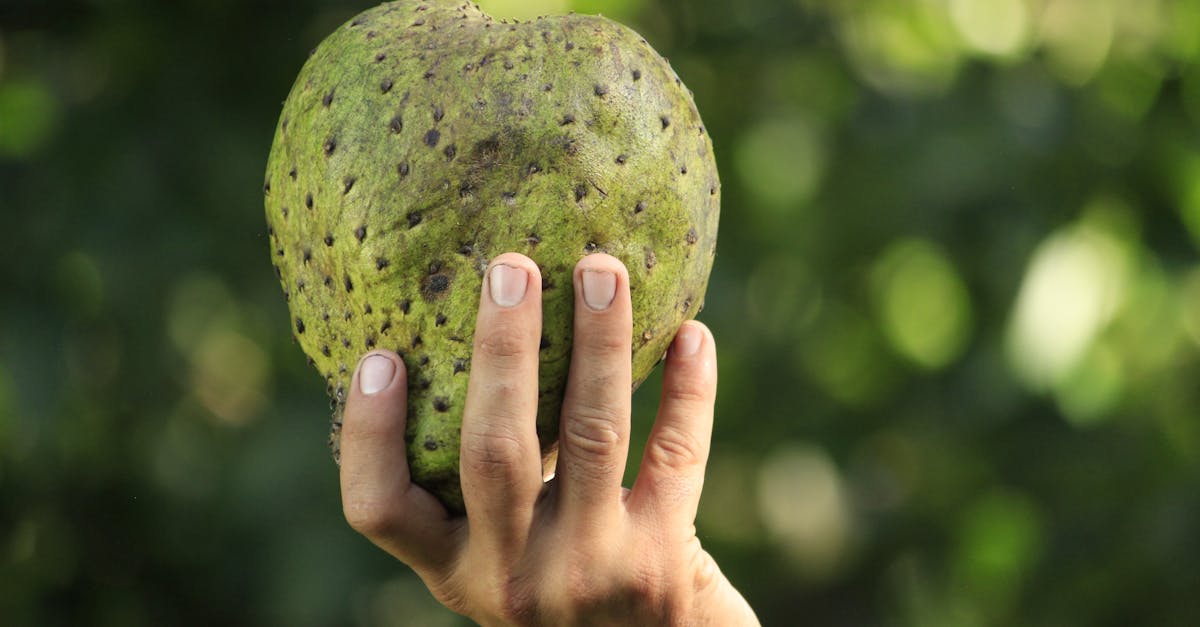
Atemoya (a cross of cherimoya and sugar apple) is a niche fruit in India: the commercially proven material here is the ICAR-IIHR hybrid Arka Sahan and its relatives, grown in the same dry, warm belt as custard apple (sitaphal) in Maharashtra, Karnataka, Telangana and Andhra Pradesh. It rewards growers who will hand-pollinate flowers every morning during the flowering window and who can reach a buyer for a soft fruit that bruises easily.
Published Indian data on true atemoya cultivars is thin. Most verified figures below come from IIHR's work on Arka Sahan, an annona hybrid of atemoya and custard apple, and from general custard apple practice. Treat any "premium" price promise for atemoya as unverified until a buyer confirms it in writing.
Where it grows in India
- Belt: Maharashtra remains India's main custard apple region, with orchards also in Karnataka (for example Kolar district). Hybrids such as Arka Sahan are being planted at higher density and sold fresh and as frozen pulp.
- Climate: custard apple needs about 600 to 1,000 mm rainfall a year and established trees survive on 500 to 700 mm without irrigation, so it suits semi-arid land. Test a small block before planting widely.
- Soil: shallow, rocky red soils that suit few other fruit crops are acceptable; the one firm rule is drainage, because waterlogged roots rot.
Varieties
| Variety | Source | Traits | Notes |
|---|---|---|---|
| Arka Sahan | ICAR-IIHR, released 1997 (Island Gem atemoya x Mammoth custard apple) | Few small seeds (9 per 100 g fruit), sweetness above 32 degrees Brix (22.8% total sugar), ripens slowly over 5 to 6 days, white mealy pulp | Needs hand pollination; pulp recovery reported near 70% against about 30% in wild types |
| Balanagar | Common custard apple standard | Widely grown, more seeds | Baseline to compare against |
| Sangareddy hybrids | Fruit Research Station, Sangareddy (2001 to 2006 evaluation) | Best hybrid reached 250 g fruit and 94 fruits per tree, TSS 22 to 28 degrees Brix | Research selections; ask the station or KVK whether grafts are available |
African Pride, a South African atemoya (about 250 g fruit, TSS about 23%), is grown abroad. No Indian trial data was found for it, so ask a government or university nursery before paying for it.
Planting and spacing
- Use grafted plants from a recognised nursery, not seedlings. Grafted custard apple plants bear in 2 to 3 years against 4 to 5 for seedlings.
- Standard spacing is 5 m x 5 m, which is 160 trees per acre (400 per hectare). Closer 4 m x 4 m gives 250 per acre (625 per hectare) and needs pruning to keep the canopy open.
- Pits of 60 x 60 x 60 cm, filled with topsoil and well-rotted farmyard manure. Plant at the start of the monsoon (June to July) in rainfed areas.
- Fertiliser doses for atemoya are not fixed in the sources used; follow the schedule of your state agricultural university or KVK, and base it on a soil test. See fertilizers.
- Irrigation: rainfed is possible for custard apple; ask your KVK about supplementary water for hybrids at flowering and fruit growth. Drip saves water on dry land.
Hand pollination
Left alone, only about 1 to 2% of Arka Sahan flowers set fruit, because the female and male parts of a flower mature at different times. IIHR's method is to pollinate by hand:
- Pollinate in the morning, between 6.00 and 9.30, using pollen from custard apple; it worked better than pollen from Arka Sahan itself.
- One person can pollinate 150 to 200 flowers an hour.
- Result reported by IIHR: about 80% fruit set, fruit of 450 to 500 g, about 90% heavier than open-pollinated fruit, with a more even shape.
- Keep about 60 fruits per tree at maturity for good size; thin the rest.
Pests and diseases
- TNAU lists fruit borer, fruit fly and tailed mealybug as pests of custard apple. Mealybug is the most common problem; clean the trunk of ants, which protect it, and use neem oil with soap spray in early attacks.
- Leaf spot appears in wet spells; a copper fungicide is the usual choice. Birds damage ripe fruit; netting helps.
- For any chemical spray, follow the label and ask your local KVK for the current recommendation. See pests.
Harvest and yield
- Pick when the skin shows a slight colour change from green to whitish-green and the fruit is just yielding to gentle pressure. Fruit left to ripen on the tree splits and drops. Ripen at room temperature for 2 to 4 days.
- Arka Sahan: IIHR reports 40 to 45 kg of fruit per tree from the eighth year, and an expected 25 tonnes per hectare (about 10 tonnes per acre) with hand pollination. One Maharashtra grower of a different hybrid reported about 10 tonnes per acre.
- These are best-case, well-managed figures. Ordinary custard apple orchards report 80 to 150 fruits of 200 to 350 g per tree after year 5, or roughly 2,500 to 8,400 kg per acre at 160 trees.
Cost and returns
- Input cost: a custard apple guide puts annual running cost at ₹20,000 to ₹30,000 per acre, excluding hand-pollination labour beyond normal. Grafted plants cost about ₹40 to ₹80 each for ordinary custard apple; atemoya grafts usually cost more.
- Price benchmark: the same guide shows conventional custard apple at about ₹35 per kg wholesale and ₹25 per kg for processing. No verified wholesale price for atemoya fruit in Indian mandis was found, so the premium is an assumption until you have a buyer's quote.
- Arithmetic (illustration, not a promise): 160 trees x 40 kg = 6,400 kg per acre; at ₹35 per kg that is ₹2.24 lakh gross, less ₹20,000 to ₹30,000 running cost plus pollination labour. At the IIHR figure of about 10 t per acre the gross would be ₹3.5 lakh at the same price. Yields at this level start only after 6 to 8 years.
Market and risks
- Fresh fruit is soft and short-lived, so sell within days to urban fruit retailers, supermarkets or pulp processors. Frozen pulp is stored and moved at minus 18 degrees C, and a Maharashtra grower has exported to the US, Gulf and Europe; this needs freezing equipment and a processor.
- Check mandi bhav, export buyers and FPO options for group selling.
- Be wary of nurseries selling "atemoya" at high prices with income promises. Ask for the variety name, the grafting source and an IIHR or state university reference.
- For subsidy, ask your state horticulture department about MIDH support for fruit orchards; see subsidy finder. No atemoya-specific rate was verified.