
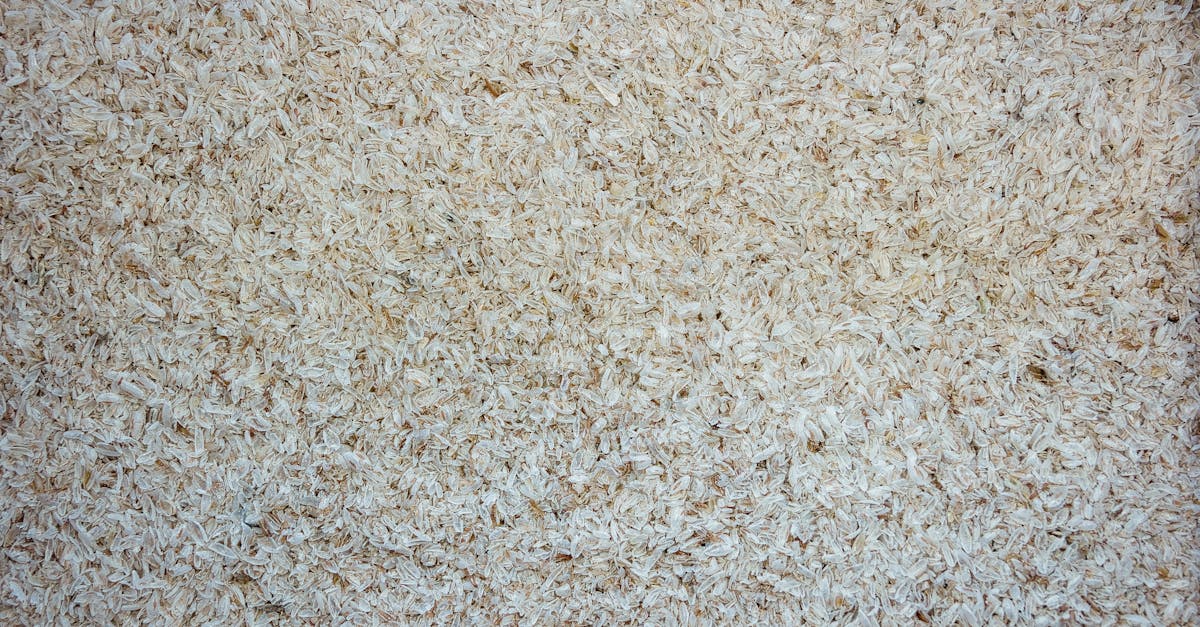
Isabgol (psyllium, Plantago ovata) is a realistic cash crop for dry-region farmers in North Gujarat, Rajasthan and Madhya Pradesh, because it is a low-water winter crop with an established mandi at Unjha. It needs cool weather at sowing and dry, rain-free weather at harvest, and the price swings widely from year to year.
The crop is sold as seed; the husk (about a quarter of the seed by weight) is separated later by processors, so a farmer sells whole seed. Plan on about 8 to 10 quintals per hectare (3.2 to 4 quintals per acre) as the package-of-practices yield, and treat higher figures as best-case.
Where it grows in India
- Main belt: North Gujarat (the Unjha and Sidhpur belt, Mehsana district) is reported to account for 75 to 80% of Indian production, with Rajasthan and Madhya Pradesh next (the first two named as main belts in trade sources). Punjab, Haryana, Uttar Pradesh and Karnataka are smaller, expanding areas.
- Climate: germination is best at 20 to 25 degrees C and the crop matures in 30 to 35 degrees C dry weather; reported rainfall range is 50 to 125 cm a year, but rain or heavy dew at flowering and harvest damages the crop.
- Soil: well-drained sandy loam is best, pH 7.2 to 7.9; it can be grown on clay loam and black cotton soil if water does not stand.
Varieties
| Variety | Released / source | Traits | Notes |
|---|---|---|---|
| Gujarat Isabgol-1 (GI-1) | Gujarat (released 1976) | Dark green leaves; matures in 110 to 115 days | Older variety, still seen in North Gujarat |
| Gujarat Isabgol-2 (GI-2) | Gujarat (released 1983) | Medium broad pale green leaves; 110 to 115 days | Widely grown in the Gujarat belt |
| Haryana Isabgol-5 (HI-5) | Haryana | 140 to 145 days; 1,000 to 1,200 kg/ha; husk 25 to 30% | Longer duration, suited to northern states |
| Jawahar Isabgol-4 (JI-4) | Released 1996 | Narrow dense leaves, rosy white husk; 1,300 to 1,500 kg/ha | Reported yield potential, not a guaranteed farm yield |
| Vallabh Isabgol-1, 2, 3 | Gujarat (2015 to 2016) | Early maturing; 897 to 1,440 kg/ha across the three | Newer releases; confirm seed availability with the university or KVK |
Yield figures in the table come from variety descriptions and a trade-press summary; they are potentials. Ask the Sardarkrushinagar Dantiwada Agricultural University (SDAU), Anand Agricultural University or the nearest KVK for certified seed of the current recommended variety.
Sowing, seed and spacing
- Time: November to mid-December is the recommended window; the last week of October to the second fortnight of November is reported as ideal, and the first week of November gives the best yield. Very early sowing, while the weather is still warm and humid, raises the risk of downy mildew.
- Method: prepare a fine, clod-free seedbed, make beds (for example 2.5 x 2.5 m), and sow in lines about 30 cm apart (an ICAR trial found 20, 25 and 30 cm rows similar, with 25 cm marginally best).
- Seed rate: package of practices gives 4 kg/ha. A seed-rate trial (4, 6, 8 kg/ha) gave the highest seed yield and net return at 8 kg/ha.
| Item | Per hectare | Per acre |
|---|---|---|
| Seed rate (package of practices) | 4 kg | 1.6 kg |
| Seed rate (ICAR study, best economics) | 8 kg | 3.2 kg |
| Farmyard manure at land preparation | 10 to 15 tonnes | 4 to 6 tonnes |
| Basal N : P2O5 : K2O | 50 : 25 : 30 kg | 20 : 10 : 12 kg |
| Top dressing | Part of the nitrogen about one month after sowing | Same |
Irrigation and nutrition
- Give a light watering immediately after sowing; seed germinates in 6 to 7 days. If the stand is thin, a second light irrigation helps. The remaining irrigations follow soil moisture, with the last at the milk stage of the spike. Avoid heavy irrigation when the weather is humid, since it feeds downy mildew.
- Split the nitrogen: half or more as basal and the rest as top dressing one month after sowing. Get a soil test; see fertilizers for product options.
Pests and diseases
- Downy mildew (Peronospora plantaginis): the main disease. Packages of practices recommend Bordeaux mixture or a copper fungicide, or mancozeb, at 2 to 2.5 g per litre of water. Early sowing, dense stands and humid weather increase the risk.
- Soil pests: termites and white grubs in light soil; aphids at flowering. Older packages list insecticides that are no longer permitted; ask your KVK for a currently registered product and follow the label. See pests.
Harvest and yield
- The crop matures in 110 to 130 days (HI-5 takes 140 to 145), so harvest falls in March to April. Harvest when the crop is mature and dry, since rain or high humidity near harvest causes seed shedding and quality loss; confirm the cutting stage with your KVK.
- Thresh gently, winnow and dry the seed to low moisture. Keep seed dry; wet seed loses grade.
- Yield: 8 to 10 quintals per hectare (3.2 to 4 quintals per acre) is the package figure. Straw is roughly twice the seed weight. Husk recovery is about 25 to 30% of seed; this is the processor's yield, not yours.
Cost and returns
- Price (dated): Unjha APMC modal price for isabgul was ₹13,550 per quintal on 1 October 2026 (range ₹10,375 to ₹15,855), with about 581 tonnes arriving that day (Agmarknet data via ACROP). Prices were ₹12,800 on 29 July 2026. These are wholesale prices at one mandi, not a guaranteed offer. Check current rates on mandi bhav.
- Arithmetic (illustration): 8 to 10 quintals/ha x ₹13,550 = about ₹1.08 to ₹1.36 lakh per hectare gross (₹44,000 to ₹55,000 per acre). If the price falls to ₹10,375, the gross is ₹83,000 to ₹1.04 lakh per hectare.
- Cost: published cost figures are old. An ICAR-journal seed-rate trial reported a net return of ₹31,175 per hectare at a benefit-cost ratio of 3.69, and a trade summary quotes ₹15,000 per hectare cultivation cost. No current Indian cost-of-cultivation figure was found, so count your own seed, labour, irrigation and threshing costs against the gross above.
Market and risks
- Seed is sold at Unjha APMC (Mehsana) and through traders to husk-processing units around Unjha and Sidhpur. India supplies the large majority of world psyllium, and a trade source lists the United States, Canada and Europe as main destinations.
- The price depends on export demand and on the size of the Gujarat crop. The Unjha range on one day in October 2026 ran from ₹10,375 to ₹15,855, so quality matters, and a price at sowing is no guide to the price at harvest.
- Isabgol has no government minimum support price (MSP list), so crop insurance under PMFBY and a Kisan Credit Card are the main financial protections to check.
- Rain at harvest, downy mildew in humid winters and very early sowing are the usual causes of poor crops. Join an FPO for pooled selling if no processor is nearby. For other medicinal crops see ashwagandha.
Sources
- Isabgol (Plantago ovata) package of practices (slide deck of a university package)
- Effect of seed rate and spacing on yield and economics of isabgol (Annals of Agricultural Research / ICAR epubs)
- Krishi Jagran, isabgol cultivation overview (secondary source)
- ACROP, isabgul price at Unjha APMC (Agmarknet data)