
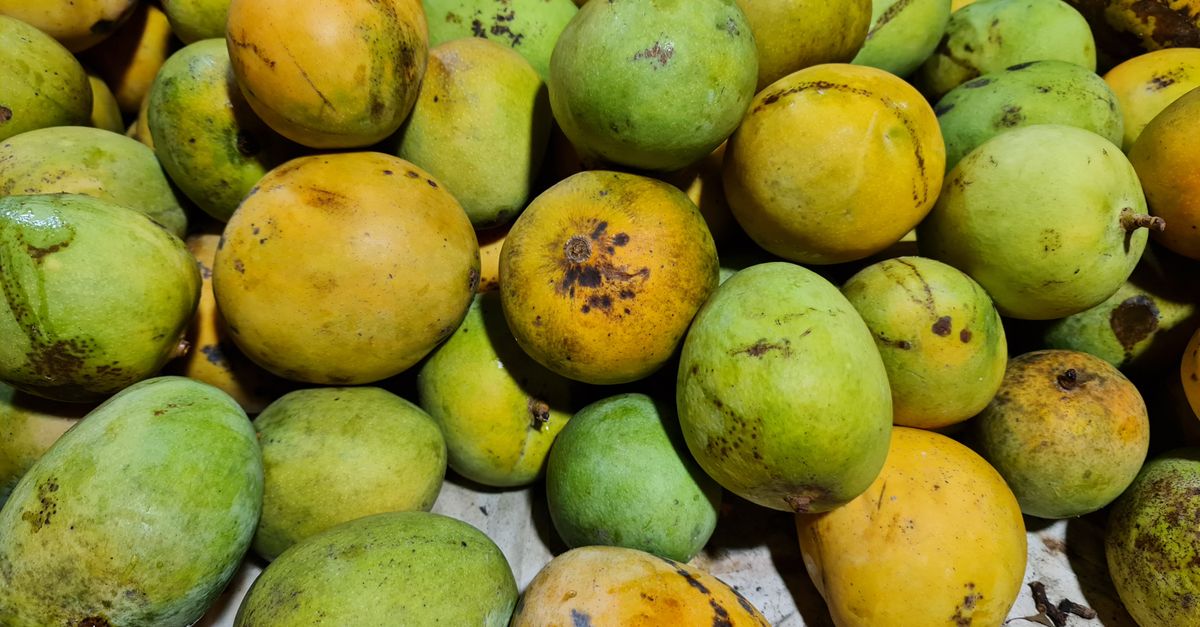
Himsagar (called Khirsapati in Malda) is a mid-to-late season table mango that suits the alluvial districts of West Bengal, where Malda, Murshidabad, Nadia and North 24 Parganas are the main mango districts. It has a Geographical Indication tag, but the tag covers Malda only, and the Himsagar market has been crowded: in 2023 a record Malda crop led to very low prices for Khirsapati and other Malda varieties.
Grafted trees take several years to come into bearing, so planting makes sense where a grower already has Bengal mango experience, a nearby market for fruit, and can protect the flowering crop from hopper, mildew and anthracnose.
Where it grows and the GI
- Districts: Himsagar is grown mainly in Malda, Murshidabad, Nadia and North 24 Parganas in West Bengal. The Malda cultivars Laxman Bhog, Khirsapati (Himsagar) and Fazli were registered as Geographical Indications; Khirsapati (Himsagar) is application no. 112, for the Malda area.
- What the GI means for you: it protects the name for fruit from the Malda area. Himsagar grown elsewhere is a good mango but cannot be sold under the Malda GI name.
- Fruit: medium oval fruit of 250 to 350 g with smooth yellow skin and yellow-orange pulp with little fibre. ICAR describes it as sweet with good keeping quality.
- In the best BCKV nutrient treatment at Gayeshpur (Nadia), fruit had TSS about 19.7°Brix and a room-temperature shelf life of 9 days. Himsagar is a short-keeping fruit, so plan transport and sale within days.
Variety notes
- Himsagar is the standard grafted variety for Bengal. A comparison of West Bengal traditional cultivars found that Champa and Panja Pasand had more TSS, sugar and vitamin C than Himsagar, and Panja Pasand gave higher yield. These are local cultivars with limited planting material, so check supply before relying on them.
- Buy grafts only from a nursery that can show the mother plant; ask the state horticulture department or BCKV which nurseries are registered in your district.
Spacing and orchard layout
- BCKV's nutrient trials used 12-year-old Himsagar trees at 10 x 10 m, which is 100 trees per hectare (40 per acre). That is the figure all the yield data below refers to.
- Dense, shaded canopies encourage hoppers, powdery mildew and anthracnose; the national IPM schedule advises open canopies and pruning overcrowded branches after the rains.
- Pit size and planting season: follow your state horticulture department or KVK schedule for your soil.
Nutrition
| Treatment (per tree per year) | Fruits per tree | Fruit weight | Yield per tree |
|---|---|---|---|
| Control: 1,000 g N, 500 g P, 1,000 g K | 176.71 | not reported | lower than 60.22 kg |
| Best: half the NPK + 50 kg FYM + 5 kg vermicompost + 100 g potash mobiliser | 230.31 | 261.48 g | 60.22 kg |
- This is a two-year BCKV trial (2012-13 and 2013-14) at Gayeshpur. Cutting chemical NPK by half and adding FYM, vermicompost or biofertiliser beat the full chemical dose. The lowest yield (39.27 kg per tree) was the full-dose control plus mulch.
- An earlier BCKV Gayeshpur trial (2009 to 2011) recorded up to 58.56 kg per tree, 234 fruits and 263 g average fruit weight with a similar integrated schedule.
- These are research-orchard results on 12-year-old trees. Get a soil and leaf test and ask your KVK for the dose for your tree age. See fertilizers.
Pests and diseases at flowering
- Hopper: sucks sap from the panicle, drops flowers and fruit, and leaves honeydew that grows sooty mould. The NHM IPM schedule sprays at early panicle formation if hoppers exceed 5 to 10 per panicle, again at full-length panicle, and again at pea-size fruit, and warns to keep chemical sprays need-based and rotate products.
- Powdery mildew and anthracnose: both strike flowers and young fruit in humid, cloudy weather and are worse in crowded canopies. Prune diseased leaves and malformed panicles, and time fungicide sprays to flowering. Follow the label dose and your KVK or state advisory for products.
- Fruit bagging: in a Himsagar trial (2019 and 2020), non-woven green bags gave the heaviest fruit (256 g) and largest volume, with no significant change in sugars or acids. The study did not report cost or spotting, so test on a few trees first.
- See pests.
Harvest and yield
- Himsagar harvest in Bengal is late May to June, after Alphonso.
- Trial yields of 39 to 60 kg per tree on 40 trees per acre equal about 1,600 to 2,400 kg per acre (4 to 6 t/ha). India's average mango yield was reported as 7.3 t/ha, so trial yields on wide spacing are not high, and a typical farm will often do less.
- Mango trees often bear alternate years, so do not budget on the best year every year.
💡 Tip: Keep a record of sale prices from your own mandi for 3 seasons. In a glut year like 2023 growers reported that costs could not be recovered, so plan costs against a low-price year.
Cost and returns
- No verified Himsagar cost-of-cultivation figure or farm-gate price for 2026 was found, so no profit figure is given. Ask the Malda or Murshidabad district horticulture office and your nearest mandi.
- Arithmetic (illustration only; prices are assumptions): 1,600 to 2,400 kg per acre at ₹30 per kg is ₹48,000 to ₹72,000; at ₹60 per kg it is ₹96,000 to ₹1.44 lakh. Subtract your own costs for spraying, labour, picking and transport.
Market and selling
- Fruit is sold to traders and wholesale markets; check with your district horticulture office for the buyers active near you. In 2023, officials reported talks with exporters to send Malda mangoes to the US, but no export contract for Himsagar was confirmed.
- Selling through a group can help with price and transport. See FPO, mandi bhav and export buyers.
- For storage and loans, see cold storage subsidy, KCC and subsidy finder. No current MIDH rate for Himsagar planting was verified; ask the state horticulture department.
Sources
- Indian Horticulture (ICAR), mango varieties with GI in India
- Journal of Horticultural Science 2017, integrated nutrient management on mango cv. Himsagar (BCKV)
- Journal of Horticultural Science, integrated nutrient management on growth and yield of Himsagar (BCKV, Gayeshpur)
- International Journal of Economic Plants, bagging on yield and quality of Himsagar
- The Bioscan, potentiality of traditional mango cultivars of West Bengal
- National Horticulture Mission, IPM schedule for mango pests
- FreshPlaza, bumper yield in Malda leads to lower mango prices (2023)