
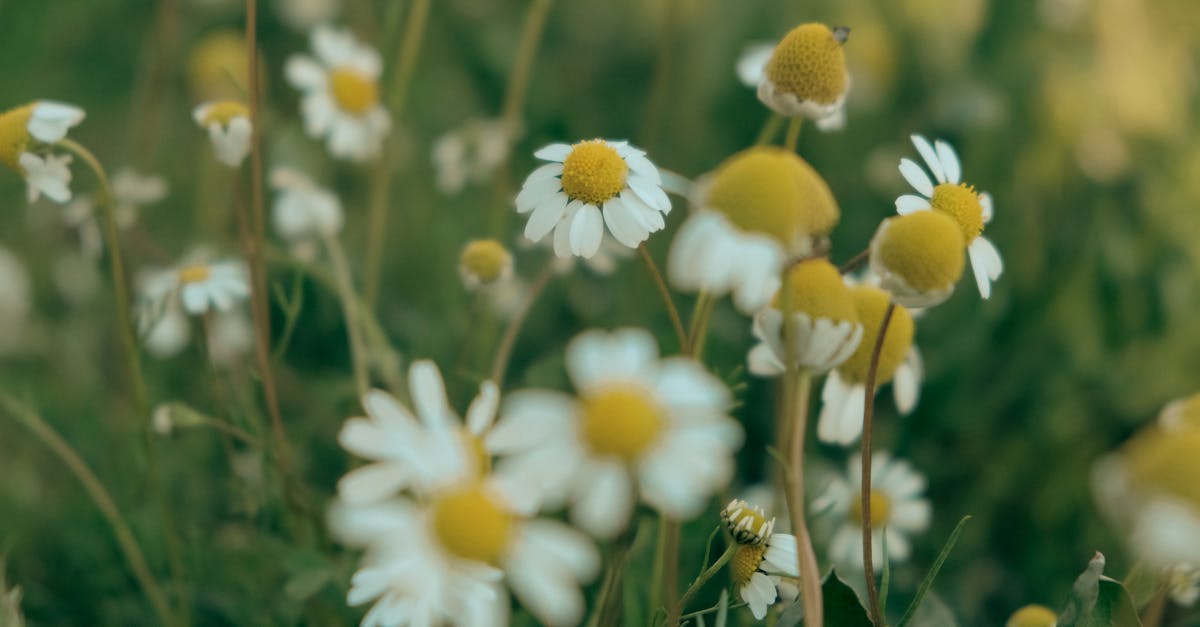
German chamomile (Matricaria chamomilla, also called Matricaria recutita) is a proven winter crop for the north Indian plains and a summer crop for the hills, grown for dried flowers (herbal tea) and for a blue essential oil. CSIR-CIMAP, Lucknow, reports Jammu and Kashmir, Uttar Pradesh and Assam as the main growing centres, and it is worth planting only where you have labour for repeated hand picking and a buyer for the dried flower or access to a distillation unit.
It is a short, low-input crop, but the income is modest unless you have your own labour: CIMAP's own costing shows a net benefit of about ₹95,000 per hectare per year. Dry flower yield is about 7 to 8 quintal per hectare, so the price you secure matters more than any agronomic trick.
Where and when it grows
- Season: sown October to November as a winter crop in the north Indian plains, and March to April in the hills of Jammu and Kashmir, Himachal Pradesh and Uttar Pradesh.
- Temperature: growth is good at about 30 to 32 °C with 40 to 50% humidity; above 38 °C plant growth and flower bud formation suffer. Sow early enough that flowering finishes before the April heat.
- Soil: medium to heavy, well-drained, levelled soil. Avoid very light, sandy soils that hold little water. CIMAP notes the crop tolerates some sodicity, and an Indian Forester paper reported good growth on salt-affected alluvial land in Uttar Pradesh.
- Waterlogging causes crown rot and damping off, so drainage matters more than fertility.
Varieties
| Variety | Released by | Notes |
|---|---|---|
| Vellari | CSIR-CIMAP | Older improved variety, used as the comparison for newer ones |
| Prashant | CSIR-CIMAP | Described by CIMAP as superior to Vellari; plant height about 85 cm |
| CIMAP-Sammohak, CIM-Ujjwala | CSIR-CIMAP | Newer releases; ask CIMAP for current seed availability and yield data |
Buy seed only from CSIR-CIMAP or an agency it names, and ask for the variety and the lot's germination date.
Nursery, planting and spacing
- Raise seedlings on raised beds of 4 x 1 m or 5 x 1 m mixed with FYM or compost, sowing in October to November.
- Transplant 6 to 8 weeks later, around mid-November in the plains, at 50 x 30 cm. That is about 66,000 plants per hectare, or about 27,000 per acre. Direct line sowing is possible but uses more seed.
- Prepare the field with two deep ploughings and level it well so water does not stand.
Nutrition, irrigation and weeds
- Manure: 10 to 15 tonnes of well-rotted FYM per hectare (4 to 6 tonnes per acre), or 5 tonnes of vermicompost, at field preparation.
- Fertiliser (general, per CIMAP): N:P:K at 80:40:40 kg per hectare, which is about 32:16:16 kg per acre, adjusted to soil test. All P and K at transplanting; nitrogen in four equal splits, three before flowering and the fourth after the first picking. Check your soil test and fertilizer guidance.
- Water: irrigate just after transplanting and then only as needed. The crop normally takes 2 to 3 irrigations in its duration.
- Weeds: uncontrolled weeds cut dry flower yield by about 35%. Plan 3 to 4 hand weedings; CIMAP notes oxyfluorfen at 0.6 kg per hectare as one herbicide option. Follow the label and ask your KVK.
Pests and diseases
- Insects: aphids, mealybugs and spider mites. CIMAP suggests natural enemies such as ladybird beetles and neem oil for mealybug.
- Powdery mildew: white powder on leaves; captan, carbendazim or mancozeb at 0.2 to 0.3% are listed. Follow the label and local KVK advice, since flowers are used in tea.
- Damping off and crown rot: both come from excess water; drain the field and avoid heavy nitrogen and over-irrigation.
See pests for identification help.
Picking, drying and oil
- The first picking is 65 to 70 days after transplanting, then every 15 days. Pick only fully opened flowers. The last two pickings are normally left for seed.
- Picking is the main labour cost. Make sure enough pickers are available at each round before planting.
- Fresh flowers hold 70 to 80% water. Spread them in a thin 1 to 2 cm layer in a shed and dry quickly; avoid piling, which causes mould.
- Oil is extracted from dried flowers by steam distillation. CIMAP gives an oil content of about 0.8%, oil yield of 7 to 8 kg and dry flower yield of 7 to 8 quintal per hectare.
- An older Indian Forester trial in Uttar Pradesh recorded about 45 quintal per hectare of fresh flowers.
Cost and returns
- CIMAP costing: cost about ₹75,000 per hectare, income ₹1,70,000, net about ₹95,000 per hectare (about ₹38,000 net per acre). The year of the figures is not stated, so update with current wages.
- Price check: a CSIR-IIIM Jammu price list (undated, uploaded 2017) shows dried chamomile flower at ₹445 per kg. At that rate, 7 to 8 quintal would be ₹3.1 to ₹3.6 lakh per hectare, more than CIMAP's income figure, which implies about ₹225 per kg. The gap shows that price and grade vary greatly; do not budget on the upper figure without a written offer.
- Trade data from Tridge (2024) show import prices of dried chamomile of about US$7 to 9 per kg and export prices of about US$6 to 22 per kg, so quality and packaging decide the price.
- If you distil, 7 to 8 kg of oil per hectare is a small quantity; distillation economics need a shared unit, for example through an FPO or CIMAP's Aroma Mission clusters.
Market and risks
- Buyers are herbal tea makers, Ayurveda and Unani companies, cosmetic firms and exporters. Agree the moisture limit, grade, price and payment date in writing.
- Since India also imports dried chamomile from Germany and Egypt, imported flower sets a ceiling on price for domestic growers.
- Labour for repeated hand picking is the main risk. Start with half an acre.
- For support, ask the district horticulture office and subsidy finder about National Medicinal Plants Board and MIDH assistance. No chamomile-specific rate was verified. Compare also with stevia, another labour-heavy herb crop.
Sources
- Indian Horticulture, Jan-Feb 2021, Chamomile cultivation: Step towards rural prosperity (CSIR-CIMAP authors)
- Indian Forester, Matricaria chamomilla Linn., a remunerative crop for saline-alkali soils
- CSIR-IIIM Jammu, Genetic resource and agrotechnology price list (undated)
- Tridge, dried camomile prices in India (trade data)