
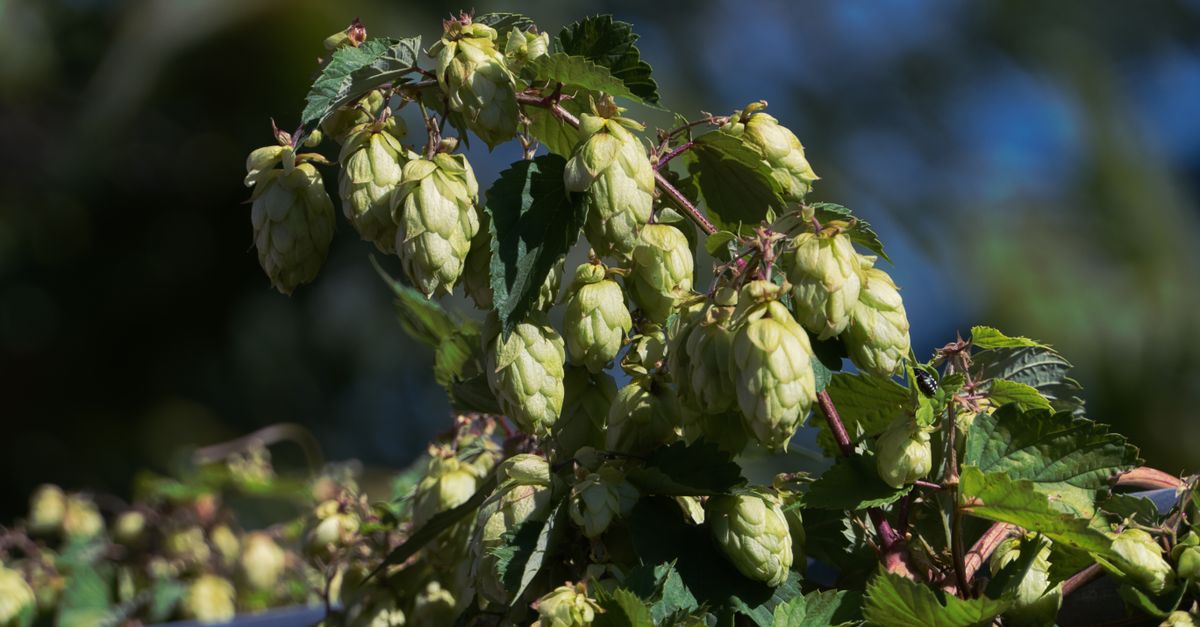
Hops do not work as a normal farm crop in most of India. The only place they have been grown commercially is the cold, high-altitude tribal belt of Himachal Pradesh (Lahaul in Lahaul and Spiti, and Pangi in Chamba), and even there production collapsed when cheap imported hops and pellets took over the breweries. Anywhere else, planting hops means an untested crop, a trellis taller than a house and no assured buyer.
The "world's costliest vegetable" stories about hop shoots are not a business plan: one widely shared 2021 Bihar case carries an editor's note that follow-up checks found no crop in the field. No Indian price list, cost sheet or buyer for hop shoots could be verified.
Where it has grown in India
- Himachal Pradesh: a 1998 Tribune report says hops were grown commercially only in Lahaul (Lahaul and Spiti district) and Pangi (Chamba district). Cultivated area was 215 hectares in 1995, and production fell from 130 tonnes in 1994 to 35 tonnes in 1997.
- Why it declined: the same report blames the cut in import duty from 120% to 40%, which let breweries switch to imported hops, extracts and pellets, and the lack of processing for pellets and extracts in the state. CSIR Jammu was reported to judge Himachal hops as comparable to international quality, so the failure was commercial, not agronomic.
- Climate need: hops need a cold dormant winter. Reports describe 5 to 6 weeks of near-freezing weather, crowns surviving to about minus 25°C under snow or soil cover, sprouting in March, and commercial hop regions north or south of about 35° latitude. Lahaul sits below 35°N but is a high, cold, dry valley. Sites without a real winter chill are unlikely to suit it.
- Soil: deep, well-drained soil, since roots reach more than 4 m deep and 5 m sideways.
Varieties and planting material
- Hop plants are female for brewing; propagation is by rhizomes or cuttings, not seed. A Michigan SARE project used Cascade, the common US craft brewing variety, but no Indian variety trial with named cultivars and alpha-acid results was found.
- Oregon State University lists Crystal, Comet, Lotus and Pahto as varieties less susceptible to powdery mildew. Whether any of these perform in Indian conditions is untested.
- Import of planting material (rhizomes) from abroad needs plant quarantine permission; ask the National Bureau of Plant Genetic Resources and your state horticulture department before ordering anything. The Bihar case above obtained saplings from ICAR-IIVR Varanasi, per press reports.
Trellis, spacing and planting
- A standard commercial hop yard uses a trellis about 18 feet (5.5 m) tall with plants about 3 feet by 14 feet apart, which is 1,000 to 1,200 plants per acre (Michigan State University Extension).
- A Michigan SARE short-trellis trial used 10 foot (3 m) posts with 10 foot rows and 36 inch (0.9 m) plant spacing, reporting posts at $18 each against $45 for the taller option.
- Poles and wires must be set before planting. The trellis is the largest fixed cost; get quotes for poles, anchors and wire before deciding.
Nutrition, irrigation and disease
- Oregon State advises that for well-managed hops, less than 200 lb of nitrogen per acre (about 225 kg per hectare) generally is enough, and that excess nitrogen raises late-season disease. No Indian fertiliser schedule for hops was found.
- Powdery mildew and downy mildew can ruin a crop. Remove overwintering plant material, prune twice in spring, train few shoots per plant, strip lower leaves and manage irrigation to cut humidity. Plant resistant varieties where available. Fungicide choice and dose should follow the label and local plant protection advice.
- Hops grow tall and dense in humid weather, so choose a site with good drainage and airflow, and keep the canopy open.
Harvest and yield
- First-year yields are small. A Michigan trial recorded 8 lb dry in year 1 and 44 lb dry in year 2 from the trial planting, and expects a mature yard to reach about 1 lb dry per plant, around 1,000 lb per acre (about 450 kg per acre, 1,100 kg per hectare), from the third year.
- Cones are picked in late summer, must be dried quickly and then pressed into bales or pelletised. Drying and pelleting equipment is costly for a small farm; the Himachal case shows missing processing was a reason the industry failed.
- No recent Indian cone yield per acre was found. Treat US figures as a ceiling, not a forecast.
💡 Tip: Before spending on poles and wire, ask a brewery or hop processor in writing: what variety, what alpha-acid level, in what form (dried cones or pellets), at what price per kg, and for how many years will they buy?
Cost and returns
- No Indian cost of cultivation or farm-gate price for brewing hops could be verified. Any "profit per acre" figure for Indian hops is therefore unsupported, and none is given here.
- Illustration of the scale (not Indian data): if a mature acre gives about 450 kg of dry cones, then every ₹100 per kg of farm-gate price is ₹45,000 per acre. Compare that with the cost of an 18 foot trellis over the whole acre, drying equipment and 3 years of waiting.
- Hop shoots: a press report quotes ₹85,000 per kg, and another farmer claimed ₹50 to 60 lakh per katha. Neither claim was backed by an identified buyer, and an editor's note on the Outlook story says follow-up inquiries found no crop. Do not plan around these numbers.
Market and risks
- Buyers are breweries. The 1998 report says breweries moved to imported hops, extracts and pellets, so a grower competes on price and consistency with imports; ask current breweries what they now import and buy.
- The 1998 report ties the Himachal decline to the cut in import duty, so changes in duty can again decide whether the crop pays.
- Main risks: no buyer, no processing, monsoon disease, high trellis cost, and sellers of planting material promising returns. Try not to buy rhizomes before a buyer commits.
- For a hill farmer, see also subsidy finder and FPO for group marketing; no hop-specific subsidy rate was verified.
Sources
- The Tribune, hops cultivation in Himachal Pradesh (1998)
- Outlook India, Can this Bihar farmer grow the world's costliest vegetable (2021, with editor's note)
- SARE, short trellis system for Cascade hops in Michigan
- Michigan State University Extension, hop production in Michigan
- Oregon State University Extension, managing powdery mildew in hop
- Krishi Jagran, hop shoots cultivation (secondary source)
- Tractor Junction, hop shoots farming in India (secondary source, price claims unverified)