
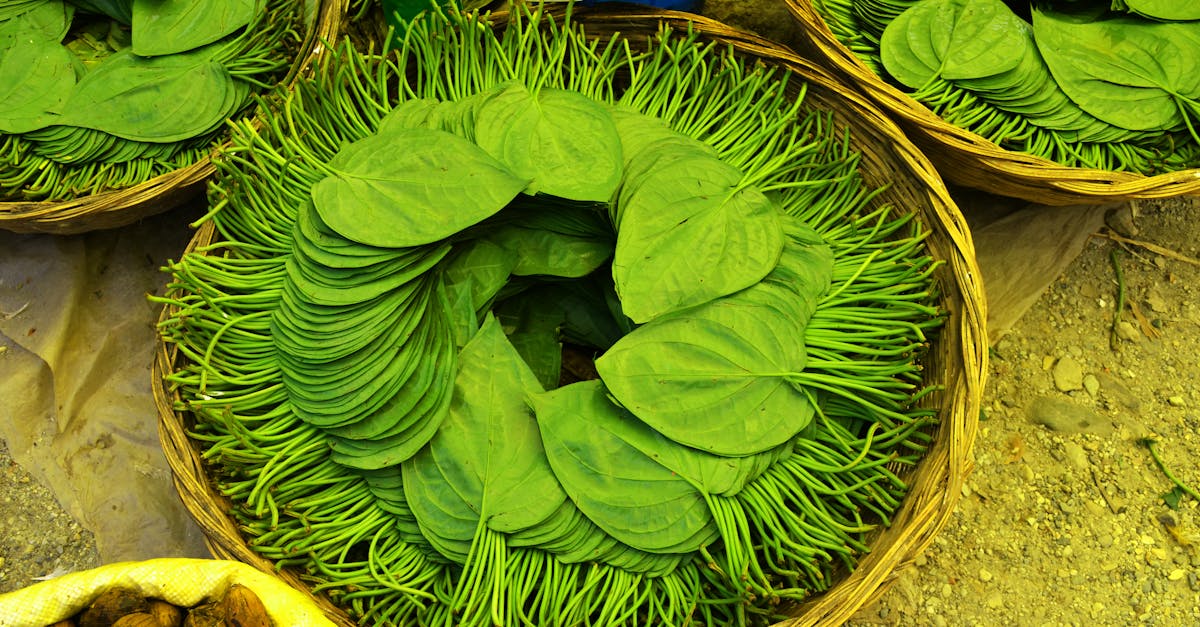
Betel leaf (paan) is a proven, long-established crop in India, grown in West Bengal, Odisha, Bihar, Assam, Andhra Pradesh, Karnataka, Kerala, Gujarat, Madhya Pradesh, Rajasthan and Maharashtra, but only a grower with irrigation water, family labour, a boroj (shade structure) and a trader who buys daily should start. It is a daily-work crop with a loss in the first year, high running cost and a disease that can wipe out the vines.
An ICAR-published paper puts 15 to 20 million people as daily betel leaf users in India, with the crop on about 55,000 ha. The economics below come from a Sundarbans study, so adjust for your own state's labour and prices.
Where it grows and what it needs
- Climate: cool, humid conditions under filtered shade, with regular moisture. Tender leaves are damaged by hot dry wind, frost and heavy rain, which is why the crop is raised inside a roofed and walled boroj.
- Soil: TNAU recommends well drained, fertile clay loam. Saline and alkaline soils are unsuitable. In the Sundarbans study every grower used raised highland to avoid waterlogging, and 100% irrigated, mostly with pump sets from their own ponds.
- Structure: in West Bengal the boroj is made of bamboo, jute sticks and straw or grass. In Tamil Nadu, TNAU describes live supports: Agathi trees about 4 m tall with banana suckers at bed edges. Bamboo standards are the alternative.
Varieties
| Variety | Source | Traits | Suited to |
|---|---|---|---|
| SGM 1 | Listed by TNAU, released 1994 | Dwarf; 65 lakh leaves per ha a year | Tamil Nadu and similar conditions |
| SGM BV 2 | Listed by TNAU, released 2004 | Dark green leaf; 48.81 lakh leaves per ha a year | Tamil Nadu and similar conditions |
| Meetha | Traditional West Bengal cultivar | Used by about 96% of growers in the Sundarbans study | West Bengal |
| Bangla, Desawari, Kapoori, Sanchi | Traditional cultivars | Bangla and Desawari in the north, Kapoori in the peninsular states; choose by local market taste | Check with your buyer |
| DPB-6, Bidhan Pan | Listed by TNAU | Other options | Ask the KVK |
Paan buyers are very particular about leaf type, so plant the cultivar your local market already prefers.
Planting
- Season: November to December and January to February.
- Material: terminal stem cuttings (setts) 30 to 45 cm long from the upper part of healthy vines, with a vigorous bud and nodal roots. TNAU puts the need at about 1,00,000 setts per hectare (about 40,000 per acre).
- Spacing: TNAU: two rows on 180 cm wide beds, 45 cm between plants.
- Irrigation: irrigate immediately after planting and then weekly, as TNAU advises; in the Sundarbans study, growers irrigated by pump set all year.
- Training: guide the vines every 15 to 20 days, and lower the vines in March to April when they reach about 3 m, to renew growth.
Nutrition
| Source | Dose per hectare a year | Per acre |
|---|---|---|
| TNAU | 150 kg N (75 kg as neem cake and 75 kg as urea), 100 kg P2O5, 30 kg K2O, in three splits starting 15 days after vine lifting, then at 40 to 45 day intervals | about 61 kg N, 40 kg P2O5, 12 kg K2O |
| West Bengal trial (HRS Mondouri, cv. Simurali Deshi) | 200 kg N, 100 kg P2O5, 100 kg K2O in three splits four months apart; best leaf size at 50:50 organic and urea nitrogen | about 81 kg N, 40 kg P2O5, 40 kg K2O |
In the trial, leaves were largest with mustard cake nitrogen at a 50:50 mix with urea, and smallest with organic manure alone. Because leaves are chewed fresh, use organic inputs where possible and follow the label and your KVK on any chemical.
Pests and diseases
- Foot rot and leaf rot (Phytophthora): losses of 5 to 90% are reported. TNAU suggests Bordeaux mixture 0.25% as a monthly drench and Streptocycline with Bordeaux mixture at 20-day intervals for bacterial problems. In the West Bengal trial, Bordeaux mixture 1% was sprayed monthly. Good drainage and clean cuttings are the first defence.
- Sucking pests: whitefly, aphids, thrips and others attack the leaf. A report from Kollam, Kerala found tea mosquito bug on 66% of the sampled vines; a neem oil and soap emulsion at 0.2% sprayed every third day for two weeks reduced infestation to 10% and 4% after two and six months.
- Other: TNAU lists scale insects, mites, mealybugs, nematodes, anthracnose and powdery mildew, with wettable sulphur 0.2% for powdery mildew and neem cake 1 t per hectare for nematodes. Because leaves are eaten, check with your KVK before any chemical spray.
Harvest and yield
- Leaves are picked almost daily once the vines are grown; the first year gives little. Leaves are counted in motes of 10,000 in West Bengal.
- TNAU gives 75 to 100 lakh leaves per hectare a year. The Sundarbans farms averaged 29.09 motes (about 2.9 lakh leaves) from 0.05 ha, which is about 58 lakh per hectare.
- Pack with moist cloth, straw or banana leaf in baskets so that leaves do not dry or bruise on the way to market.
Cost and returns
- Sundarbans study (0.05 ha, about 500 m2, one boroj; paper received 2015): annual running cost ₹98,663 (land preparation ₹11,350, fertiliser ₹32,242, packing ₹10,870, repairs ₹9,300, jute sticks ₹7,398, harvesting ₹5,609, transport ₹4,661, pesticide ₹5,449, irrigation ₹2,419) plus ₹7,893 interest. Gross return ₹1,74,561 from 29.09 motes at about ₹6,000 per mote (₹60 per 100 leaves). Net return ₹68,005 a year in a typical year.
- Year one: the study's cash flow shows a net loss of ₹1,42,295 in the year the boroj is built, with later years of ₹40,000 to ₹81,000 net. It assumed an 8 year life, after which the structure needs big spending. Payback 2.81 years, IRR 45%, benefit-cost ratio 1.25.
- Scale-up caution: these figures are for one 0.05 ha unit worked by the family. Multiplying them by 20 for a hectare ignores hired labour, market limits and disease risk, so do not budget that way.
- Prices move sharply with season and festival demand; check the current rate in your nearest paan mandi, and see mandi prices.
Market and risks
- Leaves go through local traders and paan mandis, with many intermediaries; the Sundarbans study lists fluctuating price, many intermediaries, lack of grading and storage, and transport as constraints. A small export trade exists (₹3 to 4 crore a year to countries including Pakistan, Bangladesh, Nepal and the Middle East, per a 2012 reference cited in the Kerala paper).
- Main risks: foot rot after heavy rain, storm damage to the boroj, price crashes and the daily labour.
- See Kisan Credit Card for working capital, subsidy finder for support (some states have boroj or plant-protection schemes; confirm with the horticulture department) and FPO for group sales.
Sources
- TNAU Agritech Portal, Betelvine
- Mandal and Mandal, Financial feasibility and constraints of betel vine cultivation in coastal Sundarbans, West Bengal (Journal of Indian Society of Coastal Agricultural Research)
- Pariari and Imam, Leaf characters of betelvine as influenced by nitrogen application (Indian Journal of Horticulture 69(4), 2012)
- Sivakumar and Yeshwanth, Helopeltis theivora as a pest of betel vine (Indian Journal of Agricultural Sciences 90(2), 2020)