
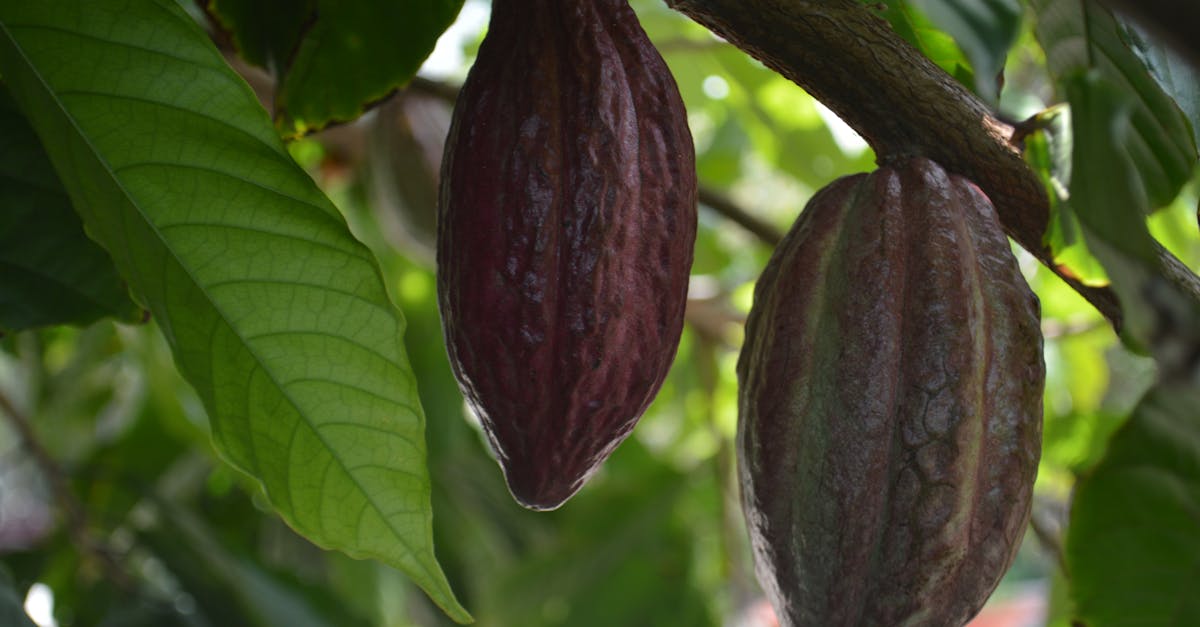
Cocoa works in India as an intercrop under coconut, arecanut or oil palm in the south, where the existing canopy gives the 40 to 50 percent shade the crop wants. It is not a field crop, and it is not a quick one: the first pods come around the fifth year, and the income depends on a buyer who will take your beans at a price you can verify.
India's cocoa production is small, around 33 thousand tonnes in 2024-25 by one compilation, with Andhra Pradesh the largest producer (about 40 percent) and Kerala next (about 36 percent), followed by Karnataka and Tamil Nadu. World prices rose sharply in 2024, but a larger domestic crop has been met with a lukewarm response from some procurers, so check a written buy-back before planting.
Where it grows in India
- States: Andhra Pradesh (about 43,900 ha and 12,400 tonnes in 2024 by one dataset), Kerala, Karnataka and Tamil Nadu. The crop was first promoted in Wayanad in 1964, and trade reports say over 1 lakh farmers have taken it up.
- Climate (TNAU): up to 1,200 m altitude, rainfall 1,000 to 2,000 mm, about 80 percent humidity, temperatures between 15°C and 35°C.
- Soil: red laterite soils preferred; pH 6.5 to 7.0 is best, and the crop tolerates 4.5 to 8.0.
- Shade: about 50 percent shade for seedlings and 40 percent later. Coconut and arecanut gardens already give this.
Types and varieties
- TNAU lists the three cocoa types as Criollo, Forastero and Trinitario, and says Forastero performs best in India.
- CPCRI Kasaragod has released improved selections and hybrids with the codes VTLCC-1, VTLCS-1, VTLCS-2 and VTLCH-1 to VTLCH-4. Ask CPCRI or your state horticulture department for the current traits and plant availability, since no yield figure for each was verified.
- Buy grafted or seedling plants only from CPCRI, a state agricultural university, a state nursery or a company nursery tied to a buyer. A 2016 report said Mondelez ran 11 nurseries supplying saplings to about 5,000 farmers.
Spacing and planting
- Under coconut: about 500 plants per hectare (about 200 per acre).
- Under arecanut: 2.7 x 2.7 m, about 686 plants per hectare (about 278 per acre).
- Under oil palm: 4.5 x 4.5 m, about 400 plants per hectare (about 162 per acre).
- As a sole crop, TNAU gives 7.5 x 7.5 m. Intercrop spacing must fit the line spacing of your existing garden, so confirm it with CPCRI or your KVK before marking pits.
Nutrition and irrigation
TNAU gives these doses per plant per year, split into two parts:
| Plant age | Urea (g) | Rock phosphate (g) | Muriate of potash (g) | Water (litres per plant per day) |
|---|---|---|---|---|
| Year 1 | 72 | 65 | 77 | 3 to 5 |
| Year 2 | 144 | 130 | 154 | 10 |
| Year 3 onward | 220 | 200 | 230 | 20 to 25 |
- At year 3 onward and 500 plants per hectare, this is about 110 kg urea, 100 kg rock phosphate and 115 kg muriate of potash per hectare a year (about 44, 40 and 46 kg per acre). Add organic manure and adjust to a soil test; see fertilizers.
- TNAU's water figures are per plant per day as in the table; ask CPCRI or your KVK how to schedule them across the dry months. See drip irrigation.
Pests and diseases
- TNAU lists mealybugs, tea mosquito bug, flatid plant hoppers, aphids, hairy caterpillars, stem girdlers, rats and squirrels as the main pests.
- Main diseases: seedling blight, black pod rot, stem canker, vascular streak dieback and cherelle wilt.
- For any spray, follow the label and the recommendation of CPCRI, KAU or your KVK; see pests.
Harvest and yield
- Pods start from the fifth year (TNAU). A pod takes 140 to 160 days to mature, and harvesting is done every 10 to 15 days.
- TNAU quotes 50 to 70 pods per tree a year, and 10 to 12 pods give 1 kg of wet beans, which is about 4 to 7 kg of wet beans per tree.
- Wet beans are fermented and sun-dried before sale, and the dry weight is much lower than the wet weight. No verified Indian dry-bean figure per tree was found, so ask your buyer for the wet-to-dry conversion and the fermentation standard they pay for.
Cost and returns
- Price evidence is thin. Agmarknet showed ₹11,800 to ₹12,000 per quintal (about ₹118 to ₹120 per kg) at Thodupuzha, Kerala, in August 2026, from a single market and without a stated bean grade, so do not treat it as the dry-bean price. International prices peaked near US$13,000 per tonne in late 2024 and cooled to about US$7,000 by September 2025.
- Arithmetic template: trees per acre x kg per tree x price per kg. For example, 200 trees under coconut at 4 kg of wet beans per tree is 800 kg of wet beans; convert to the form your buyer pays for, multiply by the price they confirm and subtract labour for harvest, pod breaking, fermentation and drying.
- Yield, price and cost per acre were not available from a verified Indian source, so no profit figure is given here. Because a coconut or arecanut garden is already paying for land and irrigation, extra cocoa income mainly has to cover plants, fertiliser, harvest labour and processing.
Market and risks
- Chocolate makers buy domestic beans, but Mondelez was reported in 2016 to source only a third of its India needs locally. Campco, the arecanut and cocoa cooperative, has procured cocoa for its chocolate unit at Puttur, Karnataka, and set up a procurement centre in West Godavari, Andhra Pradesh (2014 report).
- More recent reports describe a lukewarm response from major procurers to a high domestic crop, which leaves farmers exposed to price falls. Get current terms from the buyer.
- No MIDH or state subsidy rate for cocoa was verified; check subsidy finder and your horticulture department, and see FPO for group selling.