
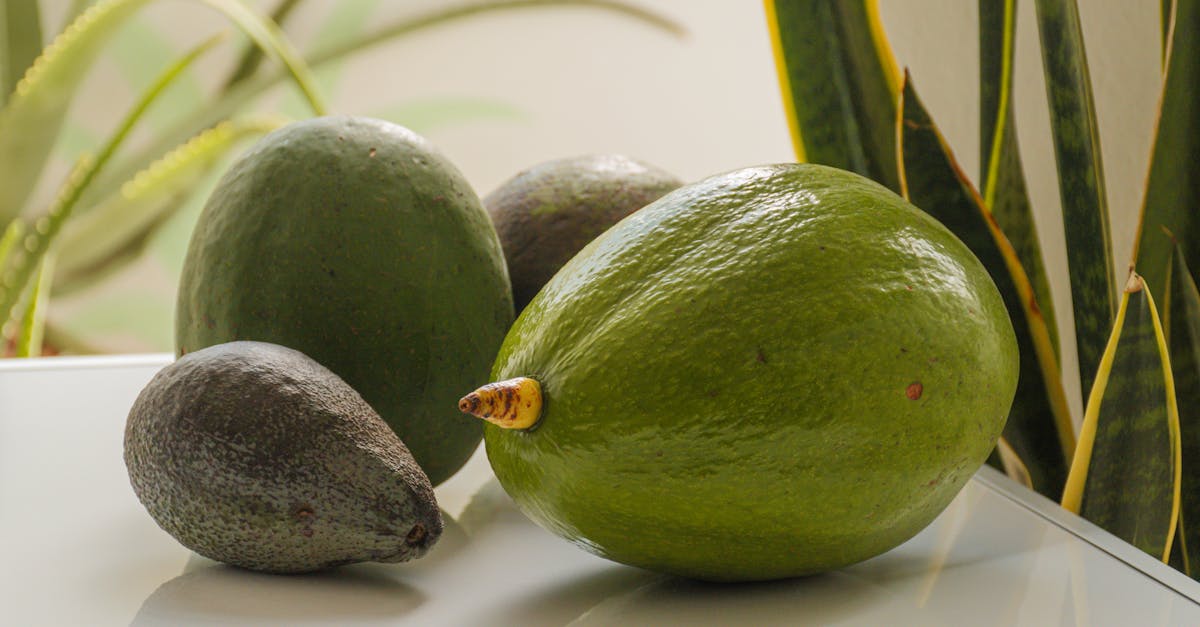
Avocado is a genuine but slow, risky orchard crop for India: it suits the cool, humid, well-drained hills of Kodagu (Coorg) and Chikkamagaluru in Karnataka, the Nilgiris, Kerala, and parts of Maharashtra and the North-East, and it does not suit black soil, waterlogged land or hot dry plains. ICAR reports commercial yields starting about eight years after planting, so this is a long-term investment, not a quick cash crop.
India has about 1,400 ha under avocado (trade estimate) and imports far more than it grows: trade sources put imports near 19,000 tonnes in 2025, against about 9,000 tonnes the year before. That gap is real, but the imported fruit is mostly Hass, which Indian orchards do not yet produce at scale.
Where it grows in India
- States: Tamil Nadu, Kerala, Karnataka, Maharashtra and North-Eastern hill regions (Sikkim, Arunachal Pradesh are also named by trade sources). It was long a backyard tree; commercial planting has grown over the last decade.
- Climate: ICAR gives 20 to 35 degrees C and 1,000 to 1,500 mm annual rainfall, tropical to warm temperate.
- Soil: any well-drained soil except black soil, pH 5.5 to 6.5. Waterlogging is the main killer of avocado trees.
- Kodagu: avocado is grown as a mixed crop in coffee estates, which gives the shade and drainage it likes.
Varieties
| Variety | Source | Traits | Suited to |
|---|---|---|---|
| Arka Supreme | ICAR-IIHR CHES, Chettalli (Kodagu), 2020 | A-type flowering; fruit 400 to 450 g; fat 18 to 20%; purple when ripe; yield potential 80 to 120 kg per plant | Karnataka, Kerala, Tamil Nadu |
| Arka Coorg Ravi | ICAR-IIHR CHES, Chettalli, 2022 | B-type flowering; fruit 450 to 600 g; pulp recovery above 80%; fat 12 to 14%; yield potential 80 to 100 kg per plant | Karnataka, Kerala, Tamil Nadu; planted as the pollinizer for A-type |
| TKD-1 | Tamil Nadu (named in the ICAR article as the one other commercial variety) | Details not verified | Nilgiris area; ask the Horticulture Department or TNAU |
| Hass, Reed (A-type); Shepard (B-type) | Imported types | Hass is the retail-standard type with about 18% oil, but Indian trial data on it is limited | Grow only from a nursery that can show the plant's source |
- Avocado flowers open twice, first as female then as male, and A-type and B-type trees open at different times of day. Planting both types close together improves fruit set. Fruit set is very low even so (reported at 0.001 to 0.23% of flowers), which is why the crop is called a shy bearer.
- ICAR testing of Arka Supreme and Arka Coorg Ravi is continuing at 16 centres under the All India Coordinated Research Project on Fruits, so performance outside Karnataka, Kerala and Tamil Nadu is not yet established.
Planting material and spacing
- Propagation: softwood grafting (over 90% success in sub-humid tropics), chip budding or patch budding. Seedlings are slow and variable.
- Pits: 1 m x 1 m x 1 m, dug in April to May and filled with FYM and topsoil in equal parts. Plant in June to July or in September depending on rainfall.
- Spacing: grafts at 6 m x 6 m (about 110 plants per acre, 270 per hectare). Seedlings at 8 m x 8 m (60 per acre) or 10 m x 10 m (40 per acre).
- Training: top the main stem at 75 to 100 cm and keep 3 to 4 primary branches. Prune lightly each year after harvest; heavy pruning pushes leaf growth and cuts yield.
Nutrition and irrigation
- Mature trees (6 years and older): 50 kg FYM plus 400 g N, 200 g P2O5 and 500 g K2O per plant, equal to about 700 g urea, 450 g DAP and 850 g MOP. That is roughly 44 kg N, 22 kg P2O5 and 55 kg K2O per acre at 110 trees (110, 55 and 136 kg per hectare at 270 trees). Split in two: May to June and October to November. In November, 250 g magnesium sulphate (or 1 kg dolomite) and 100 g borax per plant.
- Doses for trees under 6 years are not given in the ICAR article; ask your KVK or the IIHR station at Chettalli.
- Water: in India avocado is mostly rainfed; watering every two weeks in summer helps. Never let water stand. A young orchard can be intercropped with legumes or shallow annuals to hold moisture. See drip irrigation for dry-season supply.
Pests and diseases
- Phytophthora root rot is the worst avocado disease worldwide. Symptoms are small pale or yellowing leaves, wilting, thinning canopy and black dead fine roots.
- Management, from University of California guidance: plant on well-drained ground or on raised berms, use clonal rootstocks tolerant to the disease (these are not yet available in India through a verified source), keep a thick organic mulch, and use phosphonate (phosphite) as the label and your local KVK allow.
- No Indian-validated spray schedule for avocado pests was found; consult the Horticulture Department or KVK Kodagu before spraying.
Harvest and yield
- Flowering is reported from September to November or February to March in the Chettalli article, and December to February in another ICAR note. Fruit matures in 6 to 8 months (Mexican race) up to 9 to 12 months (Guatemalan race) after flowering.
- Avocado ripens only after picking. Harvest when the inner seed coat turns from yellowish white to dark brown; ripe fruit follows in 6 to 10 days.
- Yield: ICAR says commercial yields begin about 8 years after planting and average 80 to 120 kg per plant per year for the two Arka varieties. Trade articles quote 150 to 200 kg per tree and fruiting in 3 to 4 years for imported clones; these are not backed by published Indian trials, so do not budget on them.
Cost and returns
- Price: on 3 October 2026 the only mandi reporting avocado on Agmarknet data, Gaddiannaram in Hyderabad, showed ₹15,000 per quintal (₹150 per kg), within a ₹15,000 to ₹17,500 range over the past month. This is one market, not a national benchmark. Trade sources put Bengaluru wholesale at ₹180 to ₹250 per kg, but a KVK Kodagu note says growers there earlier received only ₹20 to ₹30 per kg when buyers were scarce.
- Arithmetic (potential, at maturity): 110 trees x 80 kg = 8,800 kg per acre. At a farm-gate price of ₹60 to ₹150 per kg that is about ₹5.3 lakh to ₹13.2 lakh gross per acre per year, reached only after about 8 years. At half that yield the range is ₹2.6 to ₹6.6 lakh. No verified Indian orchard cost figure was found, so costs are not shown; get quotes for grafts, pits, fencing and labour locally.
- Before year 8 there is little or no income, so intercrops (coffee, pepper or legumes, depending on altitude) matter for cash flow.
💡 Tip: Visit an existing bearing orchard of the same variety in your district before buying plants, and ask what price it actually received last season.
Market and risks
- Buyers are hotels and cafes, supermarkets, online grocers and wholesale fruit markets in metros. Indian-type fruit has about 12% oil, firmer flesh and a shorter shelf life than imported Hass, which affects price.
- Marketing channels in avocado districts are thin, and farm-gate price can be a fraction of retail. Agree a buyer before the first fruiting year.
- Be careful of nurseries selling untested plants of imported varieties with promises of bearing in 3 to 4 years and returns of lakhs per acre. Ask for the source of the mother plant and the grafting date.
- MIDH can support nurseries and drip-irrigated orchards; the exact rate for avocado was not verified, so ask your District Horticulture Officer or use the subsidy finder. For crop loans see KCC. A related fruit guide is avocado.
Sources
- ICAR, Indian Horticulture (Mar-Apr 2025), Enhancing avocado farming: Arka Coorg Ravi and Arka Supreme
- ICAR, Indian Horticulture (2024), Floral phenology and maturity indices in avocado
- University of California IPM, Phytophthora root rot in avocado (disease management background)
- FreshPlaza, India could become a significant producer of avocados within the next decade (trade press)
- ACROP, avocado mandi price (Agmarknet data)