
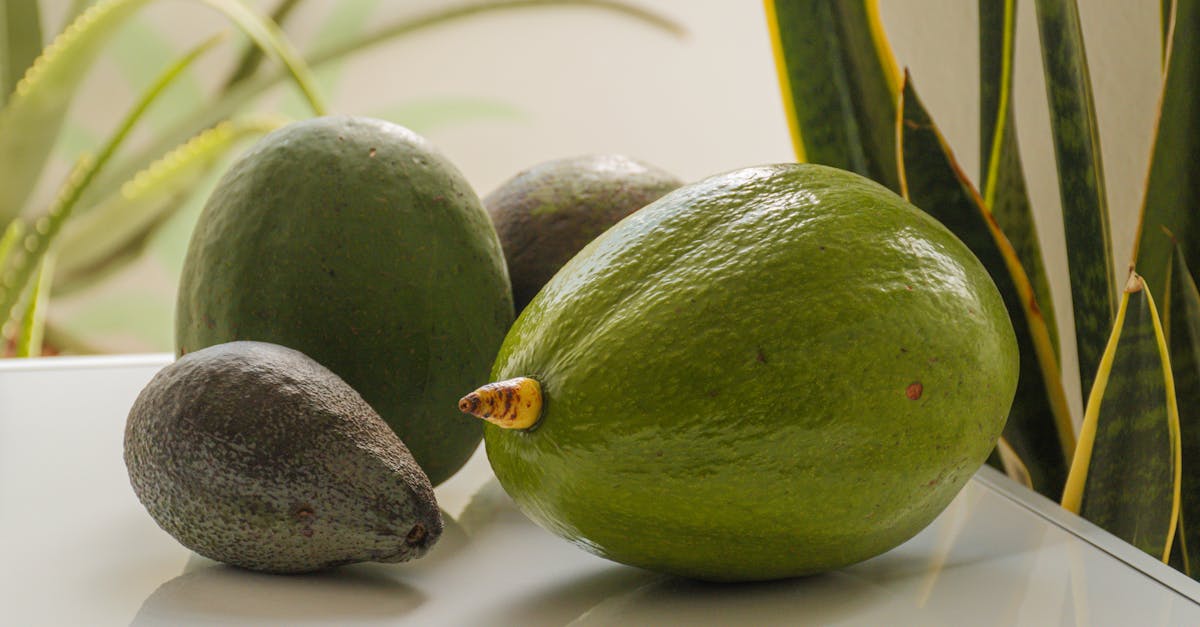
Avocado works in India in the mid-altitude hills of the south and north-east, such as Kodagu (Coorg) in Karnataka, the Nilgiris and Kodaikanal hills in Tamil Nadu, Wayanad and Idukki in Kerala, and Sikkim. It does poorly in hot plains with waterlogged soil. It needs well-drained soil, patience for about 4 to 5 years before the first crop, and strict control of root rot. India has only about 1,400 hectares under avocado, so market and quality information is thin compared with mango or banana.
Most older Indian trees are seedlings, which vary widely in fruit quality and yield. The practical modern route is a grafted plant of a known variety, from a nursery that can name its mother trees and certify the rootstock.
Where it grows in India
Reported areas are Kerala, Tamil Nadu, Karnataka, Maharashtra, Sikkim and Arunachal Pradesh. ICAR-IIHR runs its avocado research at the Central Horticultural Experiment Station, Chettalli, Kodagu. Fuerte is grown in mid-altitude Sikkim with fruit of 200 to 400 g. Avoid frost pockets, strong wind-exposed ridges and soils that hold water after rain. Avocado roots need air; even a few days of standing water can kill a tree.
Varieties
| Variety | Source | Traits |
|---|---|---|
| Arka Supreme | ICAR-IIHR, released 2020 | Flower type A; fruit 400 to 450 g; fat 18 to 20% |
| Arka Coorg Ravi | ICAR-IIHR, released 2022 | Flower type B; fruit 450 to 600 g; high pulp recovery |
| Fuerte | Introduced; grown in Sikkim | Fruit 200 to 400 g; suits mid-altitude hills |
| Hass and its relatives | Introduced; limited Indian planting | Over 18% oil, buttery, long shelf life; Indian-bred types are about 12% oil with firmer flesh |
Avocado flowers are type A or type B, opening at different times of day, and cross-pollination improves fruit set. That is why a pair such as Arka Supreme (A) with Arka Coorg Ravi (B) makes sense in one orchard. Ask your nursery for the ratio they recommend.
Planting material and spacing
Standard spacing is 6 to 8 m square, wider for spreading types. At 8 m x 8 m you plant about 63 trees per acre (156 per hectare); at 6 m x 6 m, about 112 per acre (278 per hectare). High-density planting at 5 m x 5 m (400 per hectare, about 160 per acre) is used in some places but needs pruning to keep the canopy open. Dig 1 m x 1 m x 1 m pits in April to May and fill them with topsoil and farmyard manure in equal parts. Plant at the start of the monsoon on a slightly raised mound so water drains away from the trunk.
Nutrition and irrigation
A general package for mature trees is 50 kg FYM plus about 400 g N, 200 g P and 500 g K per tree per year. In the humid south (Coorg and similar tracts) the fertiliser is split into two doses, in May to June and in September to October. Young trees need a fraction of this, increasing yearly; ask your KVK for an age-wise schedule based on a soil test. Irrigate young trees in the dry months and use drip irrigation, keeping water close to but not against the trunk. Mulch to protect the shallow roots, and never let water stand.
Pests and diseases
- Phytophthora root rot (Phytophthora cinnamomi) is the most serious disease. Symptoms are yellowing, wilting and dieback. Prevent it with good drainage, raised planting and disease-free plants. The package recommends metalaxyl (about 1 g active ingredient per 10 kg of soil before planting, and a drench at 1 g per 10 litres). Follow the label and your KVK's current advice.
- Fruit borers, mites and leaf-feeding insects occur; scout regularly. See the pests page for identification help.
- Limited resistant rootstocks are available in India, which is one of the sector's stated constraints.
Harvest and yield
Grafted trees bear from about the 4th to 5th year, and avocado fruit does not ripen on the tree. Harvest when mature (the fruit is still hard) and let it soften off the tree for several days. In ICAR-IIHR trials at Chettalli, Arka Supreme and Arka Coorg Ravi were reported to give 80 to 100 kg per tree after eight years of planting. Higher figures of 150 to 200 kg per tree appear in news reports about mature trees, but they could not be traced to a trial record, so use 80 to 100 kg for planning. Yield on your farm will vary with altitude, drainage and management.
Cost and returns, with arithmetic
No verified Indian cost-of-cultivation or farm-gate price record for avocado was found, so the figures below are an illustration with stated assumptions, not a quote. At 8 m x 8 m (63 trees per acre) and 80 to 100 kg per tree in year 8, an acre yields about 5,000 to 6,300 kg. If you receive ₹60 per kg at the farm gate, gross is about ₹3 lakh per acre; at ₹120 per kg it is about ₹7.5 lakh. Early years carry cost with no income, and drip, fencing, labour and plant cost must be met for 4 to 5 years. Always check mandi prices and nearby buyer rates before committing.
Market and selling
- Consumption in India was reported at about 10,000 tonnes in 2024, with a projection of 40,000 tonnes by 2026-27 in the same FreshPlaza report. Treat the projection as an estimate.
- Imported Hass, mainly from Tanzania in its season, sets the premium end of the market. Indian types with lower oil and shorter shelf life compete mainly on freshness and price.
- Buyers are supermarkets, hotels, juice and salad outlets and exporters. A farmer-producer group can reach them better than a single grower; see FPO.
- Be wary of nurseries that promise buy-back or "₹10 lakh per acre" income. Ask for the variety certificate and a written agreement.
Subsidy
Avocado nurseries, drip-irrigated orchards and cold chain are supported under MIDH. Rates differ by state, so check the subsidy finder and your district horticulture office. No verified per-hectare rate for avocado is available, so none is stated. For crop loans see KCC.