
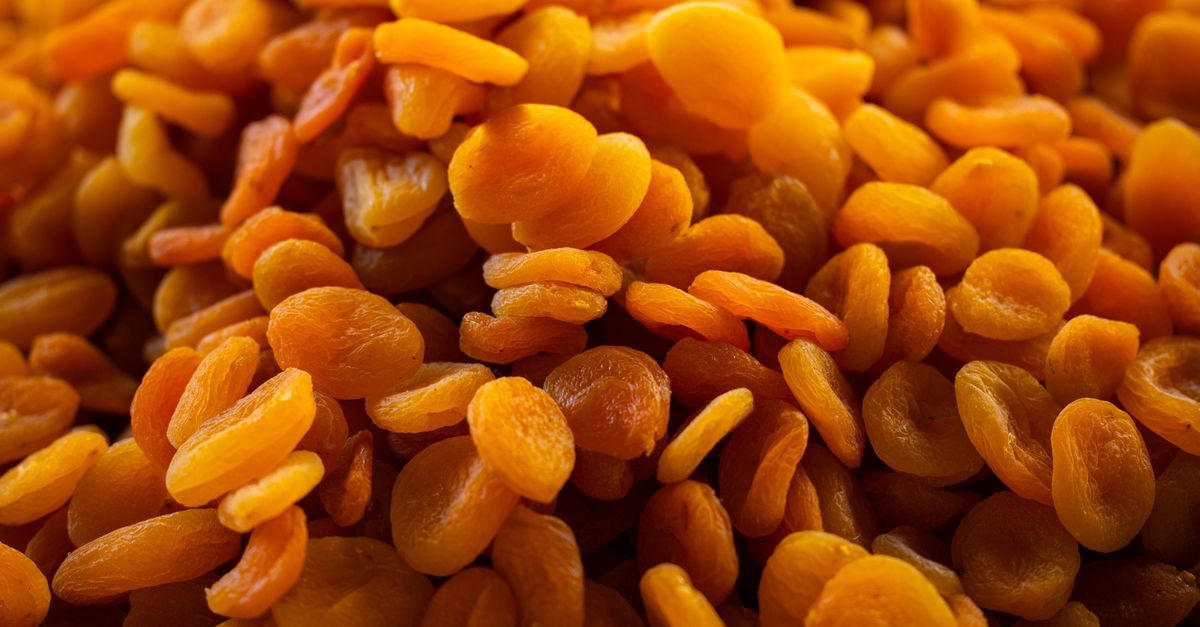
Apricot works in India only in the cold, dry hills of Ladakh, Jammu and Kashmir, Himachal Pradesh and Uttarakhand, with a little in the north-eastern hills. Ladakh alone grows about 62% of the country's crop on roughly 2,300 ha. Trees need winter chill, tolerate dry mountain valleys, and bloom so early that spring frost is the main risk; the crop is sold fresh in a short season or dried.
Published Indian trial data on orchard yield and economics is limited. The figures here come from Ladakh and Himachal research papers, government and press releases on Ladakh production, and one secondary farming guide whose yield and fertiliser figures should be checked against a nearby orchard.
Where it grows in India
- Ladakh: a Press Information Bureau release (September 2022) puts Ladakh at 2,303 ha and 15,789 t, about 62% of India's apricot, with about 1,999 t of dried apricot. Main areas are Kargil, Leh and Nubra Valley, and a 2026 press report counts more than 6,000 farming families.
- Other states: mainly Jammu and Kashmir, Himachal Pradesh (for example Kinnaur and Shimla districts) and Uttarakhand, and to a limited extent the north-eastern hills.
- Altitude and climate: a DIHAR (DRDO) orchard at 3,340 m near Leh has under 200 mm annual precipitation, mostly snow, with trees bud-breaking in late February to March. The secondary guide says white-fleshed types go up to about 3,000 m and yellow-fleshed types suit 1,000 to 1,500 m.
- Soil: deep, well-drained loam with organic matter; the guide gives pH 6.0 to 6.8. The Leh orchard soil is silty loam with pH 6.8.
- Frost: in the Leh study blossoming ran from March into April, and late blossoming was identified as the useful trait for avoiding spring frost damage.
Varieties
| Variety | Source | Traits | Suited to |
|---|---|---|---|
| Raktsey Karpo | Ladakh native; GI tag December 2022 | White stone, high TSS, late and extended flowering and ripening | Ladakh (Leh, Kargil) |
| Nyarmo (Narmu) and Khante | Ladakh local groups | Nyarmo has sweet kernels; Khante has bitter kernels | Ladakh |
| Halman, Tokpopa, Safeda, Charmagz, Afghani | Ladakh native and introduced types in the DIHAR trial | Fruit mostly under 35 g, TSS 16.1 to 20.6%; harvest from late June to August | Cold-desert Ladakh |
| Kaisha, Charmagaz, Suffaida, New Castle, St. Ambroise, Early Shipley, Nugget | Grown and studied in Himachal Pradesh (Nauni) | Mostly European-origin types; flowering from late March to early April | Himachal mid and high hills, dry temperate zone |
- Match variety to the chilling and frost pattern of your village. Late-blooming types reduce frost loss. Ask the state horticulture department or SKUAST, CITH Srinagar or Nauni for graft sources.
- In the Leh trial the earliest type was ready on 28 June and the latest on 10 August, a spread of about 31 to 39 days; staggered varieties help because fresh fruit does not keep long.
Planting material and spacing
- The DIHAR Leh trees were grafted on Chuli, the wild local apricot rootstock, planted at 4 m x 4 m (about 250 trees per acre, 625 per hectare) and trained to a modified central leader.
- The secondary guide recommends 6 m x 6 m, which works out to about 112 trees per acre (277 per hectare). The guide's own tree count per acre should not be used.
- Plant dormant, healthy grafted trees from a recognised nursery.
Nutrition and irrigation
- The secondary guide gives, for trees of 7 years and older, 40 to 45 kg farmyard manure with 500 g N, 250 g P2O5 and 200 g K2O per tree a year. Younger trees get less. Use a soil test and ask your KVK, as no ICAR schedule for Ladakh was found.
- Irrigation matters most in fruit development; the guide advises watering every 8 to 10 days in hot, dry May and June. Rainfall in the Leh area is under 200 mm a year, so orchards depend on irrigation water. Drip with a storage tank helps; see drip irrigation.
Pests and diseases
- The secondary guide lists Armillaria root rot, blossom brown rot, plum pox virus and peach twig borer. Ask your KVK which are present locally and for the current spray plan; follow the label.
- Frost at bloom is usually a bigger loss than pests in the cold desert.
Harvest and yield
- Season: Leh trial fruit was harvested from late June to August; the secondary guide gives the first week of May to the end of June for types grown at lower elevations. Fruit takes about 85 to 108 days from blossom to harvest in the Leh trial.
- Fruit size: Ladakh types are small, mostly under 35 g, with high sugar (16.1 to 20.6% TSS).
- Yield: the secondary guide gives 50 to 85 kg per tree, or 15 to 25 t per hectare (about 6 to 10 t per acre), for mature trees. No orchard yield data for Ladakh was found, so expect lower and more variable crops where frost and small-fruited local types apply.
💡 Tip: Before planting, check how many frost-free bloom years your site has had in the last ten, and sell the first crop through a local trader or a drying and packing group to learn the price.
Cost and returns
- No verified farm-gate price for fresh or dried apricot was found, and none for an orchard cost of cultivation. Collect current quotes from buyers and mandi.
- Formula (per acre): 112 trees x 50 kg = 5,600 kg fresh fruit, so each ₹10 per kg is worth ₹56,000. At 85 kg per tree, 9,520 kg gives ₹95,200 per ₹10. At a poor frost year of 20 kg per tree, ₹10 per kg gives only ₹22,400.
- Costs to budget: grafted trees, pits, irrigation channel or drip, labour for pruning and picking, crates and drying set-up. See mandi bhav for listed prices.
Market and risks
- Ladakh's fresh export is new: 35 t went out in 2022, and a July 2026 report says an MoU with a UAE retailer targets at least 1,000 t this season, with the first 5 t shipped in July 2026. Treat export targets as plans, not guaranteed demand.
- Fresh apricot is perishable, and roads and flights from remote valleys add cost. Drying, which accounts for about 1,999 t in Ladakh, gives a product that stores and travels. Cold storage helps; see cold storage subsidy and export buyers.
- Spring frost at bloom and water shortage in dry years are the main risks. Crop insurance may be available through PMFBY only where the state notifies the crop.
- Group marketing through an FPO and the subsidy finder for horticulture schemes are worth checking. No apricot-specific subsidy rate was verified. Related hill fruits: peach, plum.
Sources
- PIB (Ministry of Commerce and Industry), Ladakh apricot export, September 2022 (as reproduced by TaxTMI)
- Business Today, Ladakh apricots set for UAE exports (15 July 2026)
- Korekar G. et al., Multivariate analysis of phenological, pomological and fruit quality characters in apricot grown in trans-Himalayan Ladakh, Indian Journal of Agricultural Sciences 83(2), 2013 (DIHAR, DRDO)
- Apricot germplasm studies from Himachal Pradesh, Indian Journal of Agricultural Sciences (UHF Nauni)
- Agri Farming, apricot farming guide (secondary source)