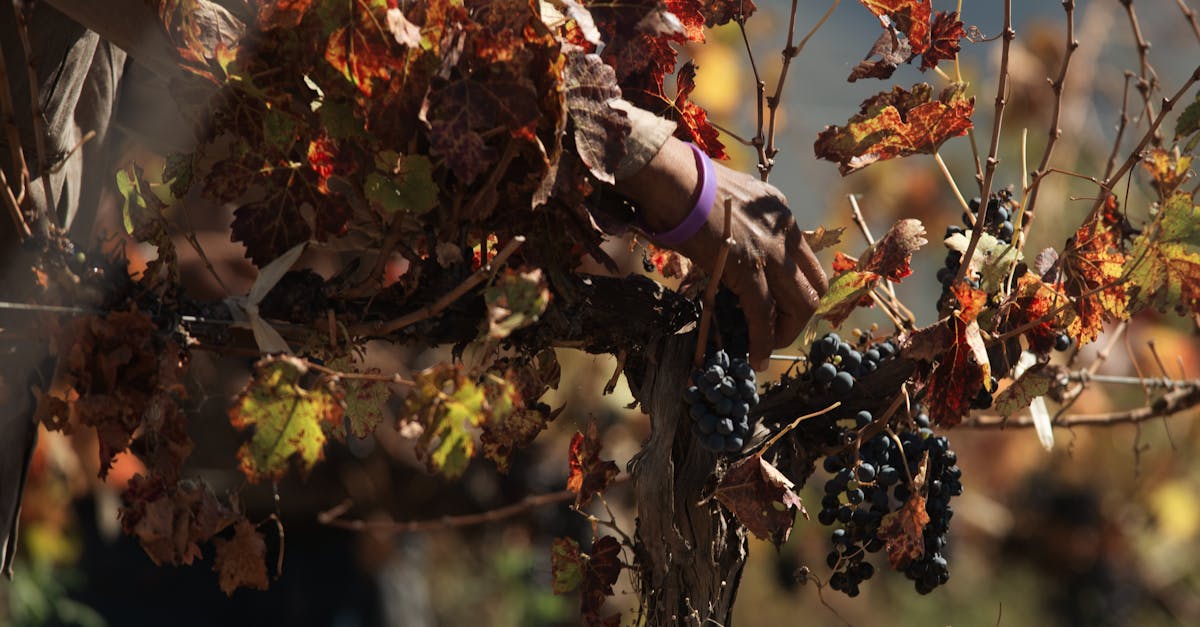
Wine grapes work in India as a contract crop in the hot-tropical belt of Maharashtra (Nashik, Sangli, Solapur, Pune, Satara) and northern and southern Karnataka (Bijapur, Bangalore region), and they make sense only if a licensed winery has agreed in writing to buy your fruit. The vineyard is expensive to set up, takes at least two years to give a crop, and winemakers pay for quality, not tonnage, so a high-yielding vineyard can be a rejected one.
Published Indian data on wine grapes is thin and mostly old. This guide uses an ICAR-NRC Grapes (Pune) overview, a 2009 farm-level survey from Bijapur, a winemaker's field remarks and a 2024 ICAR paper on grape rootstocks. Where a figure is from 2007 to 2009, it is dated as such; confirm today's prices and tonnage caps with the winery.
Where it grows in India
- Maharashtra: the hot tropical region (Nashik, Sangli, Solapur, Pune, Satara, Latur, Osmanabad) lies between 15 and 20 degrees north and holds about 70% of India's grape area (ICAR-NRC Grapes). Nashik is the main wine centre. An estimate quoted in the 2009 survey put wine grapes at about 1,000 ha in Maharashtra, about 200 ha near Bangalore and 80 ha in Bijapur; current area is not given in the sources used here.
- Karnataka: Bijapur, Belgaum, Koppal, Bagalkot, Bangalore Rural and Chikkaballapur districts grew wine grapes under winery contracts, according to the 2009 survey.
- Climate: vines in this belt do not go dormant; temperature ranges from about 42°C to 8°C, and growers use double pruning and take a single harvest. Soil and water salinity, drought and mildew in unseasonal rain at flowering are the main problems. In the north-western plains only 90 to 95 days are available between bud break and the June rains, so wine grapes there are marginal.
- Soil: well-drained sandy clay loam, red laterite or murrum soils, with low salinity.
Varieties
| Variety | Type | What the sources say |
|---|
| Cabernet Sauvignon | Red | Widely planted; a winemaker noted it needs more sun for good results |
| Shiraz | Red | Popular red in both states; thick skin, high alcohol, low acidity |
| Zinfandel, Merlot | Red | Also grown; Zinfandel is also used for rose |
| Sauvignon Blanc | White | Ripens early; used for dry wines |
| Chenin Blanc | White | Adapted to warm climates; keeps acidity; dry, sweet or sparkling styles |
| Chardonnay, Viognier | White | Chardonnay was described by a winemaker in 2007 as producing poorly in Indian conditions; Viognier prefers a warmer, longer season |
- The variety is set by your winery contract. Never plant a variety before the buyer names it.
- Vines in India have traditionally been grown on their own roots, because phylloxera and nematodes are not a problem. Rootstocks such as Dogridge, 110R and 1103P are used in Maharashtra and Karnataka mainly against salinity and drought (ICAR 2024). A winemaker also flagged that poor rootstock choice leaves vines too vigorous, so ask the winery and ICAR-NRC Grapes, Pune which rootstock suits your variety and water.
Spacing, training and inputs
- Plant population: the Bijapur survey farms averaged 1,980 vines per hectare (about 800 per acre). Planting is by hardwood cuttings.
- Training: a winemaker recommended the Guyot system for Sauvignon Blanc, spur cordon for Cabernet and a V-shaped trellis for Chenin, with pergola as an alternative. Vertical shoot positioning, Y-trellis and pergola are the systems in use in India. Match the system to what the winery wants.
- Pruning: vines are pruned twice a year in this region. The summer (back) pruning builds canes for fruit-bud formation, and the forward pruning about five to six months later brings bunches. Harvest is usually at the end of winter (January to March), when warm days and cool nights help slow ripening.
- What farms actually used (Bijapur, 2009, per hectare): 447 man days, 29.6 t farmyard manure, 2,100 kg fertiliser, 52 sprays and 49 irrigations a year. Per acre that is about 181 man days, 12 t manure, 850 kg fertiliser. These are survey averages, not a recommended dose. Get a soil-test-based schedule from the winery's agronomist or the nearest KVK.
- Water: drip is standard; see drip irrigation. Lack of irrigation and irregular electricity were ranked among growers' main problems.
Yield: what the winery will accept
| Year after planting | Yield in Bijapur survey (t/ha) | Per acre (approx.) |
|---|
| 1 | 0 | 0 |
| 2 | 5.43 | 2.2 t |
| 3 | 10.86 | 4.4 t |
| 5 | 15.34 | 6.2 t |
| 6 to 13 | 16.05 | 6.5 t |
- The survey average was 14 t/ha (about 5.7 t per acre), and the economic life was taken as 15 years.
- Quality-minded winemakers want far less. A winemaker in 2007 set maximum yields at 3 t per acre for Sauvignon Blanc and 3.5 to 4 t per acre for Shiraz, and wanted 10 to 11 bunches per vine where growers left up to 36. He also said vines were lasting 15 to 20 years rather than 30.
- The tonnage in your contract, and the Brix the winery will accept, matter more than the survey yield. Ask for both in writing. Winemakers have also rejected fruit picked early even when growers reported adequate sugar, so wait for the winery's harvest call.
Cost and returns (2009 survey, dated)
| Item (2009 prices) | Per hectare | Per acre (approx.) |
|---|
| Establishment (trellis, borewell, drip, cuttings, pits) | ₹3,94,377 | ₹1,59,600 |
| Cost of cultivation in a bearing year | ₹1,86,043 | ₹75,300 |
| Average returns at about 14 t/ha | ₹5,29,787 | ₹2,14,400 |
- The same study used about ₹35,000 per tonne for wine grapes in 2009, and a press report from that period quoted ₹35 to 40 per kg to growers against ₹6 to 15 per kg for table grapes.
- These are 2009 prices. Costs of wire, labour, drilling and power have all risen since, so do not use them as a 2026 budget. Use the method: establishment cost, then yearly cost, then tonnes accepted x contract price per kg, and compare over 15 years.
- Growers ranked these as their biggest problems: high initial investment, labour cost and irregular electricity supply.
💡 Tip: table grapes give about 21 t/ha nationally (ICAR 2024) and have an established market. Put the winery's per-kg price, tonnage cap and payment date in a signed contract before you spend on trellis and drip, and compare that with your net from table grapes.
Market and risks
- The buyer is a licensed winery. One winemaker reported a grower selling fruit to a competitor for a small price rise, so a clear contract matters on both sides.
- Risks: unseasonal rain at flowering (mildew), salinity, a contract that is not renewed, vines that decline after 15 to 20 years, and high up-front cost.
- Credit and insurance: KCC, PMFBY, and horticulture subsidies for drip and vineyards (subsidy finder). Check the state horticulture department for current rates.
Sources
Frequently asked questions
Where are wine grapes grown in India?
Mainly Nashik, Sangli, Solapur, Pune and Satara in Maharashtra, and Bijapur, Belgaum, Bagalkot and the Bangalore region in Karnataka. Most are grown under contract with wineries.
How much do wine grapes yield per acre?
A 2009 Bijapur farm survey averaged 14 t/ha, about 5.7 t per acre, but winemakers cap yield for quality. One winemaker in 2007 suggested 3 t per acre for Sauvignon Blanc and 3.5 to 4 t for Shiraz.
How long before a wine grape vineyard gives a crop?
In the Bijapur survey the first year gave nothing, the second year gave 5.43 t/ha and yield peaked from year 6 at 16.05 t/ha. Establishment cost was about ₹3.94 lakh per hectare at 2009 prices.
What do wineries pay for grapes?
A 2009 survey used about ₹35,000 per tonne and a press report quoted ₹35 to 40 per kg. These prices are old; ask the winery for the current contract rate in writing.
Which wine grape varieties suit Indian conditions?
Cabernet Sauvignon, Shiraz, Sauvignon Blanc and Chenin Blanc are the main varieties planted. Your winery decides the variety, so sign the contract before planting.
Can I grow wine grapes without a winery contract?
It is risky. The buyers are a small number of wineries, and the sources reviewed describe wine grape growing as contract-based, with the winery setting variety and harvest timing.