
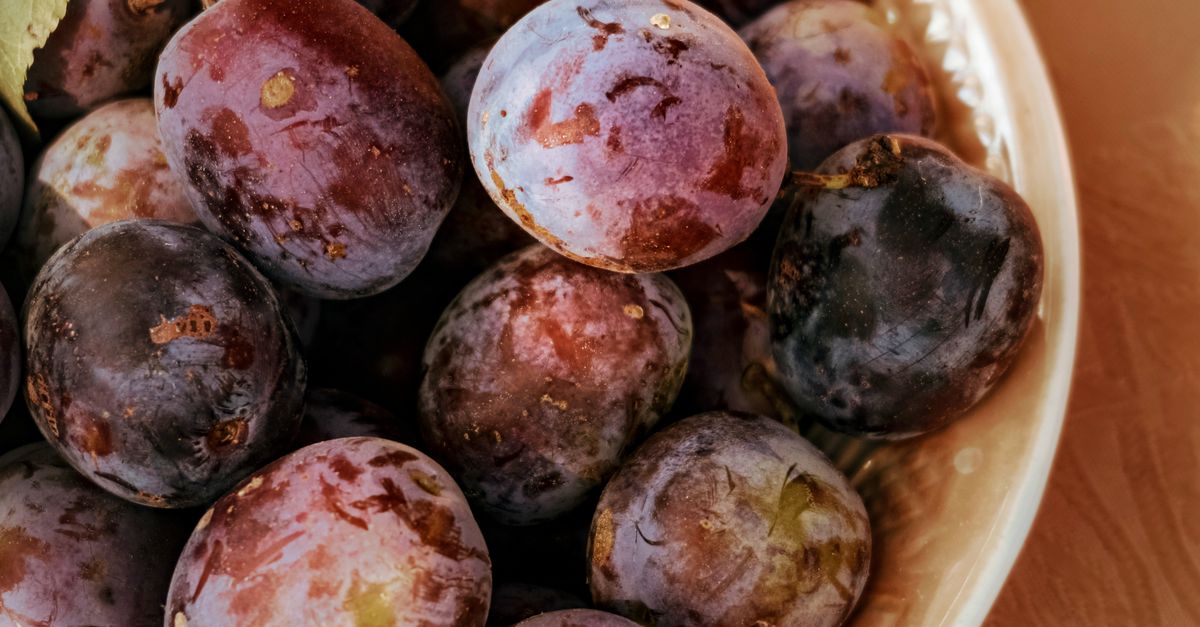
Plum works in India in two settings: Japanese plum (Prunus salicina) at mid-hill and hill elevations in Himachal Pradesh, Jammu and Kashmir and Uttarakhand, and low-chill types such as Satluj Purple and Kala Amritsari in the sub-tropical plains of Punjab and nearby areas. The variety must match the winter chill at your site, and the crop is worth planting mainly if you can reach a market with fruit that bruises and spoils within days.
Trees come into bearing in a few years and the fruit ripens early, from May in the low-chill belt to August in the hills. The main risks are poor fruit set when a self-unfruitful variety is planted without a pollinizer, fruit fly, and a price that swings with the glut of fruit arriving at once.
Where it grows in India
- Regions: Himachal Pradesh (mid-hills such as Kullu valley, where Japanese plum cultivars have been trialled at Nauni, Solan), Jammu and Kashmir and Uttarakhand, plus low-chill types in the Punjab plains, where PAU Ludhiana recommended Satluj Purple.
- Elevation: TNAU gives above 1,200 m for the high-chill types it lists for the Tamil Nadu hills.
- Soil: well-drained loam with organic matter, pH 5.8 to 6.2 (TNAU); waterlogging damages roots.
- Chill: match variety to chilling hours. Low-chill cultivars such as Black Amber, Ruby Sweet and Florida 1-2 were described as promising for the mid-hills of Himachal Pradesh in an Indian Journal of Horticulture (2013) evaluation from UHF Nauni.
Varieties
| Variety | Source of finding | Traits | Suited to |
|---|---|---|---|
| Satluj Purple | Recommended by PAU, Ludhiana | Low-chill; self-unfruitful, so needs a pollinizer | Punjab and similar sub-tropical plains |
| Kala Amritsari | Horticultural research centre studies; Kullu trial | Low-chill; self-compatible; lowest TSS in the Kullu trial; used as pollinizer for Satluj Purple | Plains and low hills |
| Red Beaut, Frontier, Mariposa, Black Amber | Kullu valley trial (mid-hill Himachal Pradesh) | Judged appropriate for commercial planting, ripening from May through August; Red Beaut earliest, Mariposa latest (about 150 days flower to harvest); Frontier TSS 14.1 °Brix; Black Amber largest, 130 g, 5.4 cm | Mid-hills of Himachal Pradesh |
| Ruby Sweet, Florida 1-2 | UHF Nauni evaluation | Low-chill; promising along with Black Amber; Florida 1-2 flowers earliest | Mid-hills of Himachal Pradesh |
| Rubio, Hale, Gaviota, Abundance, Shiro, Kelsey, Satsuma | TNAU | Rubio early; Hale, Gaviota, Abundance June to July; Shiro, Kelsey, Satsuma July to August; Hale needs other varieties planted with it | Tamil Nadu hills above 1,200 m |
- Plant at least two compatible varieties that flower together. In plains orchards, Kala Amritsari is the pollinizer for Satluj Purple.
- Buy budded plants from a government or university nursery with the variety name and rootstock stated.
Planting and spacing
- TNAU: one-year-old budded plants at 4 x 4 m (about 250 plants per acre, 625 per hectare) in pits 60 x 60 x 60 cm, planted June to July or October to December.
- In a trial on Satluj Purple, trees at 6 x 6 m (about 112 per acre, 278 per hectare) grew and cropped better than trees at 6 x 1.5 m. The Kullu cultivar trial used 3 x 6 m.
- Choose spacing by variety vigour and training system; ask the state horticulture department for the recommended distance for your valley.
Nutrition, irrigation and pests
- Manure (TNAU, bearing tree): 30 kg FYM, 500 g N, 1 kg P2O5 and 1 kg K2O per tree in October to November. For 112 trees per acre that is about 56 kg N, 112 kg P2O5 and 112 kg K2O per acre (140, 280 and 280 kg per hectare at 278 trees). Young trees need less; follow a soil test.
- Water: no verified Indian schedule was found, so ask your KVK or horticulture university; see drip irrigation.
- Fruit fly: TNAU recommends methyl eugenol traps with a fish-meal option and insecticide sprays; follow label doses and pre-harvest intervals, and ask your KVK. Collect and bury dropped fruit.
- Check the pests page and the local horticulture department for disease control; no verified disease schedule is given here.
Harvest and yield
- TNAU gives an average of 25 to 30 kg per tree per year for a bearing tree, depending on variety and management.
- At 112 trees per acre, 25 to 30 kg a tree is about 2,800 to 3,360 kg per acre (7 to 8.3 tonnes per hectare). Young trees yield much less.
- Pick when skin colour is full and fruit gives slightly to the thumb. Grade, pack in shallow crates with paper and sell within days, because plum does not store well without cold chain.
💡 Tip: Before ordering plants, ask two growers in your valley which variety sold best and when, then plan two or three ripening dates so fruit does not all arrive in the same week.
Cost and returns
- Kullu district economics study (Himachal Pradesh): initial planting cost ₹22,678 per 100 plants; maintenance cost of non-bearing plants ₹18,730, ₹20,453, ₹23,368, ₹26,874 and ₹29,350 per 100 plants in years 1 to 5. The study found a payback of 7 years, benefit-cost ratio 2.17, IRR 33% and NPV ₹4.48 lakh. These costs are from an older survey, so scale them up for current labour and input prices.
- Illustration: 2,800 to 3,360 kg per acre at ₹30 to ₹60 per kg gives ₹84,000 to about ₹2 lakh gross per acre once trees are mature. These prices are assumptions to be replaced with the rate you actually get.
- Price check: Punjab mandi data on 30 September 2026 showed reported plum prices from ₹3,800 to ₹9,700 per quintal, with very small arrivals, so it is not a benchmark for in-season fruit. Check the live rate on mandi bhav.
- Support for new orchards may be available under state horticulture schemes; no rate was verified, so check subsidy finder or the district horticulture office.
Market and risks
- Buyers are commission agents in city fruit mandis and retailers; ask local processors whether they take plum. The Kullu trial shows ripening can be spread from May to August by choosing varieties, which helps avoid a single glut.
- Risks: fruit set failure from missing pollinizers, fruit fly, glut prices, and transport damage on hill roads.
- A group of growers through an FPO can share crates and transport; see cold storage subsidy if you plan to hold fruit.
Sources
- TNAU Agritech Portal, Plum
- Performance of some Japanese plum (Prunus salicina) cultivars in mid-hill condition of Kullu Valley, Himachal Pradesh (IJBSM)
- Kumar, Tandon, Singh and Sharma, Evaluation of promising Japanese plum genotypes for mid-hills of Himachal Pradesh, Indian Journal of Horticulture 70(2), 2013
- Effect of rootstocks and spacing on growth and productivity of plum cv. Satluj Purple (Krishikosh)
- Economics of production and marketing of plum in Kullu district of Himachal Pradesh (Krishikosh)
- ACROP, plum mandi prices in Punjab (Agmarknet data)