
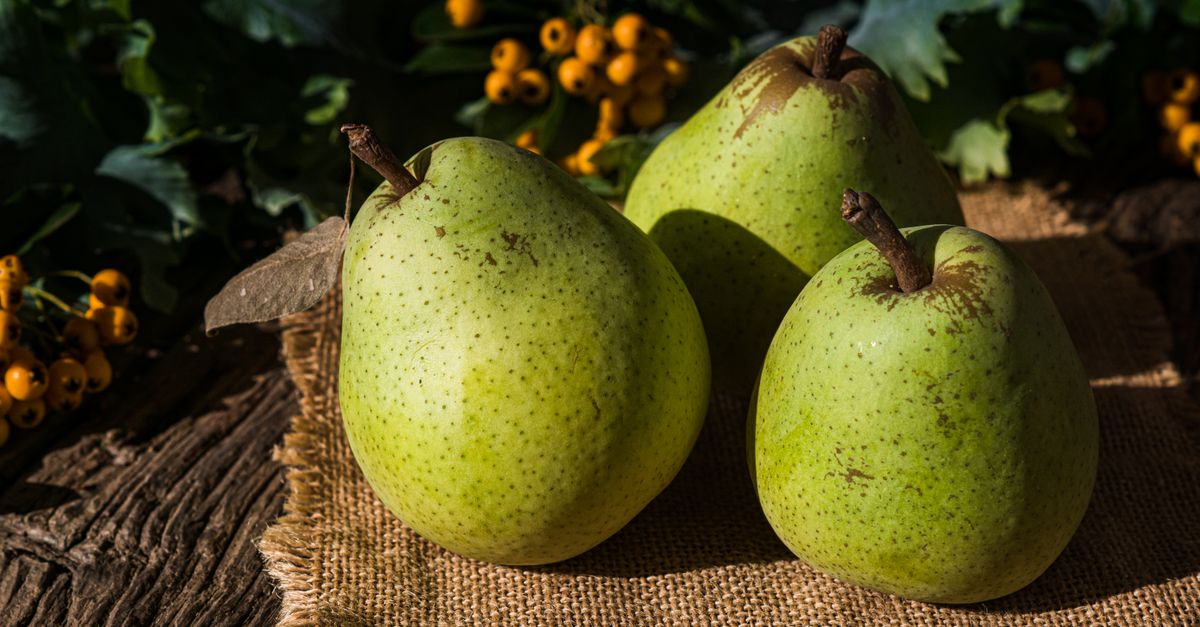
Pear works in India in two very different ways. In the hills of Himachal Pradesh and Jammu and Kashmir, soft European types such as Bartlett need about 900 to 1,000 chilling hours; in the Punjab plains and similar sub-tropical belts, low-chill Asian "sand pear" types such as Patharnakh need only 200 to 300 hours and carry most of the commercial plantings. Pick the variety by the winter you actually get, not by what is fashionable.
Pear is a slow, long-lived orchard crop. Trees are planted in winter, take several years to bear, and then fruit for decades if the orchard is managed. Punjab Agricultural University (PAU) describes Patharnakh as known for keeping and transport quality, which is why it dominates the plains.
Where it grows in India
- Range: pear grows from cold, dry temperate hills to the warm sub-tropical plains of north India. Jammu and Kashmir and Uttar Pradesh have been reported as the largest pear areas, with Himachal Pradesh, Punjab and the north-eastern hills also growing it.
- Punjab belt: a PAU study notes that Patharnakh is the leading cultivar in Punjab, contributing more than 80% of Punjab's pear production.
- Chilling: sub-tropical pears recommended for Punjab need 200 to 300 chilling hours; the soft pears of the higher hills need 900 to 1,000 hours, which north Indian plains do not receive, so they are not grown there.
- Soil: deep, well-drained sandy loam to clay loam, fertile, without a hard pan in the top 2 m. PAU limits are pH not above 8.7, electrical conductivity below 1.5 mmhos/cm, calcium carbonate below 10% and lime concretion below 20%. In high-pH soils, iron and zinc deficiency is a recurring problem.
- Water: assured irrigation is needed in the plains; the crop does not tolerate waterlogging or heavy irrigation in the dormant winter months.
Varieties
| Variety | Type and year | Traits | Maturity and yield (PAU) |
|---|---|---|---|
| Patharnakh | Hard pear (1967) | Spreading, vigorous tree; round green fruit; gritty, crisp, juicy flesh; good keeping and transport quality | Last week of July; average 150 kg per tree |
| Punjab Nakh | Hard pear (2008), selection from Patharnakh | 155 g ovate fruit, light yellowish green; crisp and juicy | Fourth week of July; average 190 kg per tree |
| Punjab Gold | Semi-soft (2004) | Upright tree; large 166 g golden fruit; TSS 13.3%; table and processing | End of July; 80 kg per tree |
| Punjab Nectar | Semi-soft (2004) | Precocious; 138 g yellow-green fruit; TSS 13.6%; very juicy when ripe | Fourth week of July; 80 kg per tree |
| Punjab Beauty | Semi-soft (1999) | Medium yellow fruit with red blush; TSS 14%; regular bearer | Third week of July; 80 kg per tree |
| Baggugosha | Semi-soft (1967) | Upright, vigorous; sweet, somewhat gritty flesh; stands transport | First week of August; 60 kg per tree |
| Nijisseiki | Soft (2010) | Medium fruit, very juicy, ripens on the tree; suited to RTS, nectar and squash | End June to first week of July; 80.2 kg per tree |
| Punjab Soft | Soft (2007) | Very juicy, soft; TSS 11.3%; processing | First week of July; 85 kg per plant |
The yields above are PAU averages for established trees, not first-year figures. In the hills, Bartlett and its red strains (Max Red Bartlett, Red Bartlett) are the main high-chill choices; confirm the right strain for your altitude with the state horticulture department or the nearest KVK.
Planting material and spacing
- Rootstock: PAU recommends Kainth (Pyrus pashia) seedling rootstock. It reduces precocity but does not throw root suckers. Pear is T-budded or tongue-grafted on it; tongue grafting is done in December and January.
- Nursery: true-to-type planting material is hard to find in the commercial belt and certified nurseries are few, as a Punjab college study points out. Buy only from a government or ICAR-linked nursery that names the variety and rootstock.
- Planting time: winter, while plants are dormant, finished within January. One-year plants are normal; 2 to 3 year old nursery-trained plants also work.
- Spacing: PAU suggests 8 m x 4 m for Patharnakh, about 126 trees per acre (312 per hectare), with scaffolds bent; this also shortens the juvenile phase by two years. A PAU trial on 8-year-old Patharnakh used a Y-trellis at 3 m x 3 m (about 450 trees per acre, 1,111 per hectare) and recorded roughly 14 to 15.5 kg per tree on the chlormequat-treated trees; that is a research system, not a ready recipe for a first orchard.
- Training: head the plant back at 90 cm at planting, allow no branch below 45 cm, follow the modified leader system, and bend 3 to 5 laterals downward in year two. Pear bears on spurs that stay productive for about 8 years, so mature trees need only light pruning in January, with Bordeaux paste on cuts.
Nutrition and irrigation
PAU's schedule per tree (add all farmyard manure, superphosphate and muriate of potash in December; half the urea in early February before flowering, half in April after fruit set):
| Tree age (years) | FYM (kg) | Urea (g) | Superphosphate (g) | Muriate of potash (g) |
|---|---|---|---|---|
| 1 to 3 | 10 to 20 | 100 to 300 | 200 to 600 | 150 to 450 |
| 4 to 6 | 25 to 35 | 400 to 600 | 800 to 1,200 | 600 to 900 |
| 7 to 9 | 40 to 50 | 700 to 900 | 1,400 to 1,800 | 1,050 to 1,350 |
| 10 and above | 50 | 1,000 | 2,000 | 1,500 |
- Per acre and hectare, full-grown trees at 8 m x 4 m: about 126 trees per acre need roughly 126 kg urea, 252 kg superphosphate, 189 kg muriate of potash and 6.3 t FYM; per hectare (312 trees) that is about 312 kg, 624 kg, 468 kg and 15.6 t.
- Extra for Punjab Beauty: 500 g urea per full-grown tree in September, on top of the schedule.
- Zinc deficiency: spray 3 kg zinc sulphate plus 1.5 kg unslaked lime in 500 litres of water. Iron deficiency: spray 0.3% ferrous sulphate (300 g in 100 litres).
- Fruit size: three foliar sprays of potassium nitrate at 1.5% (15 g per litre) at 15, 30 and 45 days after full bloom improve yield and size in Patharnakh and semi-soft pears. Thin to one fruit per cluster soon after the natural drop in mid-April.
- Irrigation: frequent after transplanting; every 5 to 7 days in summer for bearing trees, about every 15 days in July and August, restricted after harvest, and none in January. Berseem must not be grown as an intercrop because it needs winter water the dormant trees do not. See drip irrigation for water-saving options.
- Intercrops in young orchards: moong and mash in kharif; peas, gram and senji in rabi, with extra fertilizer for the intercrop.
Pests and diseases
| Problem | Where and when | PAU management |
|---|---|---|
| Fruit flies (Bactrocera dorsalis, B. zonata) | Serious on pear fruit near maturity; isolated orchards are less infested | Pick ripening fruit, remove fallen fruit and bury infested fruit at least 60 cm deep, plough shallowly after harvest, fix PAU fruit fly traps at 16 per acre in the first week of June |
| Spider mites | April to June | Frequent irrigation; remove castor and bhang that carry mites |
| Aphids | February to mid-April; worse on semi-soft than hard pear | Monitor flower buds and young leaves; follow the label and your KVK for any spray |
| Bark-eating caterpillar | Neglected orchards | Remove webbing; apply kerosene oil in the holes in September to October and January to February |
| Hairy caterpillar, leaf-hoppers | Sporadic | Scout and remove egg masses and young colonies early |
| Shoot and fruit blight, bark canker | Bud scars, wounds and twig stubs | Cut out dead bark with 2 cm of healthy bark, destroy pruned wood, apply Bordeaux paste then paint; Bordeaux mixture spray in January, March and June |
| Root rot and sapwood rot | Trees wilt, drop leaves early, may topple | Avoid deep hoeing, piling soil on the trunk, and thirsty winter intercrops; irrigate affected trees separately |
Check the pest guide for identification and follow the label and local KVK advice for any chemical.
Harvest, storage and yield
- Maturity: Patharnakh matures about 145 days after fruit set; Baggugosha and Punjab Beauty take 135 days; Punjab Nectar and Punjab Gold 140 days. Pick with an upward twist so the spurs are not torn.
- Handling: sort out bruised fruit and pack graded fruit in corrugated fibre board boxes.
- Ripening and storage: Patharnakh, Punjab Nakh and Punjab Beauty keep for 60 days at 0 to 1 degrees C and 90 to 95% humidity; Patharnakh has a shelf life of about 2 days at room temperature after storage. Patharnakh is chilled 3 days at 0 degrees C and ripened at 20 degrees C for 4 days. Punjab Soft and Nijisseiki can be held about 4 weeks (2 months for Punjab Soft after a 2% calcium chloride dip). See cold storage subsidy.
- First crop: PAU says close planting with bent scaffolds cuts the juvenile period by two years. Rejuvenated old trees fruit in the third year and give a commercial crop in the fifth. For a new orchard on Kainth, ask the nursery and the state horticulture department for the expected age at first fruit before committing.
Cost and returns
No current, verified Indian cost-of-cultivation figure or farm-gate price was available for this guide, so the table below shows only the arithmetic, using PAU tree yields and 126 trees per acre. The price column is an assumption for illustration, not a quoted market rate. Replace it with the current rate in your mandi (see mandi bhav) and deduct your own costs for plants, labour, fertilizer, irrigation, picking and packing.
| Yield per tree | Kg per acre (126 trees) | Gross at assumed ₹10/kg | Gross at ₹20/kg | Gross at ₹30/kg |
|---|---|---|---|---|
| 50 kg | 6,300 | ₹63,000 | ₹1,26,000 | ₹1,89,000 |
| 100 kg | 12,600 | ₹1,26,000 | ₹2,52,000 | ₹3,78,000 |
| 150 kg (PAU Patharnakh average) | 18,900 | ₹1,89,000 | ₹3,78,000 | ₹5,67,000 |
Young trees give nothing for several years, so an orchard must be financed through the non-bearing period; intercrops help.
Market and selling
- Fresh fruit goes to wholesale fruit markets; Patharnakh stores and travels well, which is its main commercial strength. Soft and semi-soft types suit processing (RTS, nectar, squash).
- Risks: fruit fly damage, overbearing with small fruit, and a short window when the whole region harvests at once in July. Grading and cold storage give more choice of sale date.
- Crop insurance and credit: see PMFBY and Kisan Credit Card. For orchard subsidy, ask the state horticulture department and check the subsidy finder; no verified pear-specific subsidy rate was found for this guide.
Sources
- Punjab Agricultural University, Package of Practices for Cultivation of Fruits (Pear chapter)
- FAO, Pear in India (rootstocks, growing regions)
- Kaur et al., prohexadione calcium and chlormequat chloride on Patharnakh pear, Indian Journal of Horticulture 78(2), 2021 (PAU Ludhiana)
- Kaur et al., Rooting response of pear cv. Patharnakh, Plant Archives 20 (Special Issue), 2020