
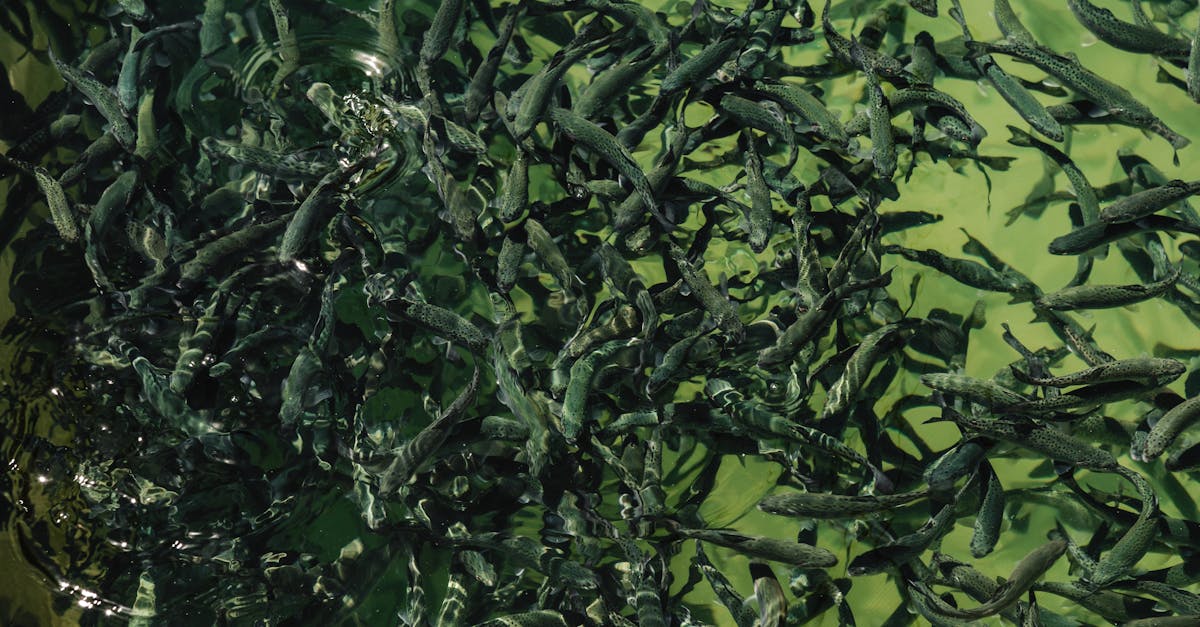
Rainbow trout farming works in India only where a perennial supply of clean, cold, flowing water exists, mainly in Jammu and Kashmir, Himachal Pradesh, Uttarakhand, Sikkim and Arunachal Pradesh. It is not a plains or warm-water enterprise, and it needs raceway construction, a steady feed supply and a market for a premium fish.
Published economics show it can pay, but thinly: a 2023 study of 30 farms in Sikkim found a production cost of about ₹660 per kg against a selling price of about ₹798 per kg, so feed cost, seed survival and water security decide the result.
Where it grows in India
- States: trout farming is established in Jammu and Kashmir, Himachal Pradesh, Uttarakhand, Sikkim, Arunachal Pradesh and Ladakh. National output rose from 147 tonnes in 2004-05 to 842 tonnes in 2015-16. Sikkim alone had about 430 raceway units in the 2023 study.
- Temperature: published Indian summaries give a suitable range of about 5 to 18 degrees C. Cold water fisheries as a whole are defined as water at 5 to 25 degrees C, which in India occurs only in the Himalaya and the peninsular hills.
- Water: a spring or stream that runs all year, with enough fall to feed raceways by gravity, and dissolved oxygen of about 5.8 to 9.5 mg per litre. Summer drying, winter freezing and monsoon floods are the main site risks; flooded intake pipes caused heavy losses on some Sikkim farms.
Raceway design
- Fish are grown in concrete flow-through raceways. In the Sikkim study each raceway had a volume of 40 cubic metres. Another Indian guideline mentions a 17 x 2 x 2 m raceway holding about 50 cubic metres at 1.5 m depth.
- Include a settling tank at the inlet and outlet, screens, and fencing against birds and animals. Predation by birds was a reported problem.
- Raceway construction made up about 96% of the fixed investment in the Sikkim study (about ₹1.84 lakh per 40 cubic metre raceway at the survey prices).
Seed, stocking and feeding
- Seed: buy fingerlings from a state fisheries department or recognised hatchery. Mortality at stocking was the second most common technical problem reported by Sikkim farmers, so handle and acclimatise fingerlings carefully.
- Stocking: ICAR-DCFR Bhimtal practice stocks healthy seed at 40 to 100 fingerlings per cubic metre with a water flow of about 300 litres per minute. Do not crowd beyond what your flow can supply with oxygen.
- Feed: trout need formulated, floating or sinking pelleted feed of the right size. Feed was the largest cost, 40% of total cost in the Sikkim study, and unavailability of quality feed was the biggest constraint. Where no feed mill exists, farmers in cooperatives have imported feed from Hyderabad.
- Growth: a DCFR-based guideline gives a 250 g harvest size in 8 to 10 months, at 30 to 40 g gain per month. Colder sites grow more slowly, so ask your fisheries department for local figures.
Diseases
- Sikkim farmers ranked disease outbreak as their top environmental constraint, naming fungal infection and whirling disease.
- Prevention is clean water, no overcrowding, removal of dead fish and not mixing batches. For any treatment, follow your state fisheries department or ICAR-DCFR advice rather than self-medicating.
Cost and returns
| Item (Sikkim study, per 40 cubic metre raceway) | Figure |
|---|---|
| Fish produced per year | about 172 kg |
| Total cost without subsidy | about ₹1.14 lakh (₹660 per kg) |
| Gross revenue at about ₹798 per kg | about ₹1.37 lakh |
| Net revenue and benefit-cost ratio | about ₹23,700; B:C 1.21 (1.87 with state subsidies) |
- Costs were priced at survey-time prices and counted interest on capital and depreciation. Feed was 40% and seed 23% of the total without subsidy.
- An earlier Kashmir study cited in the same paper reported a cost of about ₹216 per kg against a price of about ₹389 per kg, which shows how much costs and prices vary by place and year. Use current local prices.
- The arithmetic at survey values is 172 kg x ₹798 = ₹1.37 lakh, less ₹1.14 lakh cost. Income of this size per raceway means a family needs several raceways to make a living, and the first raceways cost money before any fish is sold.
💡 Tip: Measure your water before building: flow in litres per minute in the driest month, temperature through the year, and flood marks. Ask your state fisheries department for a site visit and for the current list of hatcheries and feed suppliers.
Market and risks
- Trout is sold fresh or chilled to hotels, restaurants and tourists in hill towns and cities. Sikkim's Department of Fisheries offered a minimum selling price of ₹900 per kg, as noted in the 2023 study; check whether any such price applies in your state today.
- The main risks are water failure, flood damage, disease, feed supply and distance to buyers. Fish must reach customers fresh, so ice and transport matter.
- Subsidies for raceways and feed exist through state fisheries departments under central and state schemes, but rates change; ask your district fisheries office and check the subsidy finder. Group marketing through an FPO or cooperative can improve feed access and sale price. Loans may be available through Kisan Credit Card for fisheries.