
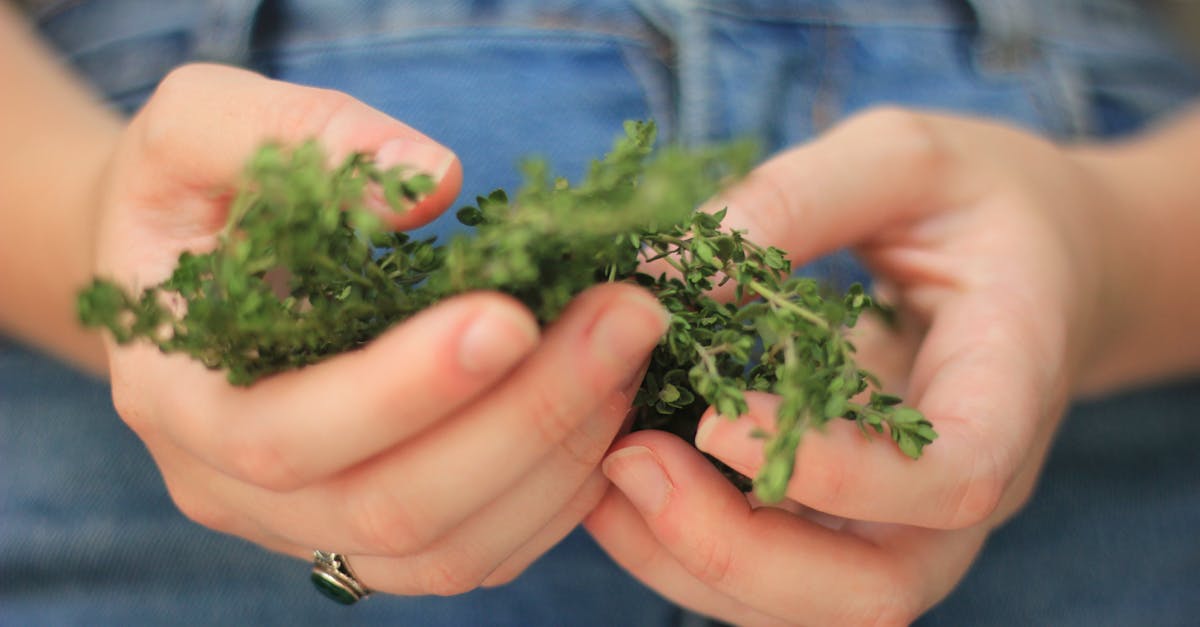
Thyme is a realistic crop only in India's cool hills, with the Nilgiris (900 to 2,500 m) the best-documented area, and in dry, well-drained sites where monsoon humidity does not rot the plants. It is a small niche herb, so plant only after a hotel supplier, dry-herb trader or oil processor has agreed to buy.
The one Indian variety on record, Ooty (Tv 1) from TNAU, is a perennial that stays productive for about 4 years. Published Indian prices and costs for thyme are scarce, so this guide gives yields and a way to work out returns from the price your own buyer offers.
Where it grows in India
- Nilgiris: TNAU recommends its Ooty (Tv 1) selection for the temperate zone of the Nilgiris between 900 and 2,500 m above sea level.
- Other regions: TNAU's organic farming notes say thyme can be grown in the hills and plains of a warm climate, with hills preferred, and that it cannot tolerate frost. Plains growing needs a dry, well-drained site and is riskier in the rains.
- Soil: well-drained loam with pH 5.5 to 6.5 for Ooty (Tv 1). TNAU's organic guide prefers light, fertile, calcareous soil; heavy, wet soils reduce aroma and shorten plant life.
- Water: thyme tolerates dry spells; waterlogging is the main danger, so use raised beds or slopes.
Varieties
| Variety | Released by | Traits | Suited to |
|---|---|---|---|
| Ooty (Tv 1) | TNAU, 2006 (pureline selection from five germplasm types) | About 10.7 t green leaf per hectare a year, 33.7% above the local type; thymol chemotype (23.63% thymol in the oil); resistant to root rot, root-knot nematode, whitefly and aphids | Nilgiris, 900 to 2,500 m; planting June to July, or rainfed in September to October |
- Other thyme types are sold by nurseries as seed or cuttings; check which is true Thymus vulgaris and ask for a sample of the leaf aroma before buying in bulk.
Planting material and spacing
- Propagation: seed, division, cuttings or layering. TNAU suggests sowing seed in a nursery in April, and vegetative propagation in March to April.
- Spacing (TNAU organic guide): transplants or cuttings 30 to 45 cm apart in rows 60 cm apart, which is roughly 15,000 to 22,500 plants per acre (37,000 to 55,000 per hectare).
- Direct seeding uses 90 cm rows, thinned to 30 to 45 cm.
Nutrition and irrigation
- TNAU's organic package per hectare: farmyard manure 50 t (20 t per acre), vermicompost 5 t, biodynamic compost 5 t, neem cake 1.25 t, plus Azospirillum and Phosphobacterium at 25 kg, with a 3% panchagavya foliar spray about five times a year.
- No Indian chemical fertiliser schedule for thyme was found; for a soil-test based dose ask your KVK.
- Water frequently only in the dry spell right after planting, then sparingly. Drip or sprinkler is suitable, but avoid wetting the plants during flowering.
Pests and diseases
- TNAU describes wilt as the major problem, managed by clean planting material and field sanitation. Ooty (Tv 1) is rated resistant to root rot.
- Good drainage and open spacing matter more than sprays. If treatment is needed, follow the label and ask your KVK, because the herb is eaten.
Harvest and yield
- First harvest about 5 months after planting, taken at flowering. Cut above the woody base and discard lower stems and discoloured leaves.
- Dry herb: TNAU's organic guide gives 1,100 to 2,200 kg per hectare, which is about 445 to 890 kg per acre.
- Green leaf: Ooty (Tv 1) averaged about 10.7 t per hectare a year (about 4.3 t per acre), with a maximum of 11.5 t per hectare.
- Replant after 3 to 4 years as plants turn woody.
💡 Tip: Start with 0.25 acre, dry a sample in shade, and have your buyer grade it and quote a written price before expanding.
Cost and returns
- No verified Indian farm-gate price or cost of cultivation for thyme was found, so no rupee profit is claimed here. Ask buyers for the rate and grade they pay.
- How to work it out: every ₹100 per kg of dry herb gives ₹44,500 to ₹89,000 per acre (₹1.1 to ₹2.2 lakh per hectare) at TNAU's 445 to 890 kg per acre. Deduct plants, manure, labour for cutting and drying, packing and transport.
- Plant, manure and labour costs are front-loaded in year 1; the stand then bears for up to about 4 years.
- Hotels that buy thyme often also buy rosemary; see rosemary for a companion crop, and check mandi bhav for any listed rates.
Market and risks
- Buyers are hotels and continental restaurants for fresh sprigs, dried herb and spice-blend traders, and essential oil processors.
- Fresh thyme spoils fast, so it needs a nearby market or cold chain; dried thyme travels better but must be clean, mould-free and correctly labelled.
- Demand is small. Beware of nurseries that promise buy-back at fixed prices.
- See FPO for group selling and subsidy finder for medicinal and aromatic plant support. No thyme-specific subsidy rate was verified; ask the state horticulture department.