
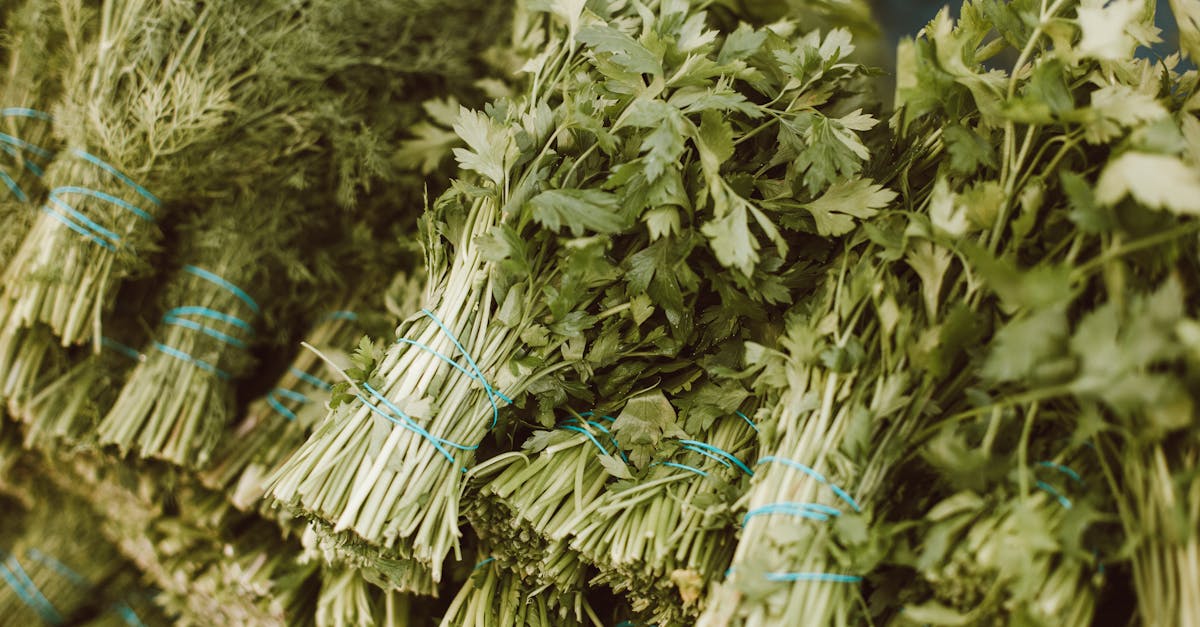
Parsley is a niche herb in India: it can be grown in the cool season in the plains and for a longer season in the hills, but there are no Indian yield trials, no official price series and no standard package of practices from an Indian agricultural university that could be found. Plant it only for a hotel, restaurant, salad kitchen or aggregator that has agreed to buy, and treat growing advice below as extension guidance from other countries, to be tested on a small plot first.
The Spices Board describes parsley as a cold-weather crop that does better at higher altitudes in India, and it has been photographed in cultivation at Shimla in Himachal Pradesh. Parsley is a biennial herb that is commercially grown as an annual. Its seed is slow and erratic to sprout, so the first weeks decide the crop.
Where and when it grows in India
- Hills: cool climates such as Himachal Pradesh, where it has been grown at Shimla, and similar hill areas. The Spices Board notes it grows better at higher altitudes.
- Plains: a winter crop. The bed needs shade or a polyhouse in the hot months, and hot weather is where the quality of leaf falls. For polyhouse support see polyhouse subsidy.
- Soil: rich, moist, well-drained loam. Purdue Extension gives a soil pH of 5.3 to 7.3 and a fine seedbed, with seed covered no deeper than about 6 mm (a quarter inch).
- Check the crop calendar and weather page for your district before fixing the sowing date, and ask your KVK or state horticulture department which local growers supply hotels.
Types and seed
| Type | Example open-pollinated cultivars | Use | Source of list |
|---|---|---|---|
| Curly leaf | Moss Curled II, Forest Green (semi-curled), Darki, Wega | Garnish and decoration | Mid-Atlantic (USA) extension variety list |
| Flat leaf (Italian) | Gigante d'Italia, Italian Plain Leaf, Pinocchio, Peione | Cooking, salads; stronger flavour | Mid-Atlantic (USA) extension variety list |
- No Indian-bred parsley variety was found. Seed is imported or sold by private seed firms, so ask your buyer which type they want (flat-leaf for cooks, curly for garnish) and buy fresh seed from a reputable supplier.
- Seed older than a year should be germination-tested: place 10 to 20 seeds between moist paper towels in a bag for one to two weeks, count the sprouted seeds and raise the sowing rate to make up the shortfall (Mid-Atlantic guide).
- Seed germination is erratic and low even under good conditions, and cold wet soil makes it worse (Purdue). A 24-hour water soak before sowing is used by some growers but is optional.
Sowing, spacing and planting
- Time to germinate: 14 to 28 days under good conditions (Mid-Atlantic guide), so keep the seedbed evenly moist for weeks. Weeds grow faster and smother seedlings.
- Direct sowing: rows 30 to 45 cm apart (12 to 18 inches), seed drilled thickly and the plants thinned to 2.5 to 5 cm apart for bunch harvest. US guides use 20 to 40 lb of seed per acre for field sowing (about 22 to 45 kg per hectare), which looks large for Indian plots; ask the seed supplier for the rate on the packet.
- Transplants: Purdue spaces transplants 10 to 20 cm apart (4 to 8 inches) in rows about 90 cm apart. Seedlings can be raised in trays and moved when the roots hold the plug together.
- Beds and pots: raised beds, deep pots or grow-bags work for a small herb unit. See drip irrigation for even moisture.
Nutrition and irrigation
- No Indian fertiliser schedule was found. The Mid-Atlantic guide, written for US soils, totals 150 to 175 lb nitrogen per acre (about 170 to 196 kg per hectare), with 0 to 200 lb each of P2O5 and K2O depending on the soil test. Half or less of the nitrogen goes in before sowing, and 25 to 50 lb per acre is added after the first cutting and after each further cutting.
- Do not copy these figures. Take a soil test, start with compost or farmyard manure, split nitrogen after cuttings, and see fertilizers.
- Keep the soil evenly moist with frequent light irrigation. Drought and waterlogging both hurt.
Pests and diseases
- Purdue lists aphids, cabbage loopers, carrot weevils, corn earworms, flea beetles and leafhoppers. Septoria leaf spot, a seed-borne fungus, is the main disease. Aster yellows, spread by leafhoppers, is controlled by managing the leafhoppers.
- The Mid-Atlantic guide warns that row covers can favour bacterial leaf spot, so remove covers on warm or windy days.
- Parsley is eaten raw. Use clean seed, rotation, drainage and netting first, and use a chemical only if its label allows it on parsley and you follow the waiting period. Ask your KVK. See pests.
Harvest, yield and storage
- Cutting: cut a few outer leaves from each plant, or cut whole bunches. Cut about 2.5 to 3 cm (1 to 1.25 inches) above the crown if you want the plant to regrow for another cutting.
- Yield: no Indian yield trial was found. A US extension source gives average fresh-market yields of about 900 bushels per acre, which is not a usable figure for Indian bunch weights. Record your own bunches per bed over the first season.
- Storage: the Mid-Atlantic guide says parsley keeps at 0 °C with 95 to 100% humidity for up to 2 to 2.5 months, and that it is sensitive to ethylene, so do not store it with ripening fruit. Without cold storage, deliver the same day in damp wrap or perforated bags.
- Remove flower stalks when they appear; once plants run to seed, leaf quality drops.
Cost and returns
- Price: no verified Indian wholesale or restaurant price for fresh parsley was found, and there is no regular Agmarknet series. Do not use online seller prices. Get the price in writing from the buyer.
- Arithmetic to do yourself: gross income = kg sold per cutting x number of cuttings x price per kg. Subtract seed, nursery, labour for cutting and bunching, irrigation, packing and transport, and unsold stock. The figures cannot be filled in honestly without a local yield and price.
- Parsley has a slow start, so a plot occupies land for weeks before the first cutting. A mixed bed with other herbs and leafy greens spreads the risk.
Market and risks
- Buyers: hotels, restaurants, cafes, salad and sandwich kitchens, supermarkets and online grocers. Demand is concentrated in a few large cities, and one lost contract can leave you with unsold herb.
- Risks: poor germination, hot-weather bolting, leaf spot, and low buyer volumes. Be wary of anyone selling parsley seed or plants with a promised buy-back; ask to see a working farm and written contracts.
- Join an FPO to share cold transport, and check the subsidy finder; no subsidy specific to parsley was verified. If you already grow soilless leafy crops, see hydroponic lettuce.