
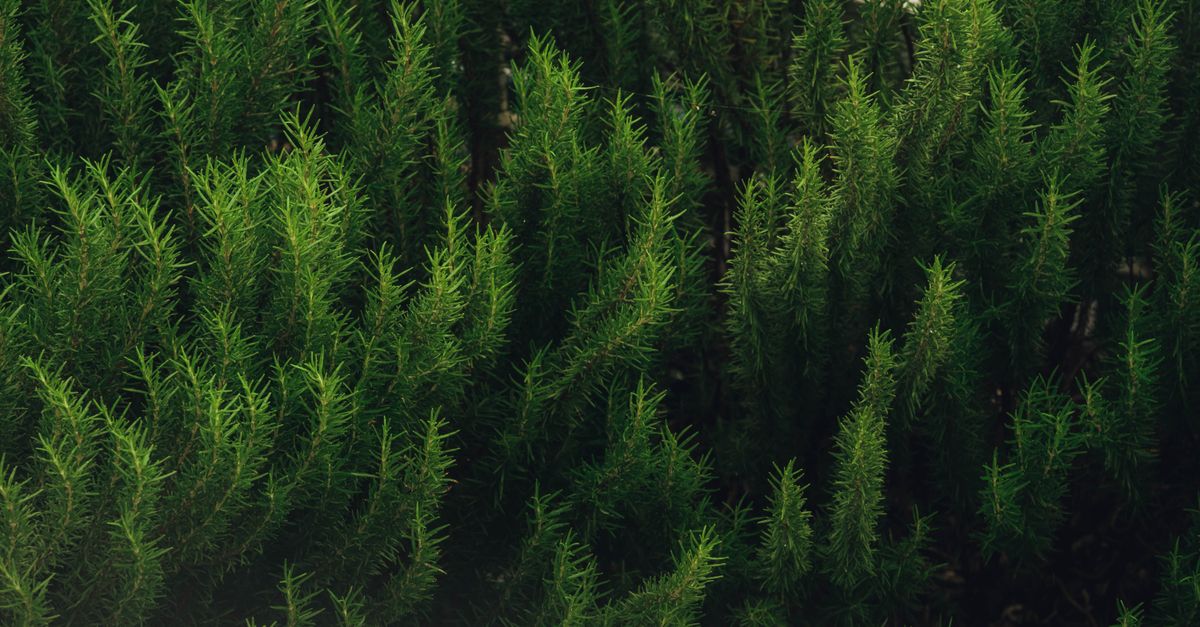
Rosemary can be grown in India, but it is a small-market crop that does best in cool, dry hill areas and, as a winter-to-summer seasonal crop, in the sub-tropical foothills. It is a perennial shrub in the hills and is hurt by waterlogging and monsoon humidity in the plains, so drainage and a buyer decide the outcome.
Indian research gives two distinct routes: fresh or dried herb for hotels and retail, and distillation of the essential oil. Verified Indian data exist for oil and herb yield, not for farm-gate prices, so check the current rate with a buyer before planting.
Where it grows in India
- Hills and plateaus: a 2025 University of Horticultural Sciences, Bagalkot paper lists Karnataka (Bengaluru, Mysuru, Coorg, Shivamogga), Tamil Nadu (Nilgiris, Ooty, Kodaikanal) and Jammu and Kashmir (Srinagar, Baramulla, Doda, Jammu, Kathua, Samba, Udhampur) as places where it is cultivated.
- Sub-tropical foothills: CSIR-CIMAP's Pantnagar centre (Uttarakhand, 29 degrees N, 244 m, mollisol soil with neutral pH) tested it as a seasonal winter-to-summer crop. Summer maximum temperatures there are 35 to 45 °C and winter minimums 2 to 5 °C. The October to June period is the one that suits the crop there.
- Soil: loose, well-drained soil of neutral pH. The Pantnagar trial used a neutral mollisol. Avoid heavy clay and low spots where water stands.
Variety and planting material
- CSIR-CIMAP's trial used the variety CIM-Hariyali, transplanted as one-month-old rooted plants in mid-November.
- Seed is a poor way to propagate: germination is only about 10 to 20 per cent and takes 3 to 4 weeks, so cuttings are used (Uttarakhand University of Horticulture and Forestry trial).
- In a Bagalkot (Karnataka) trial, treating cuttings with IBA at 2,000 ppm gave 84.5 per cent rooting, against a lower rate for other treatments; a closed media sachet gave 66.1 per cent rooted cuttings overall, and 88 per cent when combined with IBA 2,000 ppm. A Ranichauri trial found a mix of soil and cocopeat in the ratio 2:1 worked best for rooting.
- Buy rooted plants only from a nursery that can name the variety, and ask for a few sample plants first.
Spacing and care
- CIMAP's trial planted at 50 x 50 cm, which is 40,000 plants per hectare (about 16,200 per acre).
- Rosemary dislikes wet feet. Use raised beds, light irrigation (drip suits it) and avoid irrigating during the rains.
- No state-agricultural-university fertiliser schedule for rosemary was found. Use a soil test and ask your KVK or the nearest CSIR institute (CIMAP, IHBT) for a dose; see fertilizers for converting nutrients into products.
- For pests and disease, scout weekly, rogue out wilted plants (waterlogging causes root rot) and follow the label and local KVK advice before any spray; see pests.
Harvest and yield
The CIMAP Pantnagar trial harvested the same crop at six dates and measured results per hectare. Crops harvested later gave more herb, and oil content stayed around 1 per cent of fresh herb.
| Harvest date (days after transplanting) | Fresh herb (quintal per hectare) | Essential oil (litres per hectare) |
|---|---|---|
| 15 April (150 days) | 10.44 | 10.28 |
| 15 May (180 days) | 29.96 | 30.59 |
| 1 June (195 days) | 50.14 | 50.14 |
| 15 June (210 days) | 84.88 | 83.34 |
| 1 July (225 days) | 94.99 | 88.03 |
- The best result, 94.99 quintals of fresh herb and 88.03 litres of oil per hectare, is about 38 quintals of herb and 36 litres of oil per acre. The paper also reports that the same variety in the hills, grown as a perennial, gave 53.72, 170.87 and 359.47 litres of oil per hectare in the first, second and third years, quoting earlier work.
- Oil composition: mainly camphor (23.9 to 35.8 per cent), 1,8-cineole (18.0 to 23.9 per cent), alpha-pinene and verbenone, depending on harvest stage. Camphor is higher in earlier cuts. If you sell oil, the buyer will test for these.
- The herb should be cut and handled while fresh; dry in shade for the dried-herb market and keep out of damp.
Cost and returns
- No verified Indian farm-gate price for fresh or dried rosemary herb or for rosemary oil was found, and no published cost of cultivation, so no profit figure is given.
- How to work it out: gross income per acre = fresh herb sold (up to about 3,800 kg per acre in the best trial result) x the herb price you are offered, or oil litres (up to about 36 per acre) x oil price. Subtract plants (about 16,200 per acre at 50 x 50 cm), beds, irrigation, labour for cutting, drying or distillation fuel and transport.
- Oil yield per hectare was low in the first year in the hills, and rose over the next two years, so a perennial plan needs patience and capital for three years.
Market and risks
- Likely buyers are hotels and restaurants, premium retail, herb and tea packers, and essential oil traders. Volumes are small, so one or two buyers can set the price.
- Humid monsoon weather and waterlogged soil are the main field risks in most of India.
- For group selling see FPO. Aromatic and medicinal plant support varies by state and scheme, so use the subsidy finder and confirm with the district horticulture office.
Sources
- Verma et al., Productivity and essential oil composition of rosemary harvested at different growth stages, north India, Journal of Essential Oil Research (CSIR-CIMAP)
- Influence of propagation chambers and growth regulators on rooting of rosemary, Plant Archives (UHS Bagalkot, 2025)
- Effect of growing media on growth parameters of rosemary and geranium, Journal of Pharmacognosy and Phytochemistry (Ranichauri, Uttarakhand)
- CSIR-CIMAP, Pantnagar research centre