
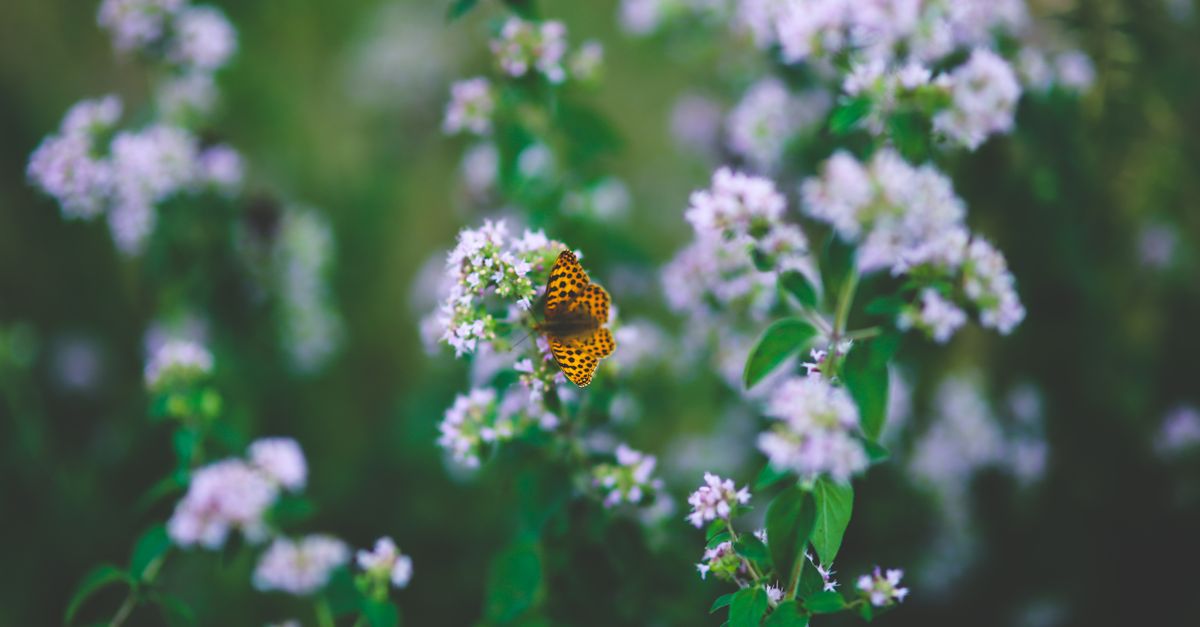
Oregano grows wild across the sub-temperate to temperate Himalayan belt of India (where it is called Himalayan marjoram or jungali tulsi) and has been trialled at Dehradun, Pantnagar and Bageshwar in Uttarakhand. It is worth planting only with a buyer in hand, because commercial cultivation in India is still small and no official price series is published.
Oregano is a perennial herb sold as dried leaf for pizza, sauces and seasonings, and its essential oil (rich in thymol or carvacrol) is used in food and pharmaceutical industries. The first Indian variety, CIM-Sudeeksha from CSIR-CIMAP, was released in 2022, so improved planting material is new and limited.
Where it grows
- Natural range: CSIR-CIMAP describes oregano as widely spread through the sub-temperate to temperate Himalayan regions.
- Trial sites: the Centre for Aromatic Plants, Selaqui, Dehradun (680 m, sandy loam, pH 7.4) used germplasm collected at Bhowali, Nainital (1,700 m). CIMAP centres at Pantnagar (Udham Singh Nagar) and Purara (Bageshwar) in Uttarakhand developed CIM-Sudeeksha.
- Soil: well-drained sandy loam; waterlogging and heavy humidity are the main hazards in the plains monsoon. Ask your KVK before planting outside the hills and foothills.
Varieties
| Variety | Source | Traits | Suited to |
|---|---|---|---|
| CIM-Sudeeksha (OV-2) | CSIR-CIMAP, Lucknow (2022) | Matures in 150 days after planting; potential 65 to 68 q/ha dry herb and 45 to 48 kg/ha essential oil; about 0.7% oil on dry weight; carvacrol 53 to 63% of oil | Uttarakhand and similar sub-temperate conditions |
| Wild Himalayan thymol-type material | Collected germplasm (Bhowali, Nainital) | Thymol 46.9 to 62.3% of oil in the Dehradun trial | Oil use; not a named variety |
- CSIR-CIMAP notes that oregano cultivation was not widespread in India because no commercial varieties existed. Contact CSIR-CIMAP or its Pantnagar centre about planting material, and buy only from a source that can show the clone name.
- The yield figure for CIM-Sudeeksha is a potential from the release report, not a farm average.
Planting and nutrition
- Planting material: rooted cuttings. In Indian trials, cuttings were rooted in sand in a nursery before transplanting.
- Spacing: the Dehradun trial planted at 45 x 45 cm (about 20,000 plants per acre, 49,000 per hectare) in November.
- Fertiliser: the Dehradun trial gave a basal dose of 80 kg N, 60 kg P2O5 and 40 kg K2O per hectare (about 32, 24 and 16 kg per acre). Add farmyard manure and base the dose on a soil test; see fertilizers.
- Water: oregano tolerates dry spells but not standing water. Light drip irrigation on raised rows suits it.
- Ask your KVK for local disease and pest advice for any chemical, since the leaf is eaten; follow the label. See pests.
Harvest, drying and yield
- Stage: the Dehradun trial compared five growth stages and found full bloom gave the best herbage and oil yield and the best oil content (2.67% on a dry basis in that trial).
- Trial yield: herbage at the five stages ranged from 21.74 to 70.78 q/ha fresh and 4.41 to 16.93 q/ha dry (about 1.8 to 6.9 q per acre dry), with oil of 8.57 to 40.33 kg/ha. That was a single first-year cycle on a trial plot.
- Release potential: CIM-Sudeeksha is reported to reach 65 to 68 q/ha dry herb, about 26 to 27.5 q per acre. The large difference from the Dehradun trial shows how much variety, age and cuts matter, so budget on the lower figure until your own plot proves more.
- Dry leaves in shade or a low-heat dryer, strip and pack dry, because buyers reject mould and dust.
💡 Tip: Plant a small block of 0.1 to 0.25 acre first, dry a sample and have a processor or seasoning company grade it before expanding. Dried herb and distilled oil are two different markets with different buyers.
Cost and returns
- No Indian cost-of-cultivation study or reliable price series for dried oregano was found, so a profit figure cannot be given here. Ask buyers for a written rate per kg of dry leaf.
- Arithmetic to use: gross per acre = dry leaf kg per acre x rate per kg. At the trial range of 180 to 690 kg dry herb per acre, every ₹100 per kg of price adds ₹18,000 to ₹69,000 per acre; at the CIM-Sudeeksha potential of 2,600 to 2,750 kg per acre the same ₹100 adds ₹2.6 lakh to ₹2.75 lakh. Subtract planting material, labour, drying and transport.
- Essential oil is a separate route: the release report quotes 45 to 48 kg oil per hectare, which needs a distillation unit and an oil buyer.
Market and risks
- Buyers are pizza and restaurant chains, seasoning and sauce makers, spice packers and oil users in the food and pharmaceutical trades. Few of them publish buying prices for Indian-grown dried oregano.
- Sellers of planting material may promise buy-back or high income; ask for a written contract and the clone name. Do not rely on yield claims for a variety that CIMAP only released in 2022.
- Check mandi bhav for herb and spice prices near you, and consider group sales through an FPO or contact export buyers. See subsidy finder for medicinal and aromatic plant support; no current rate was verified for oregano.