
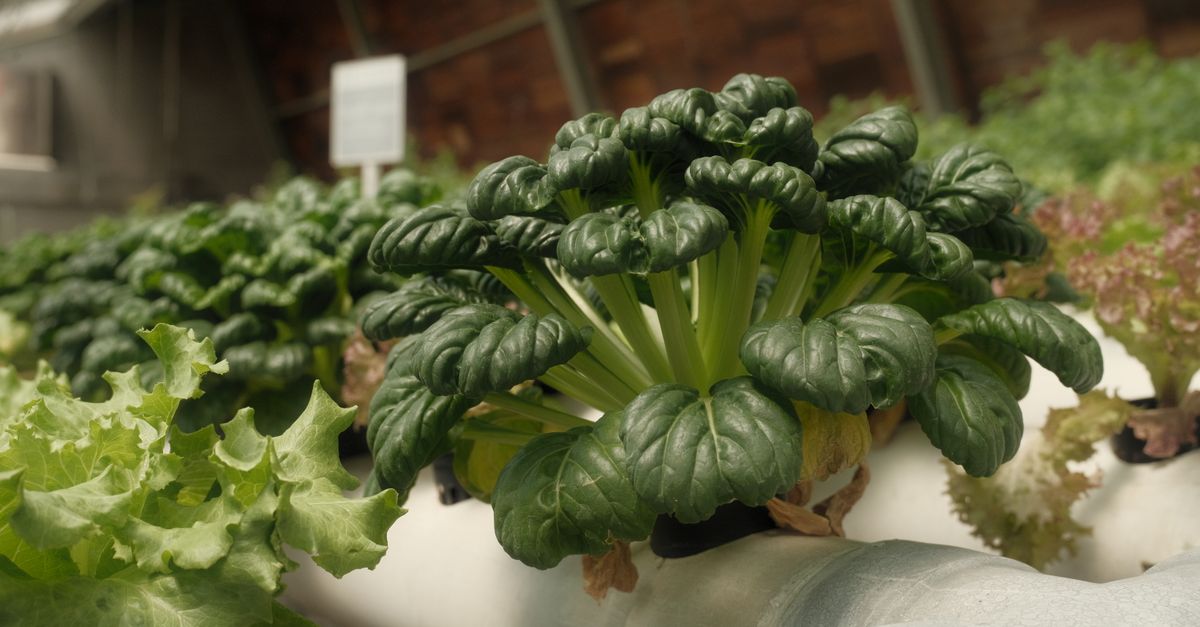
Hydroponic lettuce works in India as a small, high-skill urban enterprise: leaf lettuce grown in a recirculating nutrient film (NFT) channel system, sold fresh to restaurants, hotels, salad makers and premium retail. ICAR-CISH, Lucknow has tested it in subtropical conditions and designed low-cost units from ₹2,400 to ₹12,700, but the money is made or lost on buyers, power cuts, water temperature and root disease, not on the plants themselves.
Lettuce suits soilless growing because it is shallow-rooted, short-cycle and sold by freshness. An ICAR study reported 169% higher lettuce yield in a circulating NFT system than in open-field conditions, along with sweeter, crisper leaf. Heat is the main enemy in most Indian cities, since lettuce prefers cool root zones. Treat every price and income claim you see online as unverified until a buyer puts it in writing.
Where it works and what the system needs
- Place: any city or town with a buyer within a few hours of the unit. Fresh lettuce wilts quickly, so distance to the customer matters more than the district.
- Season: the ICAR-CISH trial at Lucknow raised seedlings in September and moved them to NFT after 30 days, i.e. the cool season. In the hot plains summer, lettuce bolts (runs to flower) and turns bitter unless the structure and nutrient tank are cooled.
- Nutrient solution temperature: ICAR-CISH gives 15 to 18 °C as ideal for leafy exotic vegetables, with growth limited below 10 °C or above 35 °C. A chiller or shaded, insulated tank may be needed in summer.
- Water and power: low-salt water with a neutral to slightly acidic pH works best. Pumps must run on a timer or flow continuously, so a battery or solar back-up decides whether a power cut kills the crop. See solar pump options.
- Light: full light is needed, with a net or polyhouse for rain, heat and insect protection. See polyhouse subsidy for structure support.
Systems and what they cost
ICAR-CISH (Lucknow) published these low-cost designs in Indian Horticulture, March-April 2026. Prices are those quoted by CISH for the unit itself.
| System | Plants per unit | Cost per unit | Notes |
|---|---|---|---|
| Vertical double-row NFT | 192 | ₹12,700 | Timer-run pump; 25% more plants than a single row; lettuce, kale, basil, coriander |
| Triangular vertical NFT (A-frame) | 80 | ₹3,500 | 8-watt pump; saves 60 to 70% water and 40% nutrients |
| Deep flow | 48 | ₹2,400 | Rooftops and balconies |
| Pyramid aggregate (solid medium) | 72 to 140 | ₹3,000 | Suits areas with erratic power |
- CISH reports that most hydroponic designs in India are imported and used by wealthy households, and that many users quit within a short time because of limited know-how, high investment and costly nutrient mixes.
- A commercial greenhouse unit with tanks, chillers, a nursery and a packing room costs far more than these small units. Get written quotes from at least two suppliers and ask your state horticulture department which components qualify for support.
Cultivars
An ICAR-CISH trial at Lucknow (2022-23 and 2023-24) compared seven cultivars in a vertical NFT system. Seed of these cultivars is sold by private seed firms; check which seed lines are available to you.
| Cultivar | Mean yield (g per plant) | Other trait in trial |
|---|---|---|
| Bingo | 127.8 | Highest yield |
| Lollo Rosso | 110.4 | Tallest plants (31.5 cm) |
| Summer Star | 94.3 | Heavy leaf weight |
| Grand Rapids | 91.4 | Longest leaves |
| Romaine | 64.3 | High antioxidants (565 μmol per 100 g) |
| Black Rose | 62.0 | Best nutritional quality (antioxidants 740 μmol per 100 g) |
| Tango | 59.3 | Narrow leaves |
Yield per plant is not the only test: a restaurant may pay more for Lollo Rosso or Romaine than for the heaviest green leaf. Ask your buyer which type they want before you choose.
Nursery, nutrients and pH
- Nursery: in the CISH trial seed was sown in 2-inch net pots filled with cocopeat, vermiculite and perlite (3:2:1) under partial shade with misting, and seedlings were moved to the NFT channels after 30 days.
- EC and pH, from the trial: yield rose steadily with EC from 1.8 to 2.0 to 2.2 dS/m (71, 88 and 96 g per plant on average). The best single combination was EC 2.2 dS/m with pH 7.5 for Bingo, which gave 226.7 g per plant. Across all cultivars, pH 6.5 gave the highest average yield (91 g) and pH 5.5 and 7.5 gave about 82 g, so the best pH depends on cultivar and EC.
- Other guidance: the CISH extension article lists a lower range for lettuce, pH 5.5 to 6.5 and EC 0.8 to 1.2 mS/cm. A University of Florida (IFAS) NFT trial used an initial EC of 1.2 dS/m. The ranges differ because of temperature, light and variety, so start in the lower range, measure growth, and raise EC only if the plants are pale or slow.
- Nutrient stock: ICAR-CISH has developed a low-cost leafy-vegetable A and B stock at 3X strength (1 litre in 300 litres of water), quoted at about ₹85 per litre. Never mix A and B in concentrated form because calcium and phosphate precipitate.
- Aeration: roots need oxygen. Keep the nutrient film shallow, the flow continuous or timed, and the tank covered and cool.
- Check pH and EC daily in a manual system. If pH needs correcting more than once a day, find the cause (water quality or fresh nutrient addition) instead of correcting again and again.
Pests, diseases and hygiene
- Root rot (often Pythium) spreads fast in warm, stagnant nutrient solution. It is the biggest risk when the tank water warms up. Keep the solution cool, clean the channels and tanks between crops, and remove sick plants at once.
- Tipburn (brown leaf edges) shows up in fast growth and heat. Ask your KVK or CISH for the right calcium and EC management.
- Aphids and whitefly enter through open sides; fine insect-proof net is the main protection. Sell only leaf that is free of residue, so spray only products labelled for lettuce and follow the label and your local KVK.
Harvest and yield
- Harvest whole heads or cut-and-come leaves when they reach the size your buyer wants, then chill and pack the same day.
- Trial yields in the CISH vertical NFT were 62 to 128 g per plant by cultivar, and up to 154 g (Bingo, pH 7.5) to 227 g (Bingo, EC 2.2, pH 7.5) at the best settings. Use 90 to 100 g per plant as a planning figure, not the best-case numbers.
- A 192-plant unit therefore gives roughly 17 to 25 kg of fresh lettuce per cycle at 90 to 130 g per plant, before losses in trimming and wilting.
Cost and returns
- No official price series: Agmarknet does not report hydroponic lettuce separately. Online guides for sellers quote ₹200 to ₹400 per kg in city retail, but these are unverified and depend on grade, packaging and buyer. Ask for a written rate from your buyer.
- Arithmetic (illustration only): 192 plants x 0.1 kg = about 19 kg per cycle. At ₹200 per kg that is ₹3,800 per cycle and at ₹300 per kg ₹5,700. Subtract seed, nutrient, electricity, packing, transport, labour and losses to see profit. A single 192-plant unit is a learning unit, not a livelihood.
- For a unit costing ₹12,700 the payback depends on how many cycles you can run a year, which depends on summer heat control. A commercial farm of thousands of plants also needs a cooled nursery, a packing room, cold chain and a salaried grower, so costs scale up sharply.
- Avoid sellers who offer "turnkey" farms with guaranteed income or buy-back. Ask for the working farm, not a brochure.
Market and risks
- Buyers: restaurants and hotels, quick-service chains, salad kitchens, supermarkets and online grocers. They want consistent weekly supply, so a single cycle failure can lose a customer.
- Risks: power failure, summer heat, root disease, imported-system dependence, expensive nutrients, and small buyers who pay late or haggle once your price is known.
- Sell fresh and local: lettuce cannot be stored for weeks. A group of growers through an FPO can share chilling and transport. Check the subsidy finder and your state horticulture department; no verified central rate for hydroponic units was found.
- Compare with soil-based options such as drip-irrigated leafy vegetables before you invest.
Sources
- Singh et al., Optimising EC, pH and cultivar for hydroponic lettuce in subtropical environments, Indian Journal of Agricultural Sciences 96(2), 2026 (ICAR-CISH, Lucknow)
- Singh et al., Low cost hydroponics systems for urban and peri-urban farming, Indian Horticulture, March-April 2026 (ICAR-CISH)
- Acharya et al., Yield and quality attributes of lettuce and spinach grown in different hydroponic systems, ICAR journal
- University of Florida IFAS, NFT lettuce nutrient management (AE610)