
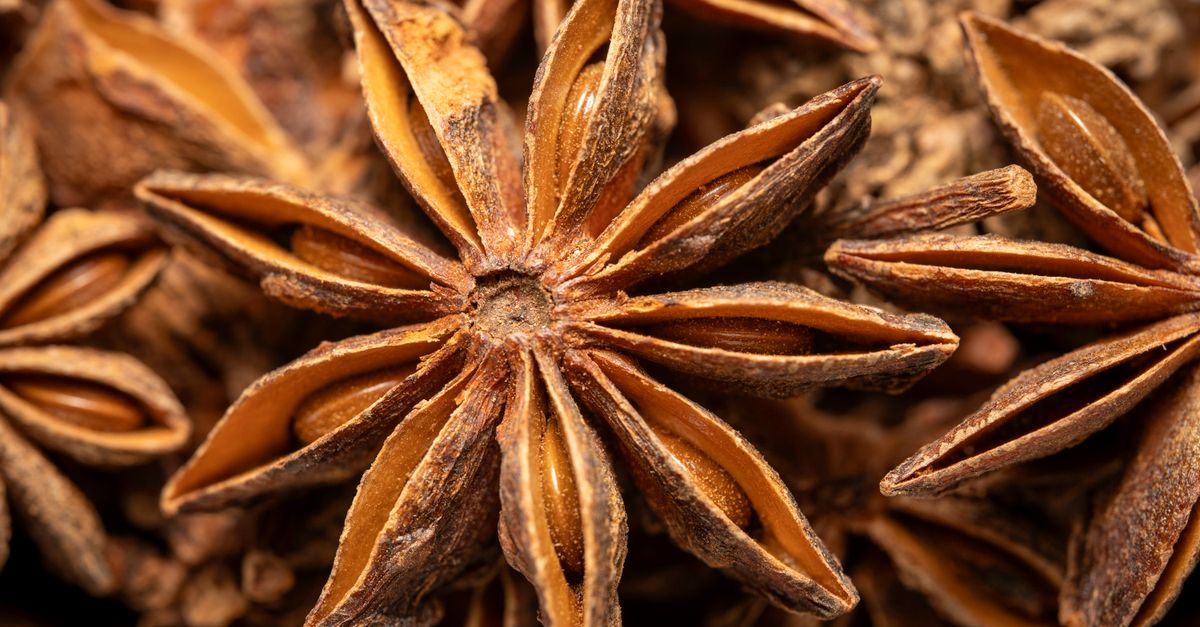
Star anise is not a crop an Indian farmer can plant for a quick return. The only Indian source is the Himalayan species Illicium griffithii (local name "lissi"), which grows wild in cold, humid forests at roughly 2,000 to 3,000 m in Arunachal Pradesh and is gathered, not farmed, while the star anise sold in shops is Illicium verum from China and Vietnam. Growing it means a slow forest tree on high-altitude land, with no established Indian planting package and a market that is mostly decided by imports.
India imported 9,215 tonnes of star anise worth ₹439.09 crore in 2023-24, up from 6,606 tonnes in 2019-20, while local collection is a few tonnes per village. Treat this page as a guide to what is known, and talk to the state forest or horticulture department and the nearest KVK before spending money on seedlings.
Where it grows in India
- Arunachal Pradesh: Illicium griffithii occurs in West Kameng, Tawang, Lohit and Lower Subansiri districts, and in very small numbers in Pakke Tiger Reserve (East Kameng). A forest survey found it between 2,000 and 3,000 m, most abundant at 2,500 to 2,750 m, in subtropical and temperate broad-leaved forest, in the second and third storey under larger trees.
- Other states: the species is also reported from Nagaland, Manipur and Meghalaya. Reports of star anise being "viable" in Himachal Pradesh, Jammu and Kashmir and Uttarakhand are research claims, not an existing crop.
- Illicium verum (the trade species): in China it is grown mainly at 200 to 700 m in Guangxi, on deep, well-drained, fertile, moist, acidic sandy loam or loam. It grows poorly on dry, barren or waterlogged land. No Indian trial data on this species was found, so its performance in India is unknown.
Species and how they differ
| Species | Where | Status and use |
|---|---|---|
| Illicium griffithii (lissi) | Wild, 2,000 to 3,000 m, Arunachal and the north-east | IUCN Endangered; listed Near Threatened in Arunachal and Critically Endangered in Meghalaya. Fruit used in tea, local wine, and medicine for cough, toothache and stomach pain. |
| Illicium verum | Guangxi and Yunnan (China), Vietnam and other South-East Asian countries | The culinary spice of world trade. China produces about 80% of world output, over 90% of it from Guangxi. |
| Illicium anisatum (Japanese star anise) | East Asia | Toxic (anisatin and neoanisatin). Looks like true star anise and has caused poisoning when mixed in. |
No named improved variety of either species has been released in India. Seedlings and planting stock are not sold through any standard nursery channel that could be verified, so a farmer would need to source from the forest department or a research institute.
Growing: what is and is not known
- Tree and flowering: in the wild the tree flowers from January to April and fruit matures in autumn. The same survey recorded alternate-year bearing, good crops in some years and poor in others, which matches the experience of the first commercial grower in Arunachal reported by Mongabay India.
- Regeneration: the survey counted 1,372 seedlings, 1,358 saplings and 314 mature trees, with good seedling numbers but poor sapling survival. Establishing young trees is the hard part.
- Not available: no verified Indian figures exist for spacing, fertiliser dose, years to first fruit or yield per tree. Do not accept a nursery's numbers on these without a written source. Ask the state forest department or KVK in your district.
- Pests: a new small yellow insect with brown spots has been reported stunting trees in Arunachal, and it has not been formally identified. Trampling by livestock is also a recorded threat to young trees.
Harvest
- Collection in Arunachal runs October to December, mostly by women who gather fallen fruit from the forest floor. Dried fruit is sold whole.
- Fruit of Illicium verum is picked in autumn and winter as it turns from green to yellow and is then sun-dried; this is the Chinese practice and not an Indian guideline.
- Village yield figures: one village, Nyukmadung, reportedly collected about 6 tonnes in 2022 and 4 tonnes in 2023.
Prices and market
- Local price: reported at ₹120 to ₹150 per kg in 2013, about ₹150 per kg in recent years, a spike to ₹450 per kg during pandemic-era import limits, and ₹180 to ₹220 per kg more recently as Vietnamese stock competed (Mongabay India, February 2025). A forest department royalty of ₹31 per kg is reported. Prices swing a lot, so check the current rate before planning.
- Middlemen: trade is unorganised, villagers often do not know grading standards, and transport from remote villages is costly. Direct market access is the main gap.
- Imports set the price: any larger planting would sell against Chinese and Vietnamese star anise. Join a group such as an FPO before attempting sales, and see export buyers only if you have graded, tested produce.
- Cost and returns: no reliable Indian cost of cultivation or per-acre income exists for this crop, so none is given here. Any brochure promising "lakhs per acre" has no source behind it.
Conservation and rules
- Illicium griffithii has lost over 60% of its population in about 84 years, according to Mongabay India's report, mainly due to over-collection of fruit, felling, deforestation and habitat conversion.
- WWF-India supports Community Conserved Areas at nine sites in Arunachal to promote sustainable harvesting and market links.
- The forest survey recommends agroforestry cultivation, training on sustainable harvest and village-level protection as the way to reduce pressure on wild trees.