
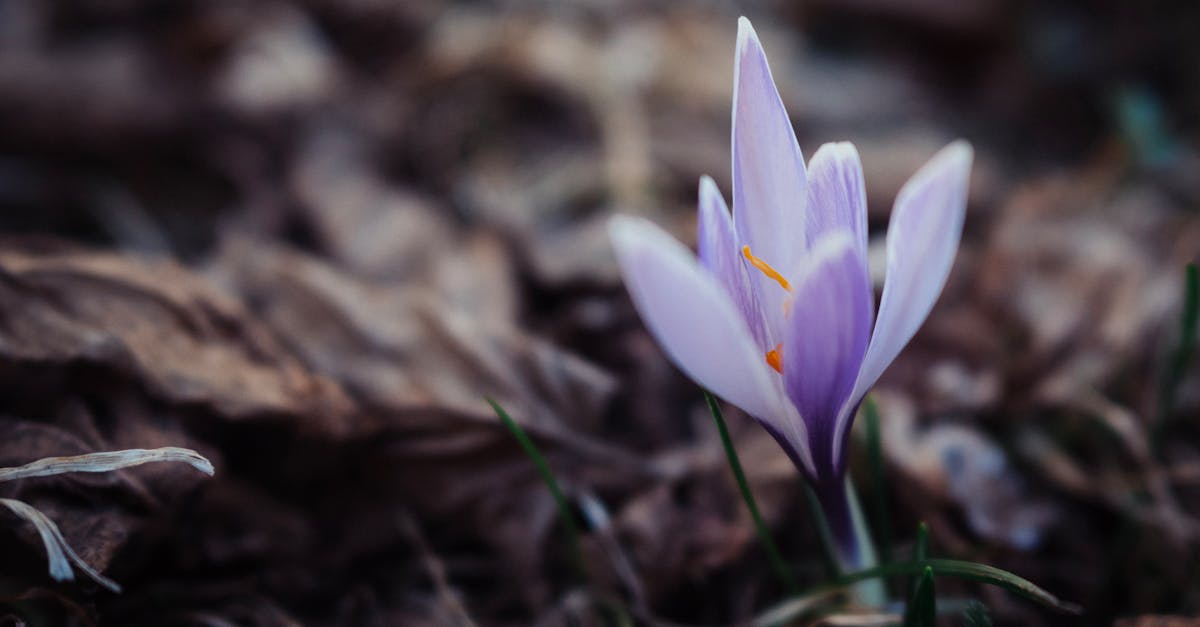
Saffron (kesar, Crocus sativus) is a crop for cold, dry-summer, well-drained highland soils, and in India it is commercially grown almost only in Jammu and Kashmir (Pampore in Pulwama, Budgam, Srinagar and Kishtwar). Outside Kashmir it is still at the trial stage: CSIR-IHBT has tested it in Himachal Pradesh, Uttarakhand and Ladakh, and has said it wants three consecutive successful crops before declaring an area fit. For a farmer on the plains, in a hot humid district or in a city, saffron is not a realistic field crop, however an indoor "kit" is advertised.
Yield per area is very low (a few kilograms of dried spice per hectare), so profit comes from the very high price per kg and from handling a labour-heavy harvest. The main risks are corm rot, weather swings and buying poor planting material.
Where it grows, and the numbers
- Pampore karewa plateau (about 1,585 to 1,677 m above sea level) is the heartland; the broader saffron soils lie at roughly 1,600 to 2,100 m. Karewa soils are well drained, which prevents corm rot. Saffron here is largely rainfed.
- Reports for 2025 give about 3,665 hectares in Kashmir, with Pampore about 3,200 ha, Budgam about 300 ha and Srinagar about 165 ha. A PIB statement says the area has fallen from about 5,700 ha to about 3,800 ha and productivity has dipped from 3.13 to 2.50 kg per hectare. Different official statements give different production and yield figures, so treat these as approximate.
- The National Saffron Mission began in 2010 (₹371.18 crore, of which ₹286.06 crore was the central share and ₹85.12 crore farmers' share, per PIB) to rejuvenate corms, irrigation and marketing. Kashmir saffron received a GI tag in 2020.
- Non-Kashmir trials: CSIR-IHBT trials in 2018 to 2020 at six sites in Himachal Pradesh and Uttarakhand (Kinnaur, Bharmour, Palampur, Bageshwar). Lahaul-Spiti and Seraj valley are pilot areas. These are pilots, not an established industry.
Climate and soil
Saffron wants friable, loose, well-drained calcareous clay or loam with good organic matter and pH 6 to 8 (alkaline slightly preferred). It needs cold winters and a dry summer rest, with flowering in October to mid-November. Waterlogging in the dormant corm season is the most common cause of failure.
Planting material and variety
SKUAST-Kashmir has released Shalimar Saffron-1. Its package of practices gives these corm quantities per hectare:
| System | Target population | Corms needed | Geometry |
|---|---|---|---|
| Normal density | 5 lakh per ha | about 50 quintal mixed grade | 20 x 10 cm, 15 cm deep, 1 corm per hill; or 25 x 15 cm with 2 corms |
| High density | 12 lakh per ha | about 86.4 quintal (57.6 q of corms above 8 g, 28.8 q of 5 to 8 g) | ditches 25 x 15 cm apart, 5 corms per ditch |
Per acre, that is about 20 quintal of corms at normal density and about 35 quintal at high density. Another traditional Kashmir practice described by growers is planting in August on raised beds of 1.5 to 2 m width. Planting is best in July to August, before flowering. Bigger corms (above 8 g) flower more, which is why corm grade matters more than count.
Planting material is the largest upfront cost and the main fraud risk. Buy only from the J&K Agriculture Department, SKUAST-Kashmir or a source they can vouch for; ICAR researchers also flag limited quality planting material as a constraint.
Nutrition, irrigation and care
No verified fertiliser schedule could be read from the SKUAST package, so no dose is given here; follow the J&K Agriculture Department or SKUAST guidance. The mission has put up borewell-fed sprinkler systems that wet the soil to about 6 inches (the corm zone), with emitters of 9.3 litres per minute at 10 m x 10 m spacing. See sprinkler irrigation.
Pests and diseases
- Corm rot (Fusarium oxysporum is the main organism named) is the biggest disease risk and the leading cause of yield loss. Recent research argues that injury to corms, rather than the pathogen alone, is the primary trigger, so handle corms carefully and plant in drained ground.
- Porcupines and rodents dig up corms; growers use fencing and iris planting as a deterrent.
- Climate change, irregular rain, cement dust near Pampore and land conversion for housing are cited as other causes of decline.
Harvest and yield
Flowers are picked by hand in the morning in October to November, and the stigmas are separated and dried the same day. SKUAST-Kashmir reports that productivity rose from 2.5 kg per hectare in 2003-04 to about 5.0 to 5.5 kg per hectare in recent years (about 2 to 2.2 kg per acre). A farmer-reported four-year cycle in the research literature shows about 1.5 kg per hectare in year 1, then 5, 7 and 10 kg per hectare in years 2 to 4. Corms multiply under the soil, so the stock is lifted and replanted every few years.
Cost and returns
Treat this as a rough illustration, not a promise. At 5 kg per hectare (2 kg per acre) and a price of ₹3 lakh per kg, an acre would gross about ₹6 lakh. The price assumption is the weakest part: a 2025 news report said top-grade Kashmir saffron was selling above ₹5 lakh per kg, but no farm-gate or auction price series was verified, so do not use headline retail prices. Corm cost (about 20 quintal per acre at normal density), labour for picking, sprinklers and fencing are real costs; no verified corm price was found, so no net figure is shown. At 2 kg per acre a 10 per cent price fall is a large absolute loss, and a failed year cannot be recovered.
Market and selling
- Kashmir saffron has a GI tag (2020). Adulteration (dyed fibres, corn silk, non-Kashmir or imported stigma sold as Kashmiri) is common, and the ICAR review lists it as a threat. Sell through GI-certified, tested channels where possible.
- Indoor, aeroponic or hydroponic "saffron farms" advertised in cities sell corm kits or buy-back deals. The ICAR review calls these practices unsustainable because they draw down corm stock from traditional areas, and indoor yields are not established by any published trial data. Ask for written buy-back terms and a reference of someone who has actually sold spice.
- Check mandi prices, and consider a group sale through an FPO.
Subsidy
Support for saffron has come through the National Saffron Mission and the J&K Agriculture Department. Rates change, and no current per-hectare rate has been verified, so confirm with the department. Check also the subsidy finder.
Sources
- AICRP Spices: Package of Practices, Shalimar Saffron-1 (SKUAST-Kashmir)
- Red Gold in Peril: threats to cultivation of saffron in India (ICAR e-pubs)
- PIB: Saffron bowl of India extends to the North East
- Drishti IAS: Decline of saffron production in Kashmir (Jan 2024)
- Injury and not the pathogen is the primary cause of corm rot in saffron (PMC)