
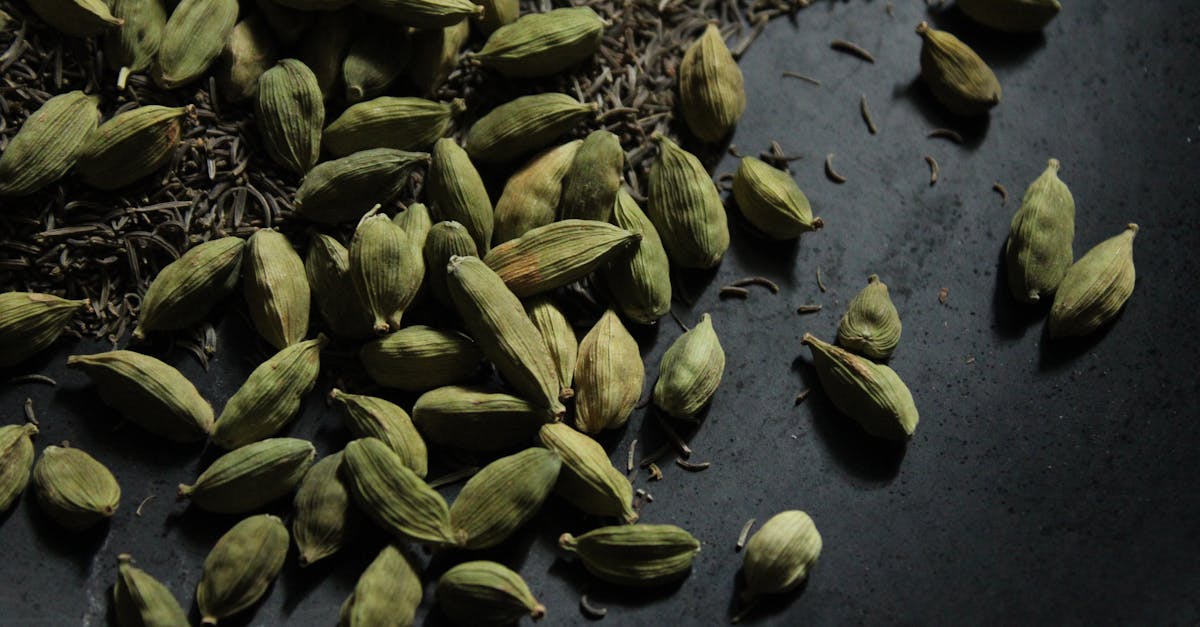
Small (green) cardamom grows commercially only in the shaded, humid hills of the Western Ghats, mainly Idukki and Wayanad in Kerala, Kodagu, Hassan and Chikmagalur in Karnataka, and the Theni and Nilgiris hills of Tamil Nadu. It needs 600 to 1,500 m elevation, acidic forest loam, 40 to 60% shade and a plantation that can be irrigated in the dry months, so it is not a crop for the plains.
A plantation bears from the second to third year and stays productive for roughly 8 to 12 years. Yields vary enormously, from about 200 to 250 kg of dry capsules per hectare in a basic rainfed package to over 1,400 kg per hectare in research trials of improved selections, and price swings at the Spices Board e-auctions decide whether a season pays.
Where it grows and climate limits
- Elevation: TNAU gives 600 to 1,500 m. Areas exposed to strong wind are unsuitable.
- Soil: forest loam, acidic, pH 5.0 to 6.5, with good drainage. Waterlogged pockets invite rhizome rot.
- Shade: 40 to 50% in rainfed gardens and 55 to 60% where irrigated (TNAU). The plant is a forest understorey species and scorches in open sun.
- States: Kerala, Karnataka and Tamil Nadu. Cardamom Research Institute (ICRI), Myladumpara, has zone-wise selections for each state.
Varieties
| Variety | Source | Type and notes | Zone |
|---|---|---|---|
| ICRI-1, 2, 5, 6, 7 | ICRI (Spices Board), Myladumpara | High-yield selections released for Kerala | Kerala |
| ICRI-3, ICRI-8 | ICRI (Spices Board) | Released for Karnataka | Karnataka |
| ICRI-4 | ICRI (Spices Board) | Released for Tamil Nadu | Tamil Nadu |
| Mudigere 1, Mudigere 2, PV-1, PV-3, IISR Suvarna, TKD-4 | State and ICAR research stations, listed by TNAU | Malabar type, the commonest group | Check with ICRI or KVK |
| MCC-12, MCC-16, PV-2, PV-5 | Listed by TNAU | Vazhukka type | Check with ICRI or KVK |
| Accession 594 | ICRI, registered 2021-22 | Yield potential 3,000 kg/ha under moderate management (potential, not field average) | Kerala hills |
In a trial reported in a plant breeding journal, the hybrid MHC-26 gave 1,896 kg/ha and selection MCC-73 gave 1,886 kg/ha, showing how far improved material can exceed old plantations. Buy only from ICRI, Spices Board or KVK-approved nurseries; unlabelled suckers are the main route for katte virus.
Planting material, spacing and planting
- Propagation: seed, suckers or tissue-culture plantlets. TNAU uses about 600 g fresh seed per hectare for nursery beds; seedlings are moved to a secondary nursery at the 3 to 4 leaf stage at 20 x 20 cm under shade.
- Main field age: 18 to 22 month-old seedlings.
- Spacing: 2.5 x 2.0 m for larger types and 2.0 x 1.5 m for smaller types, about 2,000 to 3,333 plants per hectare, or roughly 810 to 1,350 per acre.
- Pits: 60 x 60 x 60 cm, filled with compost and topsoil. Best planting window June to December, when soil is moist.
Nutrition and irrigation
- Basal: compost 25 t/ha (about 10 t per acre).
- Fertiliser (TNAU): 75 kg N, 75 kg P and 150 kg K per hectare a year (about 30:30:60 kg per acre), in two split doses.
- Water: most gardens depend on rain, but TNAU recommends sprinklers in the dry season to raise yield. See sprinkler irrigation and drip irrigation for equipment and subsidy.
Pests and diseases
| Problem | What it does | Management |
|---|---|---|
| Thrips | Scarred, deformed capsules, lower grade | TNAU lists diafenthiuron 8 g per 10 litres of water; follow the label and local KVK advice |
| Shoot and capsule borer | Bored shoots and capsules | Pheromone traps, 12 per hectare, to catch moths (TNAU) |
| Capsule rot (azhukal) | Capsules and leaves rot in monsoon | 1% Bordeaux mixture, or 0.25% copper oxychloride, or 0.2% mancozeb, three sprays before and during the monsoon (TNAU). Spices Board trials found dimethomorph, fosetyl-Al and copper oxychloride gave the best capsule and rhizome rot reduction |
| Rhizome rot and damping off | Seedling and clump collapse in wet soil | Well-drained nursery beds, Bordeaux mixture or mancozeb drench (TNAU) |
| Katte (mosaic) virus | Pale streaks on leaves, stunted clumps, no cure | Plant only virus-free material, rogue out diseased clumps, control the banana aphid that carries it |
Spices Board reports that its integrated package cut insecticide sprays to 5 to 7 a year from 12 to 14. Spray schedules and permitted chemicals change, so confirm with the Spices Board or your KVK before spraying.
Harvest, curing and yield
- First crop: bearing starts about two years after planting; full yield from year 3 or 4.
- Picking: capsules ripen unevenly, so pick every 15 to 25 days, peak October to November (TNAU).
- Curing: dry at 45 to 50 degrees C for 14 to 18 hours in an electric dryer, or 50 to 60 degrees C overnight in a kiln. A 10 minute dip in 2% washing soda before drying helps keep the green colour (TNAU).
- Yield range: 200 to 250 kg dry per hectare (80 to 100 kg per acre) in the TNAU package; 1,400 to 1,900 kg per hectare (570 to 770 kg per acre) for the best selections in research trials. A well-run commercial garden sits between the two.
Cost and returns
At the Puttady (Idukki) e-auctions, Spices Board market reports show average prices of about ₹2,250 to ₹2,320 per kg in March 2026, ₹2,420 to ₹2,480 in May 2026 and ₹2,980 to ₹3,250 in August 2026. The same period of the previous season was near ₹3,100 to ₹3,170. Prices move by 30% or more within a season.
| Scenario (per acre, per year) | Dry yield | Gross at ₹2,500 per kg | Gross at ₹3,200 per kg |
|---|---|---|---|
| Basic rainfed package | 90 kg | ₹2.25 lakh | ₹2.9 lakh |
| Good garden, irrigated | 300 kg | ₹7.5 lakh | ₹9.6 lakh |
| Trial-level (not typical) | 600 kg | ₹15 lakh | ₹19.2 lakh |
These are gross figures: yield multiplied by price. Labour for picking every 15 to 25 days, irrigation, plant protection, curing fuel and the 2 to 3 years before the first crop are large costs, and no verified Indian per-acre cost figure was available to subtract. Ask the Spices Board regional office or your KVK for current local costs before projecting profit. For crop loans and insurance, see Kisan Credit Card and PMFBY.
Market and selling
- Small cardamom is sold mainly through Spices Board licensed e-auctions at Puttady in Idukki, Kerala and other recognised centres; growers sell via licensed auctioneers or dealers, so register with the Spices Board.
- Grade matters: bold, green, uniformly dried capsules fetch the top price, so careful curing is worth money.
- Group selling through an FPO lowers curing and marketing cost for small gardens. For the related large (black) cardamom of Sikkim and Darjeeling see large cardamom.
Sources
- TNAU Agritech Portal, Cardamom (cultivation, pests, harvest)
- Spices Board India, Cardamom research highlights (ICRI varieties, plant protection)
- Spices Board India, weekly Spice Market reports (Puttady e-auction prices, 2026)
- Plant breeding journal trial of cardamom genotypes (MHC-26, MCC-73 yields)