
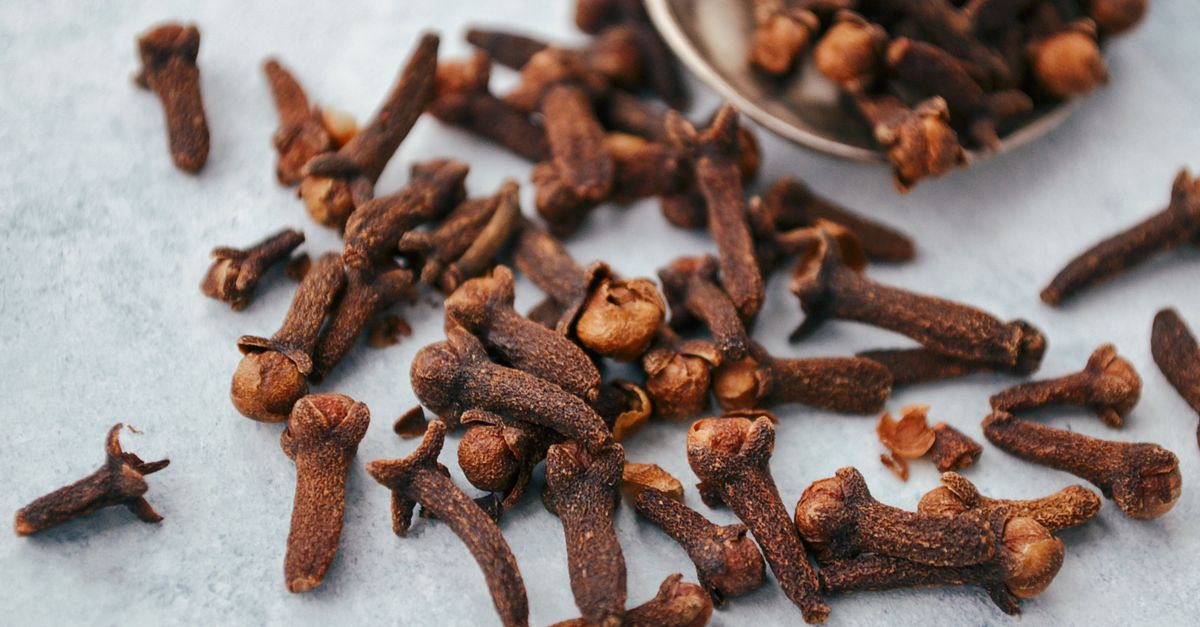
Clove grows commercially in India only in the humid southern Western Ghats (Tamil Nadu, Kerala and Karnataka) and in the Andaman and Nicobar Islands, on shaded, well-drained, humus-rich land with heavy rain. It is a tree crop that takes six to seven years to start bearing, so it suits farmers with land in that belt who can wait and who already grow arecanut, coconut or fruit trees that give partial shade.
India is short of clove: ICAR-IISR lists clove as the single largest item in the country's spice import bill by value (about 16%), so demand is not the problem. The risks are the long wait, the narrow climate range and large year-to-year swings in tree yield.
Where it grows in India
- Tamil Nadu: Kanyakumari district (the Keeriparai and Maramalai areas have been surveyed for local clove types) and the Nilgiris.
- Kerala and Karnataka: southern and midland Kerala, and the Western Ghats hill tracts of Karnataka. A Kerala Agricultural University survey in 2017-18 covered southern Kerala and Kanyakumari, which it calls the major clove-growing tract of India.
- Climate (TNAU): humid tropical, annual rainfall 150 to 250 cm, mean temperature 20 to 30 degrees C, elevation up to about 1,000 m.
- Soil (TNAU): deep, rich loams with high humus, and laterite soils. Waterlogged or dry, shallow soil is unsuitable.
- Shade: young plants need shade. Banana or temporary pandals are used at first, and north and north-eastern slopes are preferred. In established gardens clove is usually a mixed-garden or intercrop tree.
- Outside this belt, including the plains, dry regions and the Himalayan states, clove is not a realistic crop.
Planting material
- Clove is raised from seed taken from fully ripe fruits, sown at once, because the seed loses viability quickly; germination takes about 5 to 6 weeks (TNAU). Buy seedlings from a Spices Board, ICAR, state agricultural university or state horticulture nursery.
- No named improved clove variety was found for general planting in India. The KAU survey selected 30 productive local trees more than 25 years old and found wide variation, so use seedlings from known high-yielding mother trees.
Spacing and planting
- Spacing: 6 m either way (TNAU), which is about 278 trees per hectare (about 112 per acre).
- Pits: about 75 x 75 x 75 cm.
- Season: transplant at the start of the rains (June to July); in low-lying wet areas, towards the end of the monsoon (September to October).
Nutrition and irrigation
| Tree age | FYM | N | P2O5 | K2O |
|---|---|---|---|---|
| 1 year | 15 kg | 20 g | 20 g | 60 g |
| 7 years and older (bearing) | 50 kg | 300 g | 300 g | 960 g |
- Doses are per tree per year (TNAU). For a 7-year-old garden at 112 trees per acre that is about 34 kg N, 34 kg P2O5 and 108 kg K2O per acre per year. TNAU also advises 50 g each of Azospirillum and Phosphobacterium one month after manuring.
- Irrigation: about 8 litres per tree through drip or basin from January to May, the dry months. See drip irrigation.
- Pests and diseases (TNAU): stem borer, black scale and leaf-eating caterpillars; leaf rot, leaf spot and quick wilt. Keep drainage good, destroy affected plants and follow the label and your KVK or Spices Board advice for any spray. See pests.
Harvest and yield
- First bearing: from the sixth year (TNAU); other extension sources say about seven years. Trees then bear for decades.
- Harvest: pick buds when fully mature but before they open, and dry them in the sun for 5 to 7 days (TNAU).
- Yield: TNAU gives 2 to 3 kg of dried buds per tree, about 225 to 335 kg per acre (550 to 830 kg per hectare) at 112 trees per acre.
- The KAU survey recorded 5 years of dry-bud yield on 30 selected local trees over 25 years old: pooled means ranged from 1.5 to 6.6 kg per tree, and individual trees swung widely between years (one tree went from 8.98 kg to 3.1 kg in successive years). These trees were picked for high yield, so plan on the lower TNAU figure.
💡 Tip: Count the first six to seven years as pure cost. Plan an intercrop or shade tree income, such as banana, arecanut or coconut, to carry the garden until clove bears.
Cost and returns
- No verified Indian cost-of-cultivation figure for clove was found. Ask the Spices Board regional office, KVK or state horticulture department for a current estimate.
- Arithmetic: at 2 to 3 kg per tree and 112 trees per acre, every ₹100 per kg of dry bud price is worth about ₹22,500 to ₹33,500 per acre per year in a mature garden. Check today's rate before projecting; see mandi bhav.
- Drying and sorting labour, ladders for picking tall trees and the six to seven years of upkeep before the first crop are the main costs.
Market and risks
- Domestic production is small compared with demand; ICAR-IISR notes that imports of clove are large relative to domestic output, with more imported than exported. Local buyers are spice traders, grinders and clove-oil distillers.
- Imports come mainly from Madagascar, Comoros, Sri Lanka, Tanzania and Indonesia, so prices move with global supply. Do not budget on a single year's price.
- Do not buy plants from sellers who promise a fixed buy-back or a return per tree. Buy certified seedlings from government or university nurseries.
- Sell dry buds with uniform colour and low moisture through a trader or FPO. Check subsidy finder for MIDH planting support; no clove-specific rate was verified.