
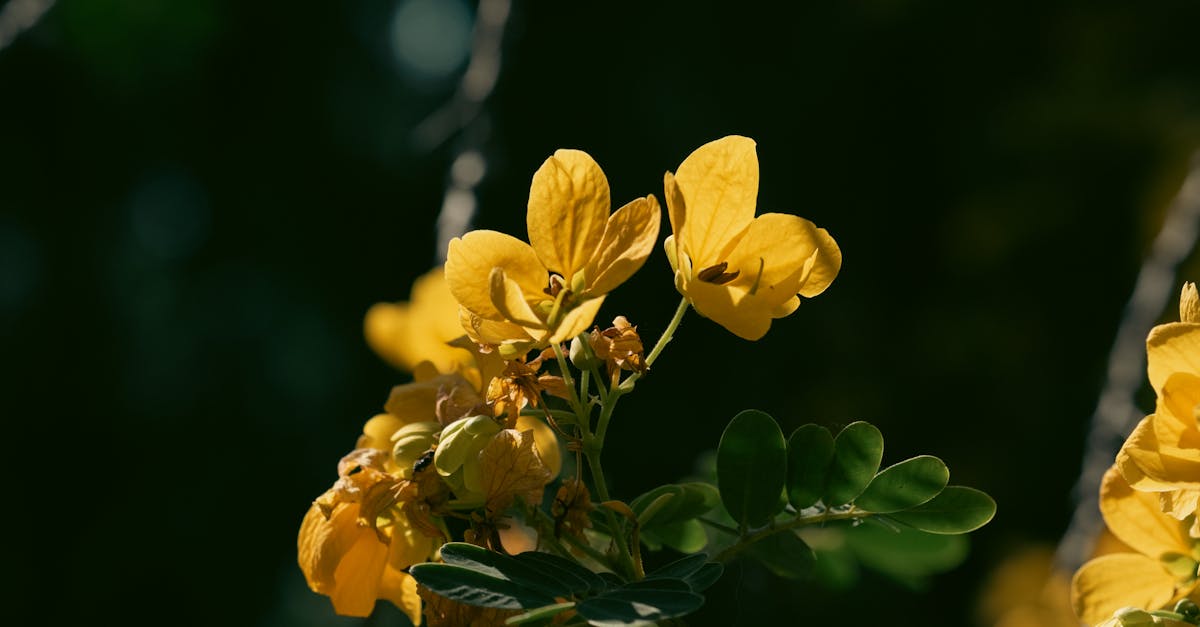
Senna (Cassia angustifolia, Tinnevelly senna) is a genuine Indian crop that suits dry, low-rainfall land in Tamil Nadu, Gujarat and Rajasthan: it grows rainfed on poor soil, needs few inputs and gives three leaf pickings in a season. The weak point is price. Farm-gate rates for leaf are modest and unstable, so it pays as a low-cost crop for marginal land, not as a high-income one.
India is described by ICAR-DMAPR as the largest producer and exporter of senna, with about 6,000 to 7,500 tonnes of leaf and pod a year from roughly 1 lakh hectares, and about 80% exported. Sennoside content and clean, correctly dried produce decide the grade.
Where it grows in India
- States: commercial cultivation is reported in Tirunelveli, Madurai and Tiruchirapalli districts of Tamil Nadu, and in Andhra Pradesh, Karnataka, Gujarat, Rajasthan, Maharashtra, West Bengal and Tripura, in arid and semi-arid regions. The crop got its name from the Tinnevelly (Tirunelveli) and Ramanathapuram districts, where it was first grown commercially.
- Rainfall and soil: areas with 300 to 400 mm annual rainfall are suitable. Sandy loam, red loam and alluvial soils are good, and red loam with drainage is best. Soil pH of 7 to 8.5 is ideal, and the crop tolerates some salinity. Black cotton soil works only if drainage is good.
- Limits: senna tolerates drought but is sensitive to waterlogging and to prolonged rainy, cloudy spells, which spoil the produce and invite leaf diseases. It is a sun-loving crop.
Varieties
| Variety | Source | Traits |
|---|---|---|
| ALFT-2 | AAU, Anand | Late flowering, high foliage yield; widely grown in Gujarat and Tamil Nadu |
| KKM (Se) 1 | TNAU, Coimbatore | Suited to rainfed conditions in Tirunelveli and Tuticorin regions |
| Tinnevelly senna | TNAU, Coimbatore | Semi-spreading type, popular in Tamil Nadu |
| Sona | CSIR-CIMAP, Lucknow | For north Indian conditions; about 1.1 t dry herbage and 0.4 t seed per hectare, 3.51% sennoside |
Sowing and spacing
- Season: TNAU gives February to March and June to July. ICAR-DMAPR says June to July in western India and September to October in southern India to use residual moisture after paddy.
- Seed: scarify seed with sand or soak overnight. TNAU gives 15 to 20 kg per hectare (6 to 8 kg per acre). DMAPR gives 25 kg per hectare broadcast in rainfed areas, 12 to 15 kg under irrigation and about 6 kg by dibbling. Treat seed against damping off (thiram 3 g per kg or carbendazim 1 g per kg) and sow 1 to 2 cm deep.
- Spacing: 45 x 30 cm in lines, which is about 74,000 plants per hectare or about 30,000 per acre. Line sowing is better than broadcasting because it allows weeding.
Nutrition, irrigation and weeds
- FYM: 10 to 15 t per hectare (4 to 6 t per acre) at last ploughing.
- NPK: TNAU gives 40:40:40 kg per hectare basal plus 40 kg N at 40 days (about 16:16:16 kg per acre basal plus 16 kg N). DMAPR gives 80:40:40 kg per hectare, with all P and K and half the N at sowing and the rest of the N at 90 days (about 32:16:16 kg per acre). Follow your soil test and KVK advice.
- Water: it can be rainfed, but 2 to 4 irrigations raise yield: one straight after sowing and one at 30 days if soil is dry. Avoid standing water. See drip irrigation if water is scarce.
- Weeds: early growth is slow. Weed at 25 to 30 days and thin to the right stand; once plants reach 20 to 25 cm they suppress weeds.
Pests and diseases
- Damping off: in poorly drained soil in north and west India; prevent with seed treatment and slope for drainage.
- Leaf spot (Alternaria) and leaf blight (Phyllosticta): occasionally serious in cloudy, humid weather; leaves dry and fall. TNAU lists carbendazim 0.5% sprays at fortnightly intervals.
- Caterpillar (Catopsilla pyranthe): feeds on leaves from July to October; DMAPR notes it is heavily parasitised by Trichogramma chilonis, with releases of 1.5 lakh per hectare per week suggested.
- Leaf is a medicinal export product with residue limits. Wait 25 to 30 days between the last spray and leaf harvest, and use only products your KVK recommends, as per the label. See pests.
Harvest and yield
- Pickings: pinch the first flowers at about 2 months to encourage branching. DMAPR gives hand picking at 50 to 70 days, 90 to 100 days and 130 to 150 days after sowing; TNAU gives the first harvest at 2 months and then every 30 days. Pick when leaves are fully grown, thick and bluish green.
- Drying: keep the produce in the open for 6 to 10 hours, then dry in shade on a clean floor or tarpaulin for 7 to 12 days, turning often, to about 10% moisture. Avoid hot sun, which spoils colour and sennosides; mechanical drying at 45 C also works. Light to yellowish green leaf and bold pods get the best grade; brown or broken leaf gets less.
- Quality: buyers accept about 2 to 2.5% sennoside in leaf and 2.5 to 3.0% in pods. Seed carries no sennoside.
- Yield per hectare (acre): DMAPR gives 15 q dry leaf and 7 q pods under irrigation (about 607 kg and 283 kg per acre) and 10 q leaf and 5 q pods rainfed (about 405 kg and 202 kg per acre). TNAU gives 2 t leaf and 150 to 200 kg pods irrigated, and 1 t leaf and 75 to 100 kg pods rainfed. Use the lower DMAPR figures for planning.
💡 Tip: Agree grade, moisture limit and sennoside test with the buyer before sowing, and do not sun-dry. Mouldy or sun-bleached leaf is the usual reason for rejection or downgrading.
Cost and returns
- Price: a 2023 ICAR-DMAPR article quotes ₹70 per kg for leaf and ₹80 per kg for pods and calls the market unsteady and unorganised. Online trade listings seen in 2026 ranged roughly from ₹40 to ₹100 per kg for leaf (organic at the top). Those are trader asking prices, not farm-gate. Ask local buyers for the rate for your grade.
- Arithmetic (illustration): irrigated, using DMAPR yields: 607 kg leaf x ₹50 plus 283 kg pods x ₹66 is about ₹49,000 per acre; at ₹70 and ₹80 it is about ₹65,000. Rainfed: 405 kg x ₹50 plus 202 kg x ₹66 is about ₹34,000; at ₹70 and ₹80 about ₹44,000. This is gross income per acre.
- Cost: no verified current cost of cultivation was found. Seed, FYM, picking labour and drying are the main items; ask your KVK for local figures and subtract them to get net income.
Market and risks
- About 80% of production is exported, mainly to the United States, Germany, Italy, the Netherlands, Canada, Mexico, Australia and Japan, while Indian herbal industry use is about 1,285 tonnes a year. Organic senna is reported to fetch about 30% more in world markets.
- Price swings are large, and the main losses come from rain at harvest and poor drying. See export buyers, FPO and subsidy finder; no senna-specific subsidy rate was verified.