
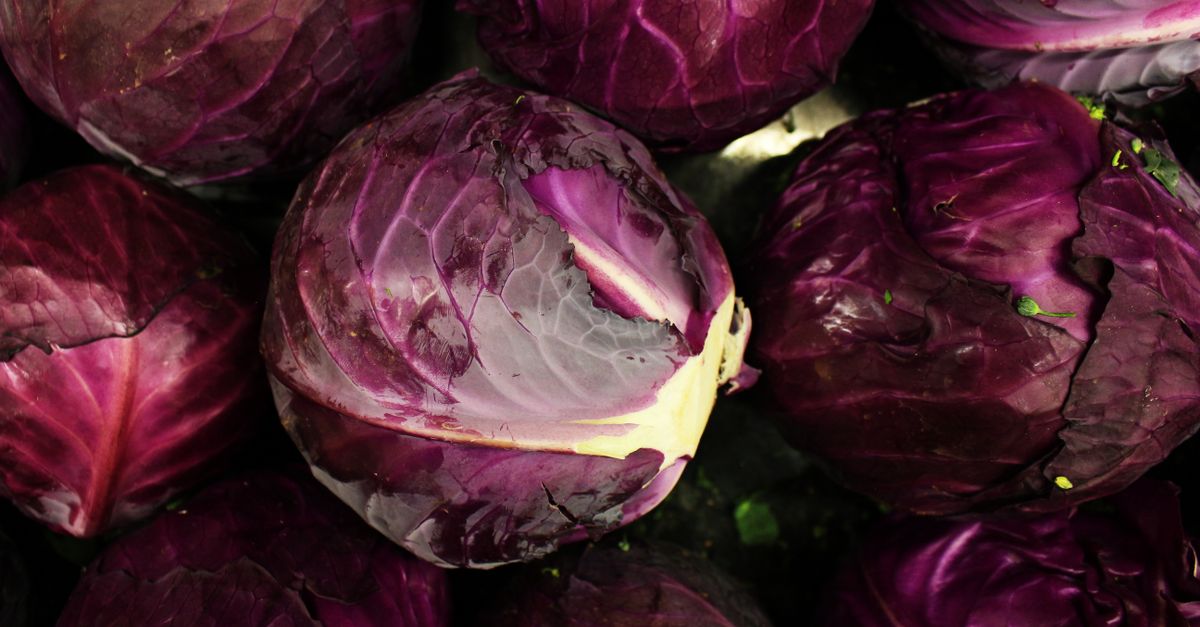
Red cabbage is grown in India exactly like green cabbage, as a cool-season crop that suits the winter season in the plains and a longer window in the hills, so any cabbage grower can plant it. The catch is the market: it is a small niche (restaurants, salad bars, retail chains, some processors), and its price premium over green cabbage varies by city and buyer, so confirm it with a buyer in writing before planting.
Indian research on red cabbage is limited. The yield figures below come from a few university trials, and the general cabbage practices come from TNAU, which does not cover red cabbage separately.
Climate, soil and season
- Climate: TNAU describes cabbage as a cool, moist climate crop grown as a winter crop in the plains.
- Soil: sandy loam to clay, with pH about 5.5 to 6.5 (TNAU). Well-drained, organic-rich land is best, and heavy soils hold water for late crops.
- Season: for cabbage TNAU gives August to November in the plains, and January to February, July to August and September to October in the hills. The Parbhani (Maharashtra) red cabbage trial transplanted in October with four-week-old seedlings. Check the window for your district with your KVK.
Varieties
| Variety | Source | Notes |
|---|---|---|
| Kinner Red | Used as the check variety in a YSPUHF, Solan trial of 28 red cabbage genotypes (rabi 2018-19) | Three exotic lines (EC 890011, EC 890012, EC 890013) out-yielded it in that trial but are not released varieties |
| Red Acre, Mammoth Red Rock, Ruby Ball and similar open-pollinated types | Named in a farming guide (secondary source) | Ask the seed company for the Indian season and the head weight to expect |
- Buy seed in sealed packets with a germination date, and ask your buyer which head size and colour they want. Ask your KVK or the state horticulture university which red cabbage types have done well locally.
Nursery and planting
- TNAU (for cabbage): seed rate 650 g per hectare (about 260 g per acre); a 100 sq m nursery bed per hectare with 300 kg FYM; transplant seedlings 40 to 45 days old.
- Spacing: TNAU gives 45 x 30 cm in the plains (about 74,000 plants per hectare, 30,000 per acre) and 40 x 40 cm in the hills (62,500 per hectare, 25,000 per acre).
- Seedling dips with Pseudomonas fluorescens are advised by TNAU against clubroot. Do not follow crucifers (cabbage, cauliflower, radish, mustard) with red cabbage on the same field for 3 years.
Nutrition and irrigation
- Plains (TNAU, cabbage): 20 t FYM per hectare (8 t per acre), 50 kg N, 125 kg P2O5 and 25 kg K2O per hectare at planting (20, 50 and 10 kg per acre), then 50 kg N after one month.
- Hills (TNAU): 30 t FYM, 90:90:90 kg NPK basal and 45:45:45 at 30 to 45 days per hectare.
- The Parbhani red cabbage trial found that 50% of the recommended fertiliser dose plus 50% vermicompost and PSB biofertiliser gave a head weight of 1,126 g and 417 quintals per hectare, against 803 g and 297 quintals per hectare for the full chemical dose alone. The paper does not state the RDF in kg, so use the TNAU numbers above as the baseline and ask the KVK before cutting chemical fertiliser. See fertilizers.
- Give a steady supply of moisture. TNAU's drip layout uses 3.5 to 4 LPH drippers 50 to 60 cm apart. See drip irrigation.
Pests and diseases
- Diamondback moth: the worst cabbage pest. TNAU advises Bacillus thuringiensis at the primordial stage.
- Aphids: yellow sticky traps (12 per hectare) and neem oil.
- Clubroot: seedling dip and crop rotation as above.
- Black rot: TNAU advises a streptomycin dip and copper oxychloride sprays.
- Heads are eaten raw, so respect the label's waiting period and spray only products registered for cabbage. See pests.
Harvest and yield
- Maturity: in the Parbhani trial, heads were ready in about 68 days after transplanting. TNAU gives about 120 days for green cabbage in the plains.
- Trial yields: 297 to 417 quintals per hectare (about 12 to 17 tonnes per acre) at Parbhani, with head weights of 0.8 to 1.1 kg. A Punjab trial at Fatehgarh Sahib recorded a best of 146 quintals per hectare (about 6 tonnes per acre), so yield varies with variety and management. TNAU's yield for ordinary cabbage is 25 to 35 tonnes per hectare in the plains.
- Cut when heads are firm and full coloured, trim wrapper leaves and pack in clean crates.
💡 Tip: Start with one or two plots timed so harvest meets a confirmed buyer's order, not the whole farm at once. A cabbage head cannot wait in the field the way some roots can.
Cost and returns
- Red cabbage farm-gate prices and costs vary by city and buyer, so use this template with your own figures. Gross income per acre = marketable kg per acre x price you get.
- Example: at the lower Parbhani yield of 297 quintals per hectare (12 tonnes per acre) and ₹20 per kg the gross is ₹2.4 lakh per acre; at ₹40 per kg it is ₹4.8 lakh. The Punjab trial yield of about 6 tonnes per acre at the same prices gives ₹1.2 to ₹2.4 lakh. These prices are assumptions, not market data, and trial plots always out-yield farmers, so discount the yield for your own field.
- Count seed or seedlings, FYM, fertiliser, irrigation, sprays, labour, crates and transport. Compare with green cabbage rates on mandi bhav.
Market and risks
- The Parbhani paper states that demand for coloured vegetables is growing among health-conscious buyers and that red cabbage fetches a premium price. Treat that as a claim to test with your buyer. Premium-vegetable demand is concentrated in metros and in hotel, restaurant and supermarket supply.
- The volume is small, so a few farmers planting at once can flood it and push prices to green cabbage levels. Sell against orders where you can, and form a group through an FPO.
- For loans see KCC; for packhouse and cold chain support see cold storage subsidy and subsidy finder.
Sources
- TNAU Agritech Portal, Cabbage
- Lahade et al., Integrated nutrient management on red cabbage, Plant Archives 25(S1), 2025 (VNMKV, Parbhani)
- Thakur et al., Bio-pesticides and nitrogen on red cabbage, Indian Journal of Agricultural Sciences (Mata Gujri College, Fatehgarh Sahib)
- Genetic evaluation of exotic germplasm of red cabbage (YSPUHF, Solan), Krishikosh
- Agrifarming, growing red cabbage (secondary source)