
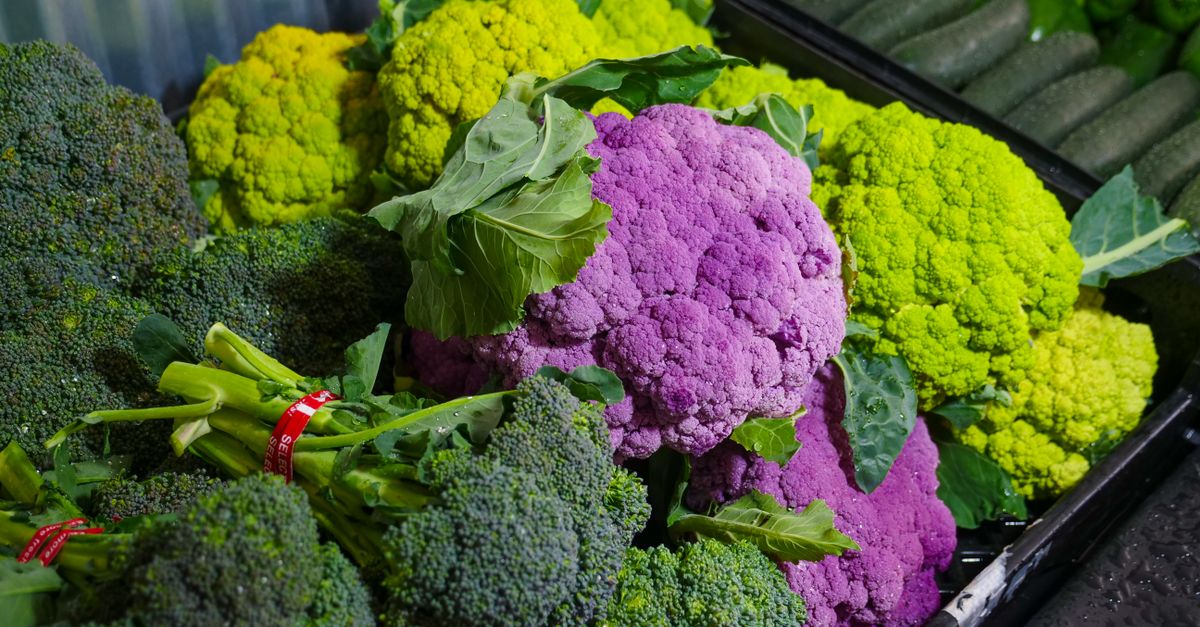
Broccoli is a cool-season cole crop that works well as a winter (rabi) vegetable in the north Indian plains, sown from October to November, and in cooler hill and highland areas. Indian trials give 120 to 205 quintals of heads per hectare (50 to 83 quintals per acre), but the farm-gate price implied by the Kanpur trial is low, so real money depends on selling graded heads to hotels, caterers and retail chains rather than loose in a mandi.
Broccoli is a heavy feeder and needs steady moisture and a well-timed sowing date, so it is a crop for farmers who can manage a vegetable nursery and a cold-season schedule.
Where and when it grows
- Plains: Indian trials at Allahabad (Prayagraj) and Kanpur in Uttar Pradesh were run as winter (rabi) crops. The Allahabad trial sowed on 20 October, 4 November and 19 November, and the 4 November sowing gave the best yield and the best benefit-cost ratio of the three.
- South and hills: UAS Bangalore ran a rabi 2022-23 trial near Bengaluru, and SD Agricultural University tested varieties at Sardarkrushinagar in Gujarat in rabi 2015-16. Hill and highland planting windows differ by altitude; ask your KVK or state horticulture department for the local date.
- Soil: the Kanpur trial was on sandy loam with low organic carbon (0.34%). Well-drained, fertile loam with good organic matter and a steady water supply suits it.
- Heat: a Kanpur paper notes broccoli withstands somewhat higher temperature than cauliflower, but warm weather at heading still causes loose, poor heads. Sow so heads form in the cool part of the season.
Varieties
| Variety | Where tested | Result reported |
|---|---|---|
| Palam Samridhi | Allahabad, rabi 2016-17 | Best of three varieties: 16.25 t/ha with 4 November sowing |
| Pusa Kanchan, Lufa F-1 | Allahabad, rabi 2016-17 | Lower yields than Palam Samridhi in the same trial |
| Aishwarya | Kanpur, 3 rabi seasons | Early; first harvest about 70 days after transplanting; 204.76 q/ha under the best nutrient plan |
| Palam Vichitra, Pusa Broccoli KTS-1, Palam Haritika | Sardarkrushinagar, Gujarat, rabi 2015-16 | Compared with Palam Samridhi at three spacings |
Palam varieties come from CSK HPKV, Palampur, and Pusa varieties from ICAR-IARI. Hotels and retailers often want dense, dark-green, tight heads, so ask the buyer for a preferred type before buying seed. Hybrid seed is costly; buy sealed packets from a licensed dealer.
Nursery, spacing and plant numbers
- Raise seedlings in a nursery bed or trays and transplant them. The Allahabad and Kanpur trials both used transplants.
- 45 x 45 cm was used in the Allahabad and Kanpur trials, about 49,000 plants per hectare (about 20,000 per acre).
- The Bengaluru trial compared 45 x 30 cm (about 74,000 per hectare, 30,000 per acre), 45 x 45 cm and 45 x 60 cm (about 37,000 per hectare, 15,000 per acre). The widest spacing gave the highest yield of 205 q/ha with the highest nutrient level and micronutrient sprays.
Nutrition and irrigation
- Recommended dose used at Bengaluru: 120:80:60 kg N:P2O5:K2O per hectare (about 49:32:24 kg per acre). The best plot got 150:100:75 kg per hectare (61:40:30 per acre) plus foliar boric acid 0.40%, zinc sulphate 0.60% and manganese sulphate 0.30%.
- Kanpur trial: the full chemical dose was 200:50:100 kg per hectare (81:20:40 per acre). Vermicompost at 2.5 t/ha plus half that chemical dose (1 t/acre plus about 40:10:20 kg per acre) gave the highest head weight (387 g), yield (204.76 q/ha) and benefit-cost ratio (3.15), ahead of the full chemical dose (343 g).
- Broccoli responds to boron and micronutrients; follow your soil test, and see fertilizers.
- Give light, frequent irrigation, never letting the bed dry out or stay waterlogged. Drip irrigation saves water and keeps leaves dry.
- Pests and diseases: usual cole-crop problems are aphids, diamondback moth caterpillars, black rot and downy mildew. Use clean seed, crop rotation away from other cabbage-family crops and field scouting; for any spray follow the label and your KVK. See pests.
Harvest and yield
- Cut the main head when the buds are still tight and green, before yellow flowers show; side shoots can be cut afterwards. The Kanpur early variety was ready about 70 days after transplanting.
- Trial yields: 12 to 16 t/ha at Allahabad (about 5 to 6.6 t per acre), about 20.5 t/ha at Kanpur and Bengaluru under the best treatments (about 8.3 t per acre). Average head weight in the Kanpur trial was about 340 to 390 g.
- Broccoli wilts quickly after cutting; cool and sell within a day or two, or use ice and a cold chain. See cold storage subsidy.
Cost and returns
- Kanpur, 3-year pooled (AICRP): cost of cultivation ₹34,500 per hectare, gross return ₹1,43,332 and net income ₹1,08,832 per hectare for the best integrated plan. Per acre that is about ₹14,000 cost, ₹58,000 gross and ₹44,000 net.
- The gross return divided by the 204.76 q/ha yield works out to about ₹7 per kg, a plain wholesale price. Higher prices need graded, packed sale to hotels and retail, and those rates were not verified; ask the buyer for a written price and see mandi bhav.
- Trial costs are for the field operations of a research farm. Packing, transport, crates, ice and your own labour add to them.
- The Allahabad trial reported a benefit-cost ratio of 1:4.05 for the best sowing date and variety, from one season only.
Market and risks
- Buyers: hotel and restaurant kitchens, caterers, supermarkets, online grocers and vegetable distributors in cities. Broccoli is a small-volume vegetable, so a few acres near a city can saturate it.
- Prices swing in the winter glut, and heads left a day too long open into flowers and lose value.
- If heads cannot reach a city within a day, grow it only in small blocks or join an FPO for pooled transport.
- Check state horticulture schemes for vegetable-area and cold-chain support through your subsidy finder; no broccoli-specific rate was verified.
Sources
- Integrated nutrient management in broccoli, Indian Journal of Agricultural Sciences 91(11), 2021 (CSAUAT Kanpur)
- Effect of sowing date on growth and yield of broccoli, Plant Archives 17(2), 2017 (SHUATS Allahabad)
- Influence of plant spacing and nutrient management on broccoli, Plant Archives 26(S1), 2026 (UAS Bangalore)
- Plant spacing and varieties in broccoli, Journal of Pharmacognosy and Phytochemistry 2018 (SDAU Gujarat)