
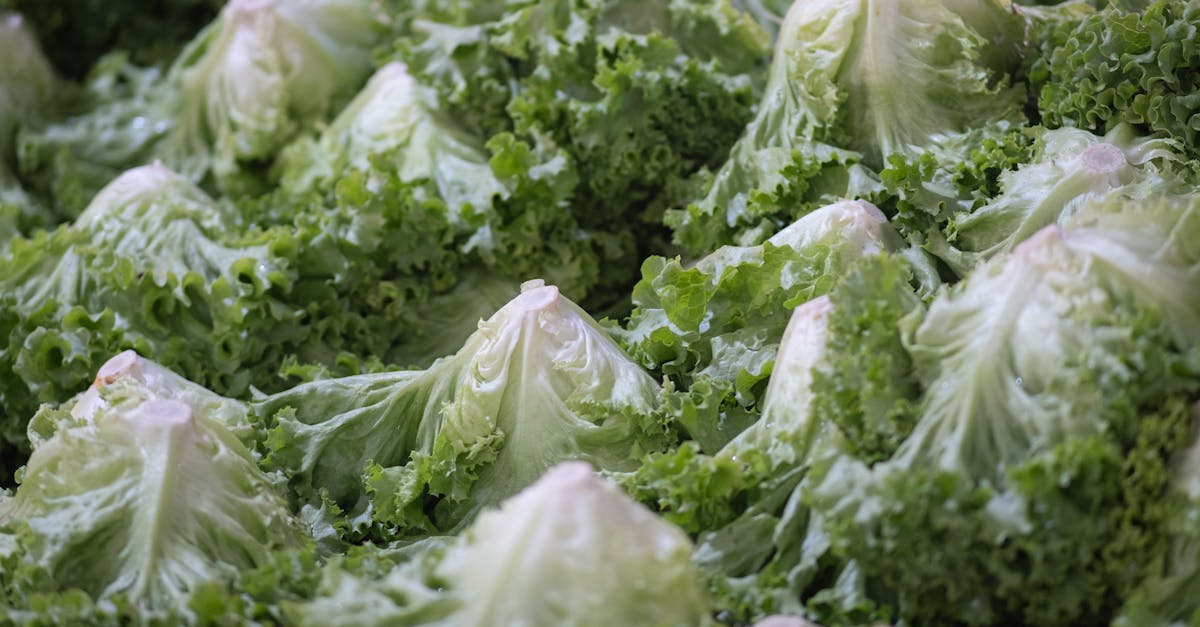
Iceberg (crisphead) lettuce is realistically a cool-season crop for the Indian hills, such as the Nilgiris, and for the winter months in the north Indian plains, and it pays only with a buyer who has agreed to specifications and a cold chain to deliver it. Heat is the main limit: Wikipedia notes that most lettuce grows poorly above 24 degrees C and bolts in heat, and iceberg is described as very heat-sensitive.
Very little Indian trial data exists on iceberg specifically. The figures below come from general lettuce guides and an ICAR journal trial on leaf lettuce, and they are marked as such. Treat them as a starting point to test on a small plot, not as a package of practices.
Where and when it works
- Temperature: optimum about 16 to 18 degrees C, with tolerance down to about 7 degrees C and poor growth above 24 degrees C; seed germination is poor or fails above 27 degrees C (Wikipedia, Lettuce). A guide for Indian growers gives a monthly mean near 15 degrees C as ideal.
- Season: a popular farming guide gives sowing between September and November in the plains and March to June in the hills. In the plains this means a winter crop; a late or hot spell during heading spoils the heads.
- Regions: web articles name the Nilgiris of Tamil Nadu as the main iceberg-producing area, and Himachal Pradesh and Jammu and Kashmir also grow lettuce. These claims came from popular sources, so confirm with the local KVK or horticulture department.
- Soil: well-drained, fertile loam with good organic matter; avoid waterlogging, as diseases follow. Guides advise drainage in heavy rain.
Varieties, planting and spacing
- Iceberg or crisphead types take about 70 to 100 days from sowing to harvest in one Indian guide, against 45 to 55 days for loose-leaf and butterhead types. Wikipedia says iceberg reaches prime age in about 60 days in cool weather, and the time lengthens in cool winter months.
- No Indian public-sector release of a named iceberg variety could be verified here. Seed is mostly sold by private seed companies; ask for a crisphead hybrid or open-pollinated line recommended for your altitude and sowing month, and ask the seller for the trial data.
- Nursery: raise seedlings on raised beds in fine soil and transplant. The SKUAST-Kashmir trial on lettuce variety LS 2 (leaf type, not iceberg) sowed seed in raised nursery beds and transplanted about 4 weeks later (26 August to 25 September in autumn; 5 February to 7 March in spring).
- Spacing: a farming guide gives rows 30 to 45 cm apart with 20 to 30 cm between plants. At 30 x 30 cm this is about 45,000 plants per acre (1.1 lakh per hectare); at 45 x 30 cm about 30,000 per acre (74,000 per hectare). In the SKUAST trial the closest spacing of 45 x 30 cm gave the highest yield per plot.
- Seed-rate figures in guides conflict (from 0.2 to 3 kg per hectare), so use the seed seller's or KVK's recommendation for the nursery.
Nutrition and irrigation
- Fertiliser (secondary guide): 15 to 20 tonnes of farmyard manure, 90 kg N and 60 to 65 kg each of P and K per hectare, which is about 6 to 8 tonnes FYM, 36 kg N and 24 to 26 kg each of P and K per acre.
- Higher dose (ICAR trial, leaf lettuce): SKUAST-Kashmir used 120:90:60 kg NPK per hectare as the full recommended dose, with all P and K and half the N as basal and the rest of N split at 30 and 45 days after transplanting. Do a soil test before choosing between the two doses; see fertilizers.
- Water: a guide advises light irrigation every 4 to 5 days to keep moisture even, with drainage in heavy rain. Uneven watering damages heads; drip irrigation gives the most even moisture.
Pests and diseases
- Wikipedia lists aphids, leafhoppers, powdery mildew, downy mildew and grey mould (Botrytis). Indian guides add cutworms, soft rot and mosaic virus.
- Lettuce is eaten raw, so residue is a serious issue: use resistant varieties, drainage, clean nursery beds, yellow sticky traps and rotation first. For any spray, follow the label and the pre-harvest interval, and ask the local KVK. See pests.
Harvest, yield and handling
- Yield: one Indian guide gives 11,000 to 12,000 kg per hectare for head lettuce, which is about 4.5 to 4.9 tonnes per acre. This is a secondary source and not iceberg-specific, so record your own marketable-head weight on a trial plot.
- Cut firm heads in the cool part of the day. Wikipedia notes that iceberg is highly perishable and keeps longest at 0 degrees C and 96 percent humidity, so cooling soon after harvest matters.
- Wrap or pack to prevent bruising and moisture loss, and avoid long unrefrigerated transport. See cold storage subsidy.
💡 Tip: Do not plant a full acre first. Plant a trial of 5 to 10 cents in the right month, weigh the trimmed heads, and show them to the buyer to confirm size, head tightness and price before expanding.
Cost and returns
- No verified Indian cost-of-cultivation sheet or farm-gate price series for iceberg lettuce was found. One web summary quoted ₹300 per kg to Nilgiris farmers in 2024; that figure could not be verified and should not be used for planning.
- How to run the numbers: at 4.5 to 4.9 tonnes per acre, every ₹10 per kg of farm-gate price equals about ₹45,000 to ₹49,000 gross per acre. Subtract your own seedlings, manure, labour, packing, cold chain and transport, and allow for trimming loss and rejected heads. Check actual rates on mandi bhav and with the buyer in writing.
Market and risks
- Buyers are hotels, restaurant and fast-food chains, caterers and vegetable wholesalers in metros. Institutional buyers specify head weight, tightness and trimming, so ask for the written spec and payment terms.
- Risks: a heat spell before harvest (loose or bolting heads), disease in wet weather, glut in the cool season when many farmers plant together, and spoilage on the way to the city.
- Group supply through an FPO helps meet volume. Protected structures may qualify for support; see polyhouse subsidy, and check current rates since none were verified for lettuce here.
Sources
- Wikipedia, Lettuce (temperature, bolting, pests, storage; secondary source)
- Wikipedia, Iceberg lettuce (maturity, perishability; secondary source)
- Indian Journal of Agricultural Sciences 80(2), plant spacing and fertilizers in lettuce, SKUAST-Kashmir (leaf lettuce LS 2)
- Agri Farming, lettuce cultivation in India (secondary source)
- TractorKarvan, lettuce cultivation in India (secondary source)