
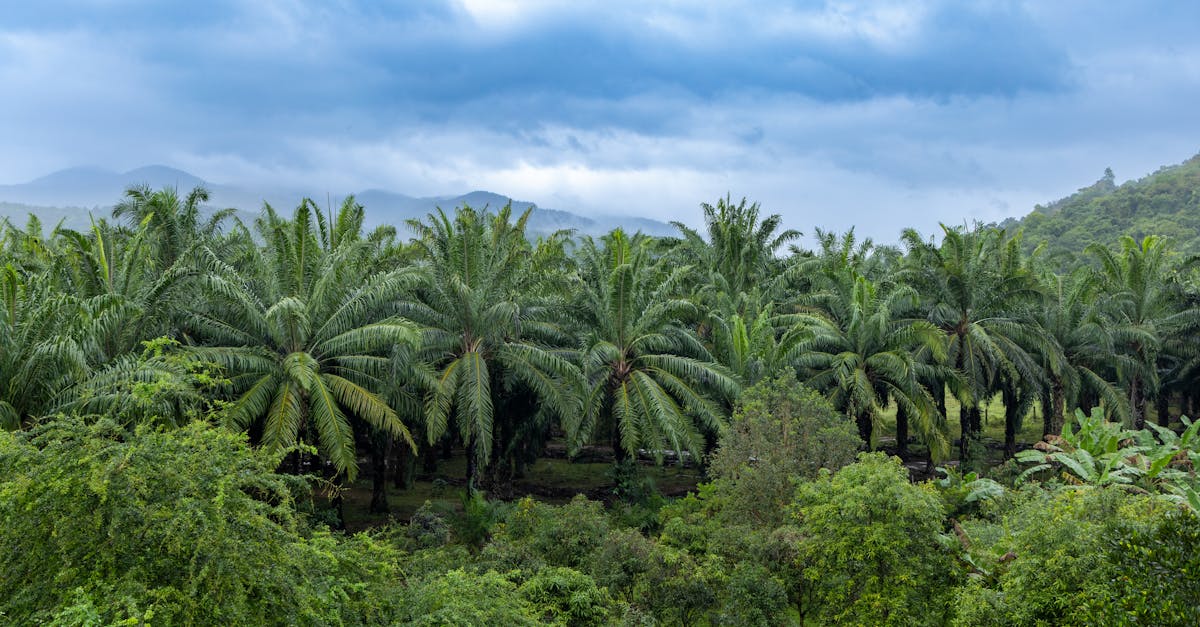
Oil palm works in India only where rainfall or irrigation is plentiful and warm, mainly in Andhra Pradesh, Telangana, Karnataka, Kerala, Tamil Nadu, Odisha, Goa, Gujarat, Chhattisgarh and the Northeast, and only if a mill with a purchase agreement is within reach, because the fruit bunches must be processed within 24 hours. It takes about 3 years to the first bunches and 8 years to full yield, uses a lot of water, and the price you get depends on the crude palm oil market.
Oil palm is a government-promoted crop under the National Mission on Edible Oils - Oil Palm (NMEO-OP). It can pay steadily for 25 or more years, but it is a poor fit for farmers without assured water, without a mill linked to their village, or without cash to wait.
Where it grows in India
- States: the NMEO-OP expansion targets Andhra Pradesh, Telangana, Gujarat, Goa, Chhattisgarh, Karnataka, Odisha and the Northeast with the Andaman and Nicobar Islands. Telangana had about 0.1 million hectares in 2026 and aims for much more; the national target is 10 lakh hectares by 2025-26, up from 3.5 lakh hectares in 2019-20, but achieving it has lagged.
- Climate: temperatures of 20 to 33 degrees C, 5 to 6 hours of bright sun a day, and rainfall of 2,500 to 4,000 mm spread evenly or about 150 mm every month. Most Indian plantations are in drier areas and depend on irrigation.
- Soil: deep (at least 1 m), well-drained loam or alluvium rich in organic matter. Avoid saline, alkaline, coastal sandy and waterlogged soils.
Planting material and spacing
- Use certified tenera (dura x pisifera hybrid) seedlings of 12 to 15 months from a recognised nursery. Under NMEO-OP the company or state arranges the seedlings; a poor seedling cannot be corrected later, so insist on a batch certificate.
- Spacing: 9 x 9 x 9 m triangular, giving 143 to 145 palms per hectare, about 58 palms per acre. Pits are 60 cm cubes.
- Planting time: start of the rains, or any time with irrigation.
- Intercrops in the first 3 years: vegetables, flowers, chilli, banana, ginger, turmeric, pineapple and tobacco are listed in extension material, and give income before the palms bear. Do not plant tall crops that shade the young palms.
Irrigation
- Oil palm needs roughly 200 litres of water per palm per day in dry weather (one extension source), and other sources put the use as high as 300 litres per palm per day. At 143 palms per hectare, 200 litres a day is about 28,600 litres per hectare per day (about 11,600 litres per acre).
- Drip is commonly used; one guide describes four drippers delivering about 32 litres in five hours per day. Basin irrigation at 4 to 5 day intervals is the older method. See drip irrigation and solar pump.
- Check the borewell yield before applying: a dry summer cuts bunch set for the following year.
Nutrition
TNAU lists the following under rainfed conditions, per palm per year, in two equal doses (May-June and September-October) spread evenly within a 2 m circle around the trunk:
| Palm age | N (g) | P (g) | K (g) | Per acre (58 palms), N-P-K kg |
|---|---|---|---|---|
| Year 1 | 400 | 200 | 400 | 23 - 12 - 23 |
| Year 2 | 800 | 400 | 800 | 46 - 23 - 46 |
| Year 3 onward | 1,200 | 600 | 2,700 | 70 - 35 - 157 |
The same schedule recommends 500 g magnesium sulphate and 100 g borax per palm per year. Per hectare (143 palms) the mature dose is about 172 kg N, 86 kg P and 386 kg K. Take a soil and leaf test before adjusting, since potassium and magnesium deficiency are common in oil palm.
Pests and diseases
- Insects: rhinoceros beetle (damages the growing point) and mealy bugs.
- Diseases: Ganoderma butt rot, bacterial bud rot, Pestalotiopsis leaf spot and oil palm wilt.
- Keep the base clean and remove old rotting trunks and logs where beetles breed. Chemical doses from an ICAR source are not verified for this page; follow the label and consult IIOPR or your KVK.
Harvest and yield
- First bunches about 2.5 to 3 years after planting. Bunches are cut every 10 to 14 days with a sickle or chisel, on a cycle that continues all year.
- Yield of fresh fruit bunches (FFB): about 10 to 12 tonnes per hectare in years 4 to 8 and 18 to 20 tonnes per hectare after year 8, per extension guidance. (Roughly 4 to 5 tonnes per acre in the early years and 7 to 8 tonnes per acre when mature.)
- Palms are productive for 25 years or more, but tall trunks make harvesting harder after 15 to 20 years.
- Bunches must reach the mill within 24 hours, otherwise oil quality falls.
Cost and returns
- Price (2026): Telangana's local FFB price was about ₹21,546 per tonne in March 2026, up from about ₹12,000 per tonne ten years earlier. In August 2026 Telangana's agriculture minister proposed an assured price of ₹25,000 per tonne. Farmer groups have said cultivation costs are near ₹18,000 per tonne.
- Arithmetic at maturity: 18 tonnes per hectare x ₹21,546 = about ₹3.9 lakh per hectare (about ₹1.57 lakh per acre) gross per year. At 20 tonnes and ₹25,000, ₹5 lakh per hectare. At 12 tonnes and ₹18,000 per tonne, ₹2.2 lakh per hectare.
- Costs: labour for harvesting, fertiliser (potassium is the large item), irrigation power and pest control all rise yearly. If cost is ₹18,000 per tonne the margin is thin in early years and when prices fall; so figure net, not gross.
- Years without income: about 3 years of expense before the first bunches and years 4 to 8 at only half the mature yield.
- Price assurance: under NMEO-OP the government fixes an annual viability price equal to 14.3% of the five-year average CPO price (adjusted for the wholesale price index), valid from 1 November to 31 October. If the monthly formula price falls below it, the difference is paid by direct bank transfer. The current rupee figure for the 2025-26 year is not confirmed, so check with your state horticulture department.
- Subsidy: the 2021 cabinet decision raised planting-material assistance from ₹12,000 to ₹29,000 per hectare and increased maintenance and intercropping assistance. The current exact maintenance and intercropping rates or state top-ups are not verified; get them from your district horticulture officer. See subsidy finder.
Market and risks
- Only the mill company in your zone can buy your bunches. In Andhra Pradesh and Telangana these include private and cooperative mills; in new areas the mill may not yet exist.
- Prices follow international palm oil and import duties. India imports roughly 9 to 10 million tonnes of palm oil a year, so domestic prices follow the global market.
- Reports have raised concerns over high water use, pesticide use and forest or tribal land conversion, so do not clear forest or common land for oil palm.
- Check crop insurance with your bank and see PMFBY and KCC for credit.
Sources
- TNAU Agritech Portal, oil palm nutrient management
- AgriFarming, oil palm cultivation guide
- Drishti IAS, National Mission on Edible Oil - Oil Palm
- Cabinet approval of NMEO-OP (Government of India)
- Commodity Board, Telangana palm oil price report (16 March 2026)
- AgroSpectrum India, Telangana seeks price protection (21 August 2026)