
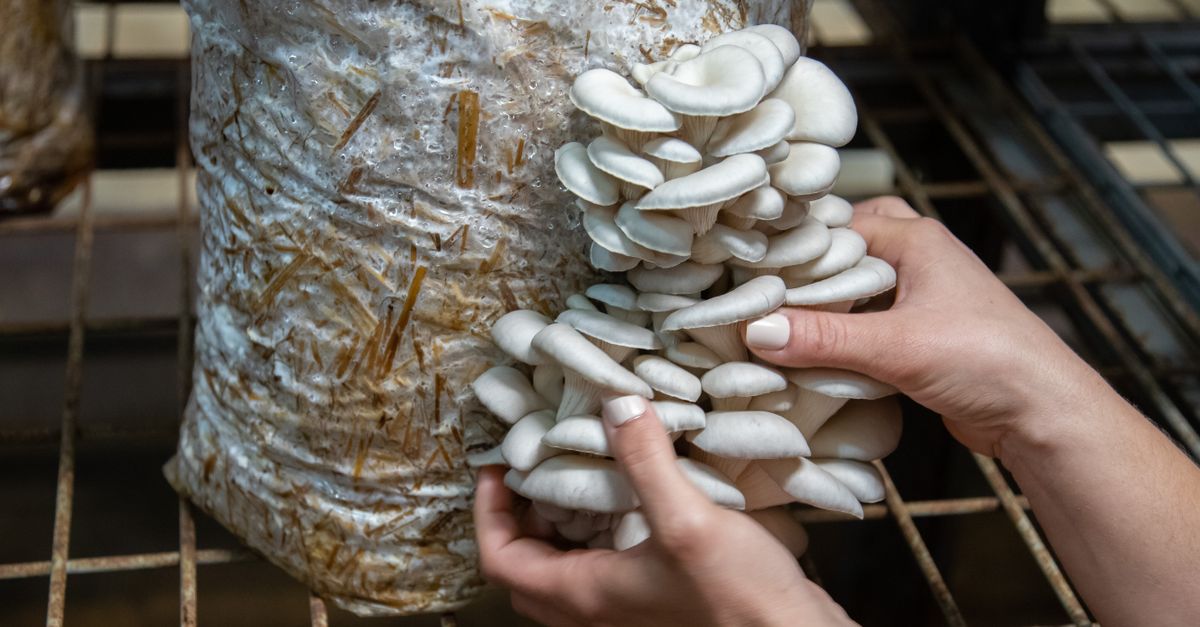
A mushroom spawn unit is a small sterile laboratory, not a farm: it makes cultured grain that mushroom growers use as "seed", and it only pays if you can keep contamination near zero and have regular growers within reach to buy. It needs trained hands, an autoclave, a clean inoculation chamber and an incubation room, and spawn quality will decide whether customers return.
The cost of making spawn is a few rupees per bag, so the business is about volume, reliability and trust rather than margin per kg. The national reference supplier, ICAR-DMR Solan, sells spawn at ₹100 per kg, so a private unit must match that quality at a price growers accept.
Start with training and a pure culture
- ICAR-Directorate of Mushroom Research (DMR), Solan runs a three-day training on spawn production technology and supplies spawn for white button, oyster, milky, shiitake and paddy straw mushrooms, plus some specialty species.
- DMR lists master spawn of commercially grown mushrooms at ₹500 per 250 g bottle and spawn at ₹100 per kg. Standard spawn needs about 20 days of advance booking with 50% advance payment; specialty mushrooms need about two months. DMR asks buyers to collect spawn personally because transport by post or courier risks spoilage.
- Start from a pure culture from a recognised source (DMR Solan, an agricultural university or IIHR), not from a mushroom bought in a market, and keep the strain label on every batch.
How grain spawn is made
The steps below follow TNAU Coimbatore's method for mother spawn and bed spawn. Check temperatures and times for each mushroom species with DMR or your KVK before scaling up.
| Step | What is done |
|---|---|
| Grain | Sorghum is described by TNAU as the best grain; wheat is the one most used. Use clean, disease-free grain and remove chaffy or damaged seeds by washing. |
| Cooking | Cook about 30 minutes, only to soften; grains must not burst. Spread on a platform or hessian cloth to dry to about 50% moisture. |
| Additive | Mix calcium carbonate at 20 g per kg of grain to take up excess moisture, correct pH and stop grains caking. |
| Filling | Fill saline bottles (mother spawn) or polypropylene bags (bed spawn) to three-quarters, about 300 to 330 g of grain each; plug with non-absorbent cotton. |
| Sterilise | Autoclave at 20 lb pressure for 2 hours, then cool. |
| Inoculate | In a clean chamber, put culture into bottles for mother spawn, and about 10 g of mother spawn into each bed-spawn bag. |
| Incubate | Keep in a clean room for about 10 days in the TNAU method. Discard any bag with green, black or pink patches or a sour smell. |
- An ICAR study on button mushroom spawn found a single grain wash gave better mycelial growth than two or three washes, and that 2% calcium sulphate plus 2% calcium carbonate (pH 6.48) gave the best growth among 25 combinations tested. Use these as pointers to discuss with DMR, not as a fixed recipe for every species.
- TNAU advises not to subculture bed spawn beyond the first generation, so that spawn keeps its vigour.
Space and equipment
- Typical units have separate zones: a grain cooking and filling area, an autoclave room, an inoculation chamber (laminar air flow cabinet or a well-sealed room with a filtered or sterilised air supply), an incubation room and storage.
- Main items: boiler or large cooker, autoclave, laminar flow cabinet, bottles or heat-resistant bags, cotton, pH meter, weighing scale, incubation racks and a refrigerator for cultures. Get quotes from at least three suppliers; costs vary widely with capacity.
- Spawn is perishable, so plan production against confirmed orders and keep a delivery radius where it can reach the grower within days.
Contamination and quality control
- Most losses come from under-sterilised grain, wet grain, leaky plugs and poor handling at inoculation. Keep a record of each batch (date, grain lot, strain, autoclave run, contamination rate) so problems can be traced.
- Ask a few growers to run a small trial with each new batch before selling to everyone, and replace any spawn that fails to colonise substrate.
Cost and returns
- The only price verified here is the DMR rate of ₹100 per kg of spawn. Since one bag holds about 300 to 330 g of grain, a kg of spawn needs about three bags, plus grain, additive, fuel, power, labour, packaging and losses.
- To judge profit, list your own costs per bag (grain price in your area, LPG or firewood for cooking and autoclave, electricity, labour, bag and cotton) and your realistic share of bags lost to contamination. Margin per kg = selling price minus cost per kg after losses; monthly profit = margin x kg sold, minus rent, loan instalments and salaried labour.
- No verified Indian figure for the investment or monthly profit of a private spawn unit was found, so ignore brochure claims and ask your KVK or an existing spawn unit near you for current numbers.
Market and risks
- Customers are oyster, milky and button mushroom growers, including women's self-help groups and FPOs. Seasonal demand follows the growing seasons of each species in your region, so oyster and milky spawn in summer and button spawn before the cool season are typical peaks.
- Many farmers buy spawn from DMR, universities or large private laboratories, so a new unit competes on freshness, local delivery and honest replacement.
- Reputation damage from one contaminated batch is the main business risk. Start small, build a list of regular growers and consider also supplying compost or training.
Subsidy
- Central schemes (MIDH through NHB and state horticulture missions) have supported spawn units as a credit-linked, back-ended subsidy, but the cost norm and percentage differ between sources and states. Confirm the current norm with the NHB regional office or your district horticulture officer before applying.
- Use subsidy finder, KCC for working-capital credit and FPO if you plan to supply a group of growers.