
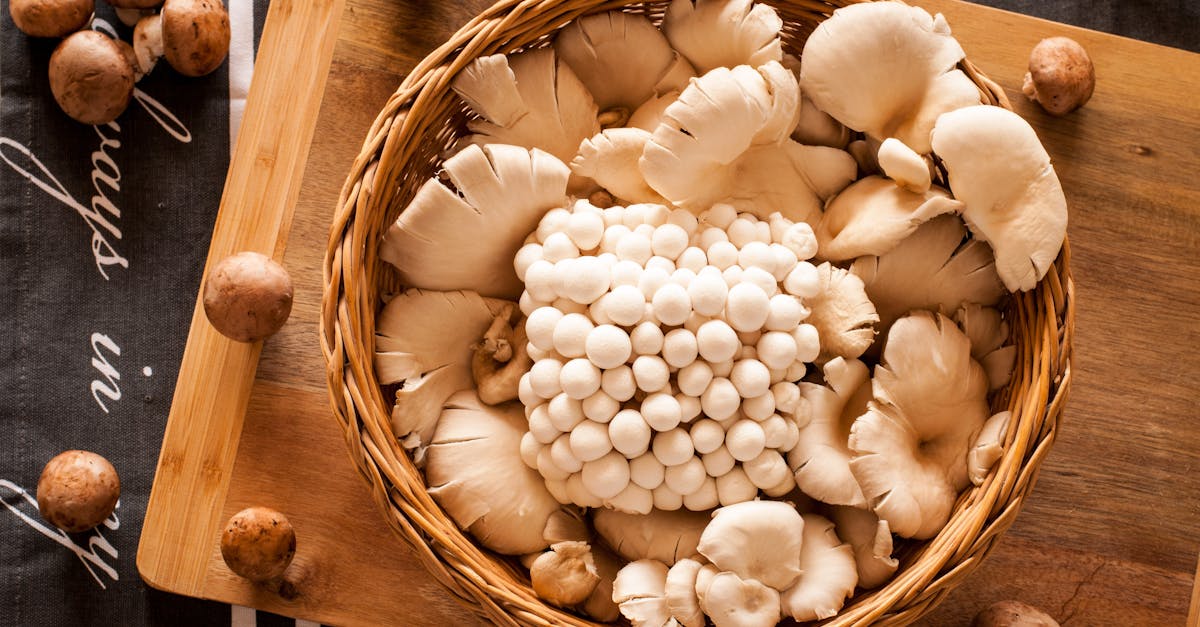
Milky mushroom (Calocybe indica) is a realistic small-scale enterprise for warm parts of India because it fruits at 30 to 35 degrees C, when button and most oyster crops fail. It needs a shaded, humid, clean room, pasteurised straw, good grain spawn and a daily market for fresh mushroom within a day or two, since the whole crop is picked fresh in 3 to 4 flushes.
It is reported to be the third most commercially cultivated mushroom in India after button and oyster. No current Indian price for milky mushroom was found; check your own market first, because the price you can actually get decides whether the enterprise pays.
Where and when it works
- Origin: the species was first documented in West Bengal and was commercialised in Tamil Nadu in the late 1990s, with a variety released from Tamil Nadu Agricultural University in 1998. Wild strains used in an ICAR-DMR study came from Karnataka, Rajasthan, Uttar Pradesh, Kerala, Tamil Nadu, Haryana, Chhattisgarh, Bihar, Himachal Pradesh and Uttarakhand.
- Temperature: spawn run about 25 to 30 degrees C and cropping 30 to 35 degrees C; growth does not occur below 25 or above 38. Humidity is 80 to 85% in the spawn run and above 80% in the cropping room. These temperatures are not reached in a north Indian winter without heating, so there it is mainly a summer and monsoon crop; the review describes year-round cropping in tropical regions.
- Wild fruiting occurs from May to August after rain, which matches its heat and moisture needs.
How it is grown
| Step | What the research reports |
|---|---|
| Substrate | Wheat straw, paddy straw and sorghum stalks performed best in the TNAU-based review; rice straw gave the highest efficiency in a Bangladesh substrate trial |
| Pre-treatment | Soak 4 to 5 hours, then steam at about 80 degrees C for 45 to 60 minutes; drain to 60 to 70% moisture |
| Spawn | Sorghum or wheat grain spawn, about 2% spawning rate, 21-day-old spawn; spawn run 15 to 20 days at about 30 degrees C |
| Supplement | Cotton seed cake at 5% of wet substrate raised yield by 300 to 380 g per bed over unsupplemented; in a Bangladesh trial 30% maize powder gave the best result |
| Casing | Partly steamed clay loam (pH about 8.4) at 1.5 to 2 cm, applied during spawn run; a Bangladesh trial found 3 cm of cow dung and loamy soil (3:1) best |
| Fruiting | 30 to 35 degrees C, humidity above 80%; first flush 24 to 30 days after bed preparation; 3 to 4 flushes |
Treat these as research values, not a recipe. Bed size, bags or trays, and the exact steaming set-up differ between labs; get a hands-on demonstration at a KVK or an agricultural university before spending money. Buy spawn from a government or university lab rather than from an unnamed seller, and ask for the culture and date of preparation.
Yield: what trials show
| Trial | Substrate or treatment | Biological efficiency | Where |
|---|---|---|---|
| PMC3741572 | Rice straw (best of 7 substrates) | 91.75% | Jahangirnagar University, Bangladesh |
| PMC3741544 | Rice straw + 30% maize powder | 91.9% (control, no supplement: about 174 g yield against 459 g) | Bangladesh |
| PMC3741572 | Rice straw with 3 cm cow dung and loam casing | 62.94% | Bangladesh |
| PMC10253166 | Best wild strains DMRO-299 and DMRO-321 | 64.08% and 56.84% | ICAR-Directorate of Mushroom Research, Solan |
- A review citing TNAU work gives a biological efficiency of 140 kg of fresh mushroom per 100 kg of dry substrate. The trials in the table, which include Indian ICAR strains, report 57 to 92%. Budget on the lower trial range until your own batches prove otherwise.
- Crop length: the review gives 40 to 45 days in total and another gives 7 to 8 weeks; the Bangladesh substrate trial took 66 to 92 days to finish all harvests. Allow longer than the brochure.
- Average weight of small buttons is 35 to 40 g, and the mushroom keeps 5 to 7 days at room temperature without refrigeration, longer than most other cultivated mushrooms.
Pests and problems
- The main losses reported are insect infestation and contaminant moulds and bacteria from unhygienic handling and poor farm maintenance. Steam properly, keep the spawning area clean, and remove contaminated beds at once; for any chemical, follow the label and ask your KVK.
- Over-supplementing lowers efficiency (the maize powder trial found 30% best and higher levels worse), so more additive is not better.
Cost and returns
- No verified Indian cost of production or selling price for milky mushroom was found, so no profit figure is given. Costs to count: straw, steaming fuel, spawn, supplement, casing soil, polybags or trays, labour, a shed with shade and water, and packing.
- Arithmetic you can do: fresh yield per 100 kg of dry straw is 57 to 92 kg at the trial range (140 kg only in the best-case review). At a price of ₹100 per kg, that is ₹5,700 to ₹9,200 per 100 kg of dry straw, before spawn, labour and spoilage. Replace ₹100 with the price your market pays.
- No price series was found, so ask retailers and hotels what they actually pay before planning volumes. Prices at local mandis are posted on mandi bhav, where mushroom may not be listed in every market.
Market and risks
- Likely buyers are local vegetable shops, hotels, restaurants and traders, though no buyer data was found; fresh milky mushroom keeps longer than other types, which helps sales in warm markets. Dried and processed products were not researched for this guide.
- The main risks are contamination, spawn of poor quality, overheating of the room, and a thin local market. A sale agreement before building a larger unit is wise; see FPO for group selling.
- No verified subsidy rate for milky mushroom was found; check subsidy finder and your state horticulture department. A Kisan Credit Card can fund working capital where eligible.
Sources
- A comprehensive review of tropical milky white mushroom (Calocybe indica P&C), PMC
- Influence of different supplements on the commercial cultivation of milky white mushroom, PMC
- Effect of different substrates and casing materials on growth and yield of Calocybe indica, PMC
- Eight high yielding strains of Calocybe indica, ICAR-Directorate of Mushroom Research, PMC
- The current status, bioactivity, food and pharmaceutical approaches of Calocybe indica: a review, PMC