
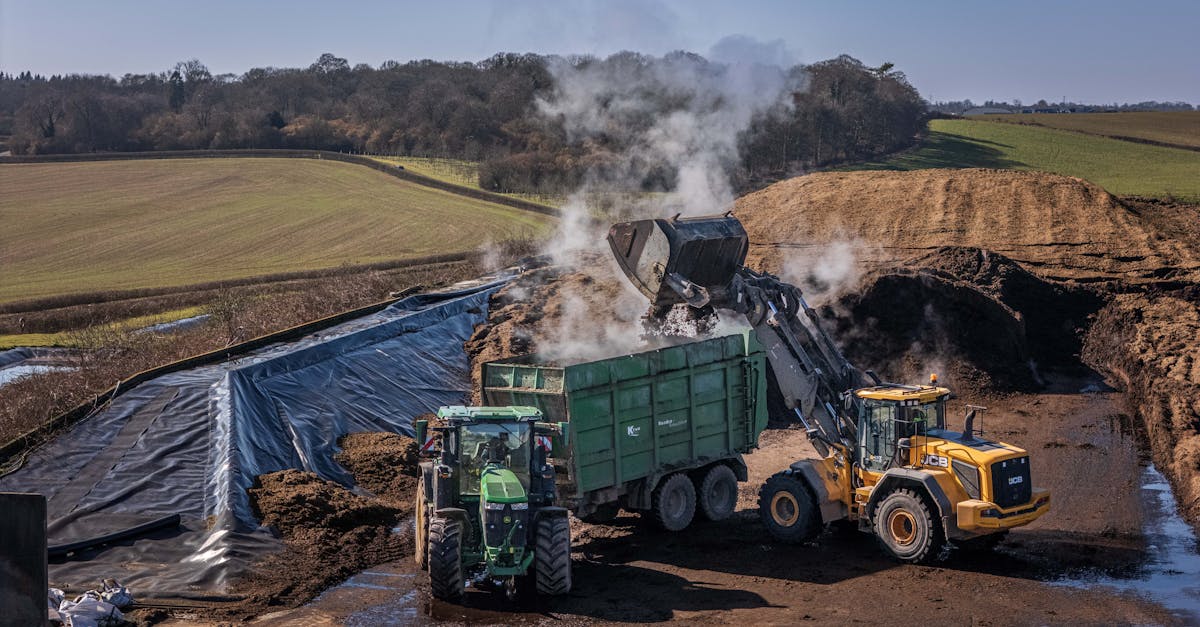
Making and selling button mushroom compost is a commercial-scale business, not a backyard activity: it needs a roofed, hard-floored yard, a lot of wheat straw and poultry manure, and for the best product an insulated room or tunnel where the compost is pasteurised with steam. It pays only where a cluster of button mushroom growers already exists and buys compost rather than making it, as around Solan in Himachal Pradesh and the Punjab and Haryana belt.
Compost is the main input of a button mushroom farm. A report on the Solan mushroom belt put it at nearly a quarter of production cost, and when the local compost yard was removed for road widening and growers had to bring compost from Punjab and Haryana, their costs rose by nearly 30%. Quality is the product here: growers return only if the compost gives good yields. If the aim is to grow mushrooms rather than sell compost, see button mushroom farming.
Long method and short method
Both methods turn straw and nitrogen sources into a selective medium on which button mushroom grows and competing moulds do not. The short method adds a controlled pasteurisation stage (Phase II) and is the one a compost seller should plan around.
| Long method | Short method | |
|---|---|---|
| Time | 28 to 30 days, all outdoors | 16 to 20 days: about 8 days outdoors (Phase I) then pasteurisation (Phase II) |
| Turnings | Days 5, 10, 14, 18, 22 and 26 | Days 2, 4, 6 and 8 |
| Mushroom yield (TNAU) | 10 to 15 kg per 100 kg compost | 18 to 25 kg per 100 kg compost |
| Needs | Open yard, turning labour | Roofed yard, insulated room or tunnel, steam supply |
Formulas used in India
- Long method, synthetic compost (TNAU): 250 kg chopped wheat straw (8 to 12 cm), 25 kg wheat bran, 4 kg ammonium sulphate or calcium ammonium nitrate, 3 kg urea and 20 kg gypsum. Gypsum is added in two parts on days 14 and 18.
- Long method, natural compost (TNAU): horse manure and wheat or barley straw in 4:3 ratio, with 100 kg chicken manure, 5 kg urea and 25 kg gypsum per tonne.
- Short method (TNAU, Solan formula): per 1,000 kg wheat straw, 400 kg chicken manure, 72 kg barley or brewer's grain, 14.5 kg urea and 30 kg gypsum. Confirm the exact quantities with ICAR-DMR Solan or your KVK before a large batch, as published sheets differ in the basis they use.
- Sugarcane bagasse: ICAR-DMR Solan has standardised bagasse-based compost and reports higher yield and protein than wheat, paddy or mustard straw composts. Bagasse is worth considering near sugar mills where straw is dear.
- Other straws: in a West Bengal long-method trial, paddy straw and maize stalks mixed 1:1 gave the best result, 1,020 g mushrooms per 8 kg compost bag (biological efficiency 12.75%). Pure maize stalk compost gave 643 g and was prone to contamination. These are low yields, so use wheat straw or bagasse where available.
Step by step (short method)
- Wetting and stacking: chop and soak the straw until fully wet, mix in chicken manure and the other supplements, and stack on a clean concrete floor with drainage so run-off does not pool.
- Phase I turns: turn the stack on days 2, 4, 6 and 8, adding water and gypsum as needed. A compost turner machine gives more even mixing than manual forking at volume.
- Phase II pasteurisation: move compost into a well-insulated room or tunnel and bring it to 52 to 54 °C with steam for about four hours, holding the compost at 52 to 60 °C afterwards. This kills pests and moulds and removes ammonia. Finished compost should smell sweet, not of ammonia, and feel soft with no sticky lumps.
- Spawning: cool the compost, mix in spawn and fill trays or bags. Many growers buy ready compost and spawn it themselves.
Setting up a compost unit
- Space: a covered, concrete Phase I yard, a Phase II room or tunnel with a boiler, a clean area for filling, and storage for straw. Straw is bulky, so choose a site within a short haul of wheat fields or a sugar mill.
- Cost and capacity: no verified Indian figure for the cost of a complete compost plant was found. Get quotes for the yard, tunnel and boiler and ask your state horticulture department about project reports, and check subsidy options and Kisan Credit Card credit.
- Pollution and neighbours: poultry manure and fermenting straw smell. Keep the unit away from houses and drain leachate to a pit.
Returns
- Work out cost per tonne of finished compost from your own quotes: straw, chicken manure, urea, gypsum and supplements, labour for turning and filling, boiler fuel, power and transport. Divide by the tonnes of compost the batch gives.
- Check the going price with growers in your cluster, then compare: income per tonne less cost per tonne, multiplied by tonnes sold in a year, less the cost of the plant.
- A grower's side check: at 18 to 25 kg of mushrooms per 100 kg compost (short method, TNAU), a tonne of compost should give 180 to 250 kg of button mushrooms. Check current rates on mandi bhav.
Market and selling
- Buyers: small and medium button mushroom growers who lack space or skill for composting, and growers who need a quick restart between crops.
- Risks: demand is local and concentrated; a bad batch loses a customer permanently; a grower can fall back on making compost himself if your price is too high; and mushroom price crashes cut grower demand. Spent compost can be sold to vegetable and nursery growers as a soil amendment for a small extra income.
- A group of growers can build a shared unit through an FPO and share the cost.
Sources
- TNAU Agritech Portal, Mushroom (button) compost preparation
- Shanmugaraj, Saranraj and Biswas, Evaluation of substrates for composting in Agaricus bisporus, West Bengal, Mushroom Research (ICAR-DMR)
- The Tribune, Lifeline dries up: Mushroom city struggles without its compost heart
- The Tribune, Mushroom based on sugarcane bagasse more nutritious (ICAR-DMR)