
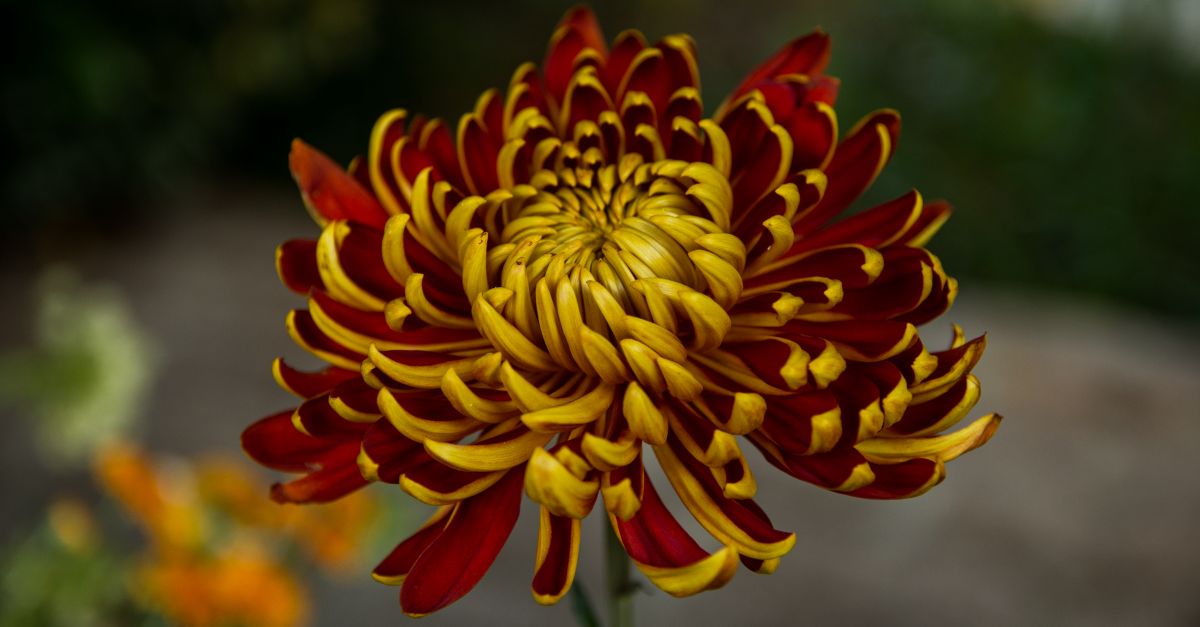
Exotic (cut) chrysanthemum is a protected-cultivation crop in India: it pays only where the farmer can control day length and temperature, grow to a strict schedule and reach a city flower market or florist within a day. The large-flowered "standard" and multi-bloom "spray" types are grown mainly in polyhouses, while the small loose-flower shevanti for garlands is a different, much cheaper crop.
The technical package below follows the TNAU cut chrysanthemum guide and ICAR-IIHR material. No verified Indian cost-of-production table or current stem price for cut chrysanthemum was available, so the returns section shows the arithmetic and leaves the price to the local market you will sell in.
Where it works in India
- Climate: TNAU gives 16 to 25 °C and 70 to 85% relative humidity as the target inside the structure, with CO2 of 600 to 900 ppm in a closed, well-managed house. Chrysanthemum is a short-day plant, so flowering is steered with day length.
- Where: polyhouse or shade-net production suits places close to large cities with florist and event demand, in areas where the structure can hold 16 to 25 °C for most of the year. In hot plains, summer temperature inside the house is the main limit. Ask the state horticulture department which districts have working cut-flower clusters.
- Growing medium: TNAU recommends well-drained sandy loam, or a medium of soil, compost and cocopeat in 1:1:2, with pH 5.5 to 6.5, on beds 1 m wide and 0.3 m high.
Varieties
| Variety | Type / source | Notes |
|---|---|---|
| Bonfire Orange, Bonfire Yellow | Standard (one large bloom per stem), listed by TNAU | Disbud: keep the top bud, remove side buds |
| Reagan Yellow, Reagan White, Nanako | Spray (several blooms per stem), listed by TNAU | Remove the large top bud so side buds open together |
| Arka Ravi | ICAR-IIHR; Korean type, peach flowers | Suited to cut flower |
| Arka Ravi Kiran | ICAR-IIHR; reddish brown stellate flowers | For cut flower and bouquets |
- Many cut varieties are imported, patented cultivars. Buy rooted cuttings only from a nursery that can name the variety and give a bill, and confirm the variety suits your season.
- IIHR Bengaluru also supplies and describes other Arka chrysanthemums, mostly for garland, pot or bedding use, so check the intended use before choosing.
Planting material and spacing
- Cuttings: TNAU describes terminal cuttings 5 to 7 cm long from healthy stock plants, rooted with IBA at 1,000 ppm.
- Spacing: 15 x 15 cm gives 45 plants per square metre of bed; 10 x 15 cm gives 67 plants per square metre.
- Pinching: first pinch about 3 weeks after planting and a second about 5 weeks after planting.
Day length, nutrition and water
- Vegetative phase (4 to 5 weeks): 13 hours light and 11 hours dark. In short-day seasons, night-break lighting of 2 to 3 hours keeps plants vegetative.
- Flowering phase (from week 5 to 6): 10 hours light and 14 hours dark. Where days are longer, black cloth is drawn over the beds to give 14 to 16 hours of darkness.
- Fertiliser (TNAU): DAP 50 g per square metre as basal dose, then a weekly 20:20:10 g NPK per square metre through fertigation.
- Water (TNAU): drip at about 8 to 9 litres per square metre per day. See drip irrigation.
- Open field: ICAR-IIHR's recommendation of 100:50:100 kg NPK per hectare (about 40:20:40 kg per acre) was used in a Kerala Agricultural University variety trial that planted at 40 x 40 cm.
Pests and diseases
- TNAU lists leaf miner, thrips, aphids and red spider mite among pests, and white rust, leaf spot, wilt and powdery mildew among diseases.
- Humid polyhouses favour fungal disease: keep air moving, avoid wetting foliage late in the day and rogue out infected plants early. See pests. Use only chemicals registered for the crop, follow the label and ask your local KVK or horticulture officer; florists reject damaged or blemished flowers.
Harvest and yield
- Stage: for standard types, TNAU says to cut when 2 to 3 rows of ray florets stand perpendicular to the flower stalk.
- Yield (TNAU): about 67 stems per square metre for standard types and 260 stems per square metre for spray types, per crop, under a well-run polyhouse. Treat these as the upper reference; first-time growers usually fall short.
- Because the crop is scheduled by day length, a polyhouse can run several crops a year, but only if cutting supply, labour and market dates are lined up.
💡 Tip: Start with 100 to 200 square metres of bed, grow one crop to the end and sell it through a real market before building anything larger. The expensive part is the structure and lighting, not the cuttings.
Cost and returns
- A verified, current cost-of-production table for cut chrysanthemum in India was not available, so no total cost or profit is quoted here. Polyhouse cost is the largest item; get written quotes and check polyhouse subsidy and the subsidy finder for the current MIDH or state rate.
- Revenue arithmetic: stems per square metre x price per stem x bed area. Standard type at 67 stems: every ₹1 per stem is ₹67 per square metre of bed. Spray type at 260 stems: every ₹1 per stem is ₹260 per square metre. Stems are often sold by the bunch, so convert the local bunch price to a per-stem price first.
- Deduct cuttings, electricity for lights, labour for pinching, disbudding and packing, packaging, transport and market commission, and divide the structure cost across the years it will last.
Market and risks
- Buyers are wholesale flower markets, florists, event decorators and bouquet makers. Price swings with festivals and wedding season, and a heavy harvest on one date can crash the price.
- Flowers need cool, quick transport. Selling to a market within a few hours is far safer than a distant one.
- Group selling can help with volume; see FPO. Compare daily prices at mandi bhav where listed, though flower markets often quote locally.
- Marigold and the small-flower chrysanthemum are easier open-field options if a protected house is not affordable.