
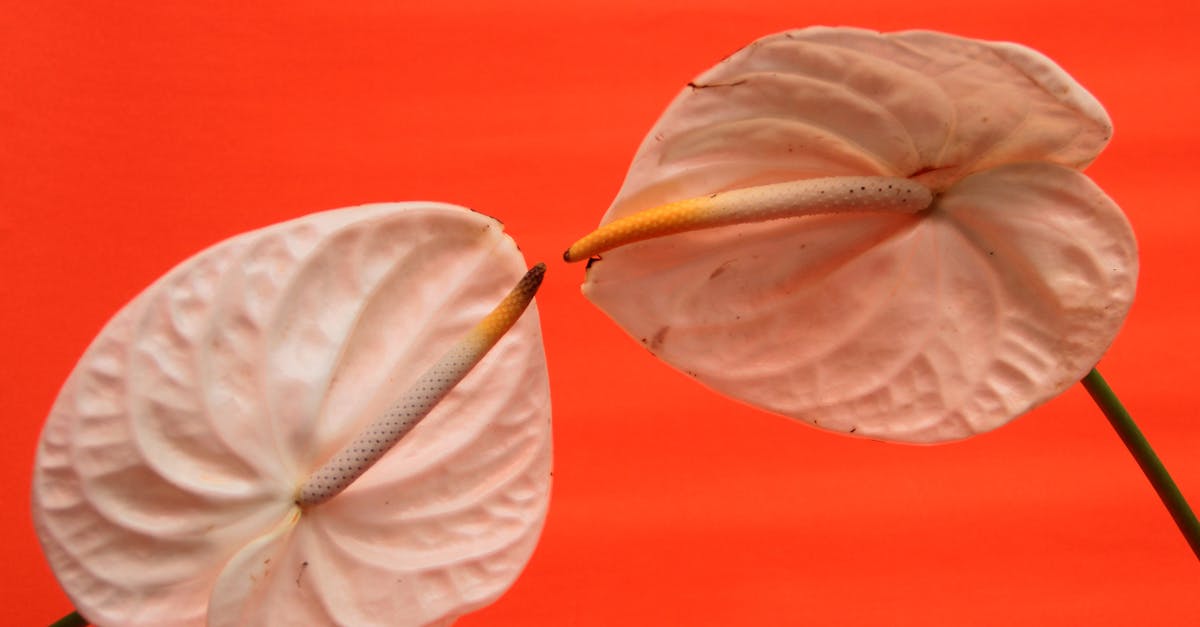
Anthurium works as a commercial cut flower in India only under 75% shade net or a ventilated polyhouse in warm, humid places, and the best-documented areas are Mizoram and the rest of the Northeast, Kerala, Karnataka hill zones (Coorg) and Tamil Nadu (Salem). It needs a soilless bed, tissue-culture plants and a structure before the first flower, and the plants take well over a year to pay back anything, so a firm buyer for stems matters more than the planting itself.
Indian data on yield is solid (5 to 13 flowers per plant per year depending on variety and site) but recent farm-gate price data is thin. The returns below are worked from dated figures and should be redone with your local florist or wholesaler price.
Where it grows in India
- Mizoram: the state horticulture department began commercial anthurium in November 2002 under the Technology Mission for the North East. By 2009 about 300 families were growing it, mostly in shade houses with soilless beds and no temperature control, and growers reported roughly 5.5 lakh plants producing 27.5 to 33 lakh flowers a year.
- Other regions: published trials and growers are from Assam (AAU, Jorhat), Kerala, Karnataka (hill zone, Belgaum, Sirsi, Bengaluru) and Tamil Nadu (Salem). Hot dry plains need foggers and cooling and are not a natural fit.
- Climate limits: TNAU recommends 70 to 80% shade, a 75% shade net house, day temperature 24 to 28 degrees C, night 15 to 22 degrees C and high humidity (80 to 90%). Direct sun scorches spathes and cold or hot dry air damages them.
- Growing medium: not field soil. TNAU suggests 1:1 leaf mould and coco peat at pH 5.5 to 6.5. The Assam trial used coco peat 2 parts, coconut husk 1 part, charcoal 1 part and a layer of brick pieces at the bottom for drainage.
Varieties
| Variety | Evidence | Traits | Notes |
|---|---|---|---|
| Crinkle Red | Karnataka hill-zone trial | 13.14 flowers per plant a year, the highest in that trial | Red cultivar; check market colour demand |
| Tropical, Cheers, Fire | Same trial | 11.77, 10.60 and 10.25 flowers per plant a year | Fire was also used in the Assam trial |
| Midori Improved | Same trial | Longest vase life, 35 days | Green spathe, a niche colour |
| Presence, Xavia, Angel | Shade-net variety trial (krishikosh) | Rated best for vegetative and flower traits | Rank varies with site; confirm with your supplier |
| Evita, Carnival | Mizoram and Assam trials | Used as test cultivars | Colour mix matters for sale |
- TNAU lists red, orange, white, pink, green and bicolour groups. Pick colours by what your buyer sells, since red and orange usually dominate but a mixed bed is easier to sell in lots.
- Tissue-culture plants are preferred for commercial beds. Seed takes 2 to 3 years to flower and gives mixed colours; suckers and stem cuttings from 3 to 4 year old plants are the other routes.
- Buy from an accredited tissue-culture lab or state horticulture department, and ask for the variety name in writing, because an unnamed mix is the common complaint.
Planting and spacing
- TNAU: raised beds 1.2 to 1.4 m wide, 60 x 60 cm spacing, about 2.8 plants per square metre of bed, using tissue-culture plants 15 cm tall with 4 to 6 leaves.
- The Assam trial used 45 x 45 cm with six-month-old plantlets, which is nearly 5 plants per square metre. Closer spacing gives more plants but less air movement and more disease.
- Plants per 100 m2 of bed: about 280 at 60 x 60 cm. Paths and structure take extra land, so an acre (4,047 m2) holds roughly 6,000 to 7,000 plants on beds, not 11,000.
Nutrition and irrigation
- TNAU schedule (raised beds, after 6 months): alternate weeks. Week A: 250 g calcium nitrate, 150 g potassium nitrate and 50 g micronutrient mix per 100 m2. Week B: 250 g mono ammonium phosphate, 100 g potassium nitrate and 50 g magnesium sulphate per 100 m2.
- Assam trial: weekly fertigation through drip, one 2 litre per hour dripper per plant, with about 200 to 220 kg N and 250 kg K per hectare a year (about 20 and 25 g per m2), plus phosphorus at about 100 kg per hectare. The full dose through drip gave the highest nutrient uptake and flower dry matter, ahead of 75% and 50% doses and of broadcast fertiliser.
- Water: TNAU recommends mist or overhead sprinklers to supply water and raise humidity. Use clean water with low salt; the NE greenhouse guide gives irrigation water pH 5.5 to 7.0 and EC 0.1 to 0.3 mS/cm as the target. See drip irrigation for emitters.
Pests and diseases
| Problem | TNAU-listed control |
|---|---|
| Aphids | Dimethoate 0.3% |
| Scale insects and thrips | Malathion 0.1% |
| Spider mites | Wettable sulphur 0.03% |
| Anthracnose | Carbendazim 0.1% |
| Leaf spot | Mancozeb 0.2% |
| Root rot | Captan 2 g per litre |
| Bacterial wilt | Streptocyclin 200 ppm |
These doses are from a state university list; some chemicals have since been restricted in places, so follow the current label and confirm with your KVK. Good drainage, clean media and removing infected plants matter more than sprays. See pests for identification.
Harvest and yield
- Harvest when the spathe has fully opened and about one third of the flowers on the spadix are open. Cut in the cool of morning or evening.
- TNAU quotes an average of 8 flowers per plant per year. Karnataka hill-zone trial cultivars gave 10 to 13; the Mizoram growers' totals work out to about 5 to 6 per plant across mixed farmers. Plan on 5 to 8 until your own beds prove higher.
- Vase life: TNAU reports 24.5 days with benzyl adenine pulsing and 30.5 days with a holding solution of 8-HQC 200 ppm and 5% sucrose. Midori Improved reached 35 days in the Karnataka trial.
- Grade by stem length and spathe size and pack in boxes so that spathes do not rub; bruising is the main reason stems are downgraded.
Cost and returns
- Price evidence (dated): Mizoram exported 13,81,629 stems worth ₹96,69,123 in 2008-09, about ₹7 per stem. A Karnataka research study reported ₹14 for A grade and ₹8 for B grade stems; its year is not given. Current wholesale prices in Kochi, Bengaluru and Delhi flower markets should be checked directly before investing.
- Arithmetic per 1,000 plants: low case 1,000 x 5.5 stems x ₹7 = ₹38,500 a year; high case 1,000 x 8 stems x ₹14 = ₹1,12,000 a year. Costs of the shade house, tissue-culture plants, labour, cooling and transport must be set against this and vary by site; get a written estimate from your state horticulture department or KVK.
- Payback: plants take a year or more to reach full flowering, so expect no meaningful income in year 1 and a multi-year payback. Ask your state horticulture department for the current unit cost norm used for subsidy; the NHB and state mission cost norms for shade nets and polyhouses are the usual reference.
Market and risks
- Buyers are local florists, event decorators, wholesalers in metro flower markets and, from the NE, traders who send boxes by air or road. In Mizoram, second-grade stems were sold locally and top grades to metro cities.
- Main risks: very high set-up cost, a long wait for first income, tissue-culture plants of the wrong or mixed variety, humidity-related disease and thin demand in small towns. Colour and stem length decide the price, not just volume.
- Group selling through a FPO or grower society worked in Mizoram and helps reach metro buyers. Check polyhouse subsidy and subsidy finder for structure support; rates vary by state and must be confirmed with the horticulture department.
Sources
- TNAU Agritech Portal, Anthurium
- Indian Journal of Horticulture, Effect of fertigation on nutrient uptake in anthurium (AAU, Jorhat), 2012
- Science Vision 11(4), Cultivation of Anthurium in Mizoram
- Performance of anthurium cultivars under hill zone of Karnataka
- Indian Horticulture, Low-cost greenhouse structures for the Northeast, Nov-Dec 2023