
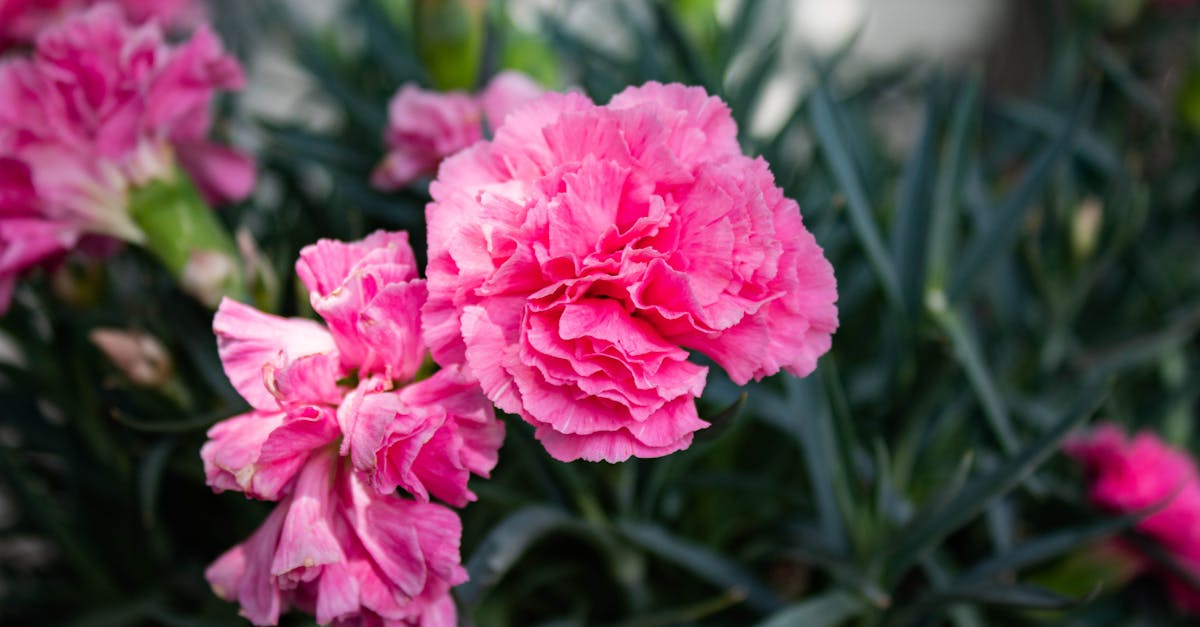
Carnation is a protected-cultivation cut flower: it pays only in a polyhouse in a cool, bright, low-humidity climate, with a buyer in a flower market, and it needs a large investment. Published Indian studies cover Pune and Satara in Maharashtra and Bilaspur in Himachal Pradesh, and show a polyhouse of about an acre costing ₹36.95 lakh to build and about ₹46 lakh a year to run.
A crop flowers for about two years from one planting. The same studies show that profit depends heavily on unit size and flower price: small units earned a benefit-cost ratio of only 1.18, large units 1.56 to 1.67.
Climate and site
- Temperature and humidity: TNAU gives 18 to 24 degrees C by day, 10 to 15 degrees C at night and 70 to 75% relative humidity. Hot plains summers and warm nights lower quality unless the structure is cooled.
- Soil: well-drained red loam with pH 5.5 to 6.5. Heavy, waterlogged soil invites wilt.
- Where grown: Pune and Satara districts of Maharashtra, and Bilaspur in Himachal Pradesh. Ask your state horticulture department about other cool-climate sites. For polyhouse designs and subsidy see polyhouse subsidy.
Types and varieties
Standard carnations carry one large flower per stem; spray types carry several smaller flowers. TNAU lists the following as commonly grown, and names change with the breeders' catalogue, so ask your buyer which colours are selling before choosing.
| Type | Red | White | Pink |
|---|---|---|---|
| Standard | Domingo, Master | Baltico, White Liberty | Dona, Charmant |
| Spray | Red Eye, Red Fuego | White Prestige, Milky Way | Rosa Bebe, Spur |
Plants are raised from terminal cuttings, so buy certified disease-free cuttings from a reputable propagator.
Planting, spacing and training
- Cuttings: terminal cuttings of 5 to 10 cm treated with NAA at 500 ppm for rooting (TNAU).
- Spacing: 15 x 15 cm, six rows per bed (25 plants per square metre of bed) or four rows (22 per square metre). That is roughly 90,000 to 100,000 plants per acre of bed area, less after paths are deducted. Other studies use 30 to 45 plants per square metre with narrower spacings.
- Pinching: a single pinch when the plant has 5 nodes gives about six lateral shoots (TNAU).
- Support: four layers of netting, with mesh from 7.5 x 7.5 cm at the bottom to 15 x 15 cm at the top, raised as the crop grows, keep stems straight (TNAU).
Nutrition and irrigation
- Basal: neem cake 2.5 t/ha and phosphorus at 400 g per 100 sq ft, mixed into beds before planting (TNAU).
- Fertigation until bud formation (TNAU): ammonium nitrate 3 g, potassium nitrate 5 g and calcium nitrate 8 g per square metre per week. Later top dressing is 2.5 g per plant per month; ask the local KVK to adjust the schedule to a soil and water test.
- Water: drip with drippers at 30 cm, about 4 to 6 litres per square metre per day. See drip irrigation.
Pests and diseases
- Pests: aphids, thrips, spider mites and bud borers (TNAU). Use insect-proof side nets, yellow and blue sticky traps and regular scouting; choose chemicals only on the label and KVK advice, and see pests.
- Diseases: Fusarium wilt, Alternaria leaf spot, grey mould and calyx splitting (TNAU). Wilt lives in the soil, so use clean cuttings, well-drained raised beds and treated or fresh bed soil; grey mould rises with humidity, so ventilate.
Harvest and yield
- First flowers: 110 to 120 days after planting (TNAU).
- Stage: standard types at the paint-brush stage; spray types when two flowers are open and the other buds show colour (TNAU).
- Yield: TNAU gives about 15 flowers per plant over two years, or 350 to 375 stems per square metre. TNAU also gives about 8 stalks per plant per year as an average, so plan on the lower end until your own crop proves otherwise.
Cost and returns
| Study | Result |
|---|---|
| Pune and Satara, Maharashtra, 60 polyhouse growers, 2018-19 | Capital investment ₹36.95 lakh; cost of cultivation ₹46.07 lakh per acre; gross return ₹77.30 lakh; net return ₹31.24 lakh; benefit-cost ratio 1.67; IRR 39%; fixed costs 52.75% of the total |
| Bilaspur, Himachal Pradesh, 2021 | Price ₹3,050 to ₹3,071 per box of 1,000 sticks; benefit-cost ratio 1.18 for polyhouses under 500 sq m and 1.56 for those above 500 sq m; IRR 44.1% and 229% |
These are study averages, not guarantees. The Maharashtra figures were for established growers selling into large markets, and the Himachal result shows that a small unit has a thin margin, so a modest fall in flower price or a failed crop can erase the profit. Fixed costs (structure, planting material, labour) are over half of the total, so a crop that fails to Fusarium or heat loses most of its investment. Prices change daily by season and festival; check your own market before projecting income. For loans, see Kisan Credit Card.
Market and selling
- Cut stems are graded by length and sold in boxes of 1,000 sticks to wholesalers, florists and decorators, so a connection to a flower market near the farm is essential.
- Prices swing with the wedding and festival season and with how many other growers are cutting at the same time, so ask the wholesaler for the last year's monthly rates.
- Carnation has a long vase life, which helps transport, but flowers still need a cool chain after harvest. Large units can also look at export buyers.
Sources
- TNAU Agritech Portal, Carnation (climate, varieties, spacing, fertigation, harvest)
- Financial feasibility and profitability of carnation cut flowers under protected cultivation (Pune and Satara), Journal of Pharmacognosy and Phytochemistry
- Economic analysis of carnation cultivation under polyhouse conditions in Bilaspur district of Himachal Pradesh (FAO AGRIS)