
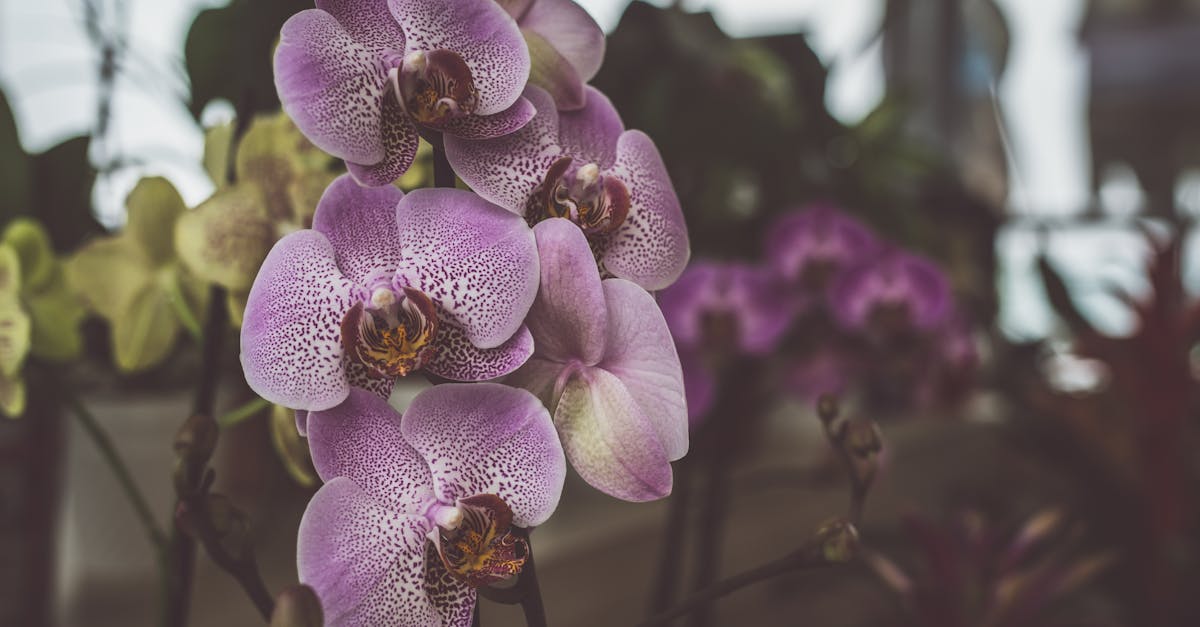
Orchid cut-flower farming works in India under shade net or a naturally ventilated polyhouse, mainly with Dendrobium hybrids in Kerala, Karnataka (Kodagu), Tamil Nadu and Maharashtra, and with Cymbidium in cool hills such as Sikkim. It needs a protected structure costing lakhs per acre, disease-free tissue-culture plants and a flower buyer arranged before planting.
India imports far more orchid flowers than it exports, which means domestic demand exists, but the crop is capital heavy and market information and grading are weak. Treat every income figure as unproven until you have sold your own spikes.
Where it grows in India
- Area growth: ICAR-NRC for Orchids, Pakyong, reports orchid area in India growing from 10 ha in 2012-13 to 3,040 ha in 2022-23. Early cultivation was in Assam, Mizoram, Meghalaya and Sikkim, and it has spread to Karnataka, Kerala, Madhya Pradesh, Telangana, Goa and West Bengal.
- Dendrobium belt: an ICAR-IIHR paper says Kerala, Tamil Nadu, Karnataka and Maharashtra grow Dendrobium commercially for cut flowers, and that Dendrobium makes up about 90% of commercial orchid cultivation. In Karnataka growers have worked in cluster mode, and the IIHR trial site at Chetalli, Kodagu (1,050 m, 19 to 32 °C, 55 to 90% humidity) suits it.
- Cymbidium: tolerates temperatures down to 7 °C and starts flowering at 10 to 15 °C, so it belongs in cool hill areas, not warm plains.
Which orchid for which place
| Type | Climate need (NRC Orchids) | Use |
|---|---|---|
| Dendrobium (warm-growing types) | 22 to 32 °C; warm bright light, 12 to 14 hours; 50 to 70% humidity | Cut sprays; most common commercial orchid in the south |
| Cymbidium | Mature plants 50 to 55% shade in hot weather; flowers at 10 to 15 °C; water through the year | Cut spikes in cool hills |
| Phalaenopsis | 26 to 27 °C growth, 19 to 21 °C for flowering, minimum 15 °C in winter | Potted flowering plants |
| Vanda, Aranda, Mokara | Warm all year; 70 to 75% humidity for Vanda | Cut flowers; Vanda needs high light |
Orchids in cultivation are mostly epiphytes, so they are grown in pots or baskets in coarse media, not in field soil. Water should have pH 5.0 to 6.5, with rainwater best, and overwatering leads to root rot.
Planting material and media
- Source: commercial orchids are multiplied by tissue culture (mericloning). Cymbidium mosaic virus and Odontoglossum ringspot virus are the most serious problems and spread through infected planting material, so buy virus-indexed tissue-culture plants from an established laboratory, not from cuttings of unknown origin. Cultivation in India is based mainly on hybrids bred abroad.
- Variety: Sonia types and Singapore White are the Dendrobium hybrids named in Indian studies; Sonia was the main variety of Uttar Kannada growers because of demand and shelf-life.
- Medium: the IIHR trial used hardened tissue-culture plants in 8 inch plastic pots filled with broken tile bits, chopped coconut husk and charcoal in 1:1:1 by volume, inside a naturally ventilated polyhouse. Bark, sphagnum moss and perlite are other options.
- Spacing and plants per acre: no verified Indian figure was found; ask NRC Orchids or the nearest KVK for the layout their bench and pot system uses.
Nutrition and watering
- In the IIHR three-year trial at Kodagu, foliar spray of 30:20:20 NPK at 0.1% every week gave the best result: 10.01 spikes per plant per year, 44 cm spike length and 16.2 flowers per spike, with plant height 53 cm. The weakest treatment (20:20:20) gave the shortest plants. This is a research result for cv. Singapore White, not a farm average.
- Orchids take up little at a time, so feed in dilute, frequent sprays rather than heavy doses. Humidity of 50 to 80% is needed, kept up with misting or fogging. See weather before planning shade and fogging.
Pests and diseases
- Fungal problems include black rot, anthracnose, orchid wilt and leaf spots; bacterial soft rot and nematodes also cause losses. Mites, scale, aphids, mealybugs, caterpillars, snails and slugs attack plants in protected structures.
- Sanitation is the main control: sterilised tools, clean media and removal of infected plants. Trichoderma, Pseudomonas fluorescens and Bacillus subtilis are used as biocontrol. For chemicals, follow the label and local KVK advice. See pests.
Harvest and yield
- Dendrobium spikes are cut at about 75% bloom, unlike most orchids which are cut at full bloom. Cut Dendrobium, Cymbidium, Vanda, Aranda and Mokara flowers last from 7 to 30 days, and Cymbidium spikes 3 to 4 weeks.
- Pre-cooling and refrigerated transport reduce losses. The ICAR paper cites 10 spikes per plant per year as the best trial result; the time to first flowering and the farm-level average should be taken from your supplier and from growers already selling spikes.
Cost and returns
- Capital: NHB norms for protected cultivation put an anthurium and orchid polyhouse with drip and fogger at ₹33.76 lakh per acre (₹83.4 lakh per hectare, hills 15% more), with cultivation cost of ₹28 lakh per acre, and a project cost ceiling of ₹70 lakh per acre with add-on components. These are norm values, not what a grower will always spend.
- One farm study: a study of orchid growers in Uttar Kannada district (mostly Sonia) reported an establishment cost of ₹2.33 lakh per gunta (a gunta is about 101 sq m), payback of 3.45 years, benefit-cost ratio 2.31 and IRR 32%. It is one district and one period; growers also named high planting material cost and lack of credit as problems.
- Your own sheet: plants x spikes per plant per year x share that is sellable grade x price per spike, less labour, fertiliser, electricity for fogging, packing, transport and the yearly cost of the structure. Get spike prices from the flower market and buyer you will use; none are given here as no verified current figure was found.
Market and selling
- Imports of orchids were worth ₹3,425.76 lakh in 2013-14 and ₹2,321.84 lakh in 2018-19, so Indian growers compete with imported flowers. Buyers are wholesale flower markets in the metros, florists, event decorators and hotels.
- Risks: high set-up cost, grading and standards not settled, disease losses and spikes that must reach the market within days. A group of growers selling through an FPO can share packing and transport; export buyers need consistent grade. Compare with anthurium, which has similar structure needs.
Subsidy
- MIDH and NHB list a cost norm of ₹700 per sq m for planting material and cultivation of orchid and anthurium under a polyhouse or shade net, with subsidy on a share of the norm and a limit on area per beneficiary. The percentage and limit differ by state and category, so confirm with your state horticulture mission or the polyhouse subsidy page and subsidy finder. Credit is available on a Kisan Credit Card or project loan.
Sources
- Das et al., Optimizing orchid cultivation, Indian Farming, July 2025 (ICAR-NRC for Orchids)
- Nair et al., Influence of inorganic nutrients on Dendrobium cv. Singapore White, Journal of Horticultural Sciences 2020 (ICAR-IIHR)
- Singh and Pal, Smart solutions for harnessing orchid potential, Indian Horticulture, Sept-Oct 2024
- National Horticulture Board, Cost Norms (protected cultivation)
- Production and Marketing Management of Orchids in Uttar Kannada District (KrishiKosh)