
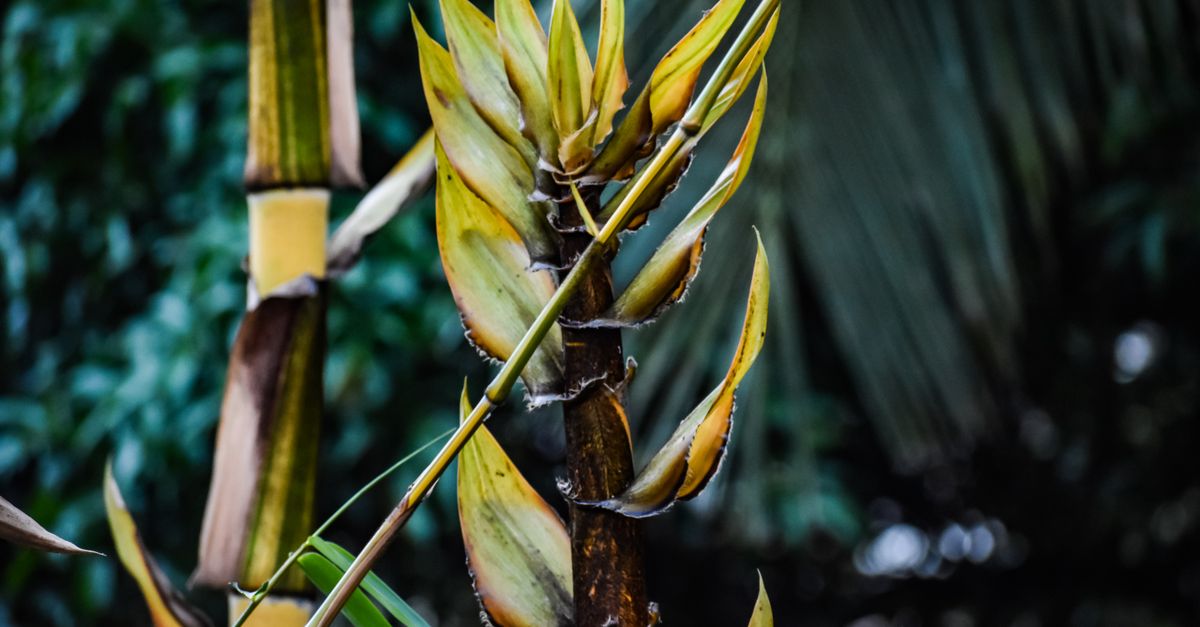
Edible bamboo shoot can be grown in India, but it is a long-wait, niche crop: the clear market is in the Northeast, where shoots are a daily food, and elsewhere a grower needs a processor or pickle maker lined up before planting. Shoots are perishable, picked only in the monsoon, and plants need several years to build up.
The one clear gap in the market is in processed products: a 2014 trade figure in a recent review puts India's bamboo shoot imports at US$131.13 million against exports of US$8.95 million. No verified Indian farm-gate price per kg of fresh shoot was found, so the page below gives yields and agronomy, and tells you how to test the price before planting.
Where it grows and which species
- Northeast India: annual consumption of bamboo shoot is reported at about 2,188 tonnes in Manipur, 1,997 tonnes in Arunachal Pradesh, 442 tonnes each in Meghalaya and Nagaland, 433 tonnes in Mizoram and 201 tonnes in Tripura. Most of this is shoots collected from natural clumps.
- Species used: Dendrocalamus hamiltonii (Meghalaya, Mizoram, Sikkim), Melocanna baccifera (Northeast), and Bambusa balcooa, Dendrocalamus asper, Bambusa vulgaris and Dendrocalamus strictus across the country.
- Sweet bamboo (Dendrocalamus asper): the species most widely promoted for planted shoot gardens. Micropropagated plants were trialled in Kerala (Alwaye, Palakkad), Karnataka (Thithimathi, Kodagu) and West Bengal (West Midnapore).
- Climate and soil: warm, humid country with good monsoon rain and deep, fertile, well drained soil rich in organic matter. Shoot size is much better in humid sites than in semi-arid ones (see yields below).
Planting
- Material: micropropagated plants of Dendrocalamus asper from an accredited lab or a forest research institute nursery. In the West Bengal trial, plants hardened for 180 days in the nursery had almost nil mortality after planting, while 90-day-old plants lost 25%, and overall survival after four years was about 85%.
- Pits: 0.5 x 0.5 x 0.5 m with 10 kg of farmyard manure per pit (West Bengal trial). Plant at the start of the rains.
- Spacing: IWST trials in Kerala and Karnataka used 5 x 5 m, which is 400 clumps per hectare or about 160 per acre. Wider spacings of 5 x 7 m and 5 x 9 m have also been tested for D. asper in Karnataka.
- Fertiliser and irrigation: no verified shoot-garden dose schedule for Indian conditions was found. Ask your state forest or horticulture research station and the KVK, and keep the clump moist during the shooting season.
- Pests and diseases: ask the KVK for current recommendations; none were verified for shoot gardens.
Shoot yield
| Site | Clump age | Shoots per clump | Shoot size |
|---|---|---|---|
| Hosakote, Bengaluru (semi-arid) | 5 years | about 16 | diameter 18 mm, edible portion above 0.75 kg |
| Thithimathi, Kodagu (humid tropical) | 5 years | about 25 | diameter 55 mm, edible portion above 2 kg |
| Arabari, West Midnapore (West Bengal) | 4 years | 25 culms per clump | culm height 4.5 m (a culm trial, not a shoot harvest) |
- The same species gave a very different yield in dry and humid sites, so site matters more than any average figure.
- Harvest each shoot when it is young: 10 to 14 days after emergence for Dendrocalamus asper, 6 to 10 days for Dendrocalamus strictus and 10 to 16 days for Bambusa tulda. The shooting season is the first week of June to the first week of September.
- Leave enough shoots to grow into culms, or the clump weakens. Harvest only a portion of the shoots, and ask the forest research institute how many.
💡 Tip: Plant 20 to 30 clumps first and take two shooting seasons of data. Phone a pickle maker, canning unit or Northeast trader for a price per kg of peeled shoot before planting more.
Processing and safety
- Raw bamboo shoot contains cyanogenic glycosides. The review reports 120 mg per kg at the shoot tip, 12 mg per kg in the middle and 1.1 mg per kg at the base, against a safe limit of 10 mg HCN equivalent per kg dry weight.
- Boiling for at least 15 minutes lowers the cyanide content, by up to 91% in the studies reviewed. Never sell or eat shoots raw.
- Common products are fermented shoot, pickle, canned and dried shoot. Sun-dried fermented shoot showed higher crude fibre (up 10.76%) and protein (up 15.20%).
- A packed food product needs FSSAI registration or licence; a small unit should ask the district industries centre or the state food safety office.
Cost and returns
- A model for 5-year-old Dendrocalamus asper plantations that counted shoot yield alone gave a benefit-cost ratio of 6.21 at a 10% discount rate. It depends on assumed yields and prices, and it excludes the loss from poor sites, so treat it as an upper marker.
- No verified Indian price per kg of fresh or processed shoot was found, and the first harvests are small. The sensible check is to take your yield of edible shoot per clump, multiply it by 160 clumps per acre, and multiply by the quoted price from your actual buyer, after allowing for what is lost in peeling and trimming.
- Income from the plantation also depends on culms later (poles, pulp) because the same clump gives both, but shoot harvest and culm harvest compete.
Market and risks
- The review lists the main constraints: rules on harvesting from forests, little cold chain, and unreliable demand for fresh shoots. Fresh shoots keep poorly, so plan processing within a day of harvest.
- Buyers are local vegetable markets in the Northeast, fermented shoot and pickle makers and, elsewhere, specialty food and restaurant buyers. Check demand in your district before planting.
- The National Bamboo Mission supports plantations and primary processing through state bamboo missions. Ask the state horticulture or forest department for current rates, and see subsidy finder. Related guide: commercial bamboo. Group sale through an FPO helps a small grower.
Sources
- Edible bamboo shoots: a sustainable nexus of nutrition, livelihood, and food security for rural communities in India (PMC)
- A two step method for accelerated mass propagation of Dendrocalamus asper and their evaluation in field (PMC)
- Introduction, mass multiplication and establishment of edible bamboo Dendrocalamus asper in India (Indian Journal of Plant Genetic Resources)