
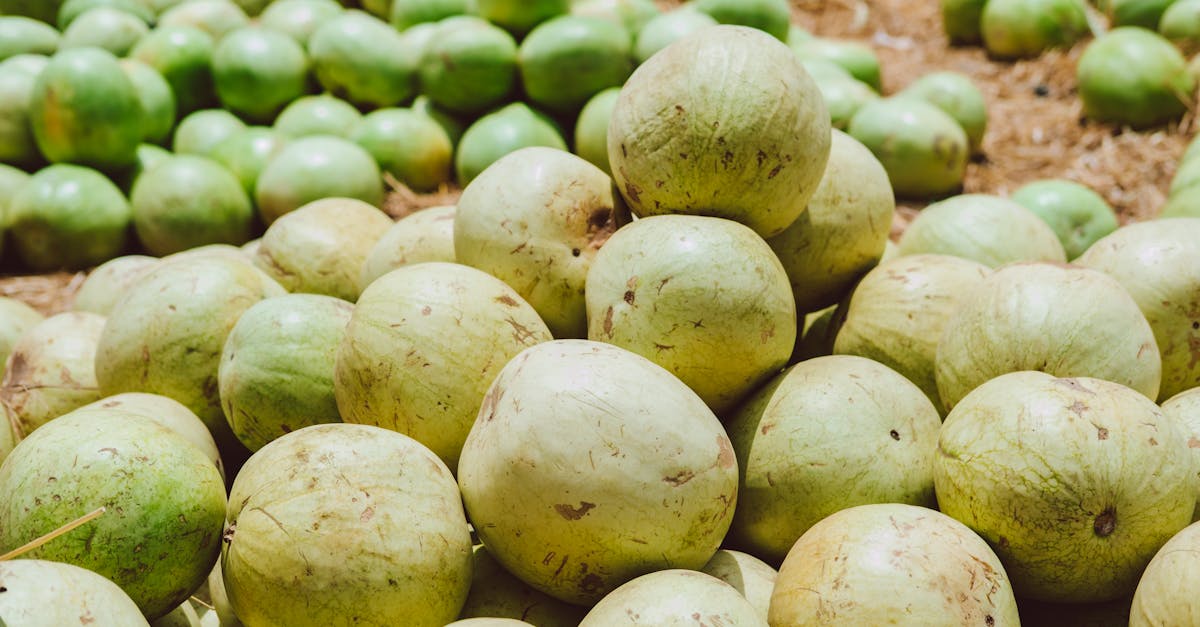
Ash gourd (petha kaddu, winter melon) is grown widely in India and is easy to raise, but the farm-gate price is low, so it pays only if you can sell by the tonne to a petha maker, a processor or a reliable mandi buyer. Uttar Pradesh, especially the area around Agra, is the largest producing region, and Agra's petha trade is the main commercial outlet. Fully ripe fruit stores for three to four months without cold storage, which gives you time to choose when to sell.
The figures below come from TNAU, KAU, a varietal trial in Odisha and NIFTEM's petha processing material. Prices in the petha trade vary by season and year; check mandi bhav before planting.
Where it grows and what it needs
- Regions: NIFTEM material names Uttar Pradesh, Kerala and Tamil Nadu as extensive growers, with Uttar Pradesh (near Agra) the largest producer. Trial work also exists in Odisha (Gajapati district).
- Soil: the fruit can be grown on any soil and needs no special care, but a well-drained loam is the safe choice. Pits, not flat beds, are the standard (see below).
- Season: TNAU gives July and January planting in Tamil Nadu. Sowing dates in north India depend on frost and rain; ask your KVK for the local window.
- Duration: 120 to 130 days for TNAU's hybrid and CO 2, 140 to 150 days for CO 1 (TNAU). NIFTEM notes fruits can be harvested from 90 to 100 days after sowing, extending up to about 150 days.
Varieties
| Variety | Source | Fruit and duration | Reported yield |
|---|---|---|---|
| CO 1 | TNAU, Coimbatore (1971) | Large oblong fruit of 8 to 10 kg; 140 to 150 days | 20 to 25 t/ha (variety group 30 to 35 t/ha on the TNAU crop page) |
| CO 2 | TNAU (1982), selection from Coimbatore local | Small oblong fruit of 2 to 4 kg; 120 to 130 days | 34 t/ha |
| TNAU Ash Gourd Hybrid CO 1 | TNAU | 120 to 130 days; seed rate 1.5 kg/ha | 80 to 90 t/ha as stated by TNAU; treat as a best case |
| Indu | KAU, Kerala | 4.82 kg average fruit; good flesh thickness | 24.5 t/ha |
| Thara | RARS Pattambi (KAU) | 1.22 kg fruit; homestead and commercial | 22 t/ha |
| Pusa Ujjwal | Named in the Odisha (Gajapati) trial and NIFTEM petha list | 5.41 fruits per vine, 6.18 kg average fruit | Highest in the Gajapati trial: 31.14 kg per vine; Kashi Surbhi 23.2 kg per vine |
- NIFTEM lists VAG 502, Pusa Ujjwal, CO 1, CO 2, Kashi Ujawal and MAH 1 as suitable for petha. A petha maker wants mature, fibre-free flesh, so ask the buyer which variety and fruit size they prefer before you buy seed.
- The Gajapati trial concluded that no genotype was best for every trait, so choose by the buyer's need (fruit weight, flesh, storage) rather than the highest yield alone.
- Vaidyakumbalam is a small-fruited Kerala type grown for medicinal use, with a different rind and shelf life; it is not a petha type.
Planting and nutrition
- Seed rate: 2.5 kg/ha for varieties (about 1 kg per acre), 1.5 kg/ha for hybrids (about 0.6 kg per acre).
- Pits and spacing (TNAU): 30 x 30 x 30 cm pits at 2 m x 1.5 m, with a basin around each. That is about 3,300 pits per hectare, or about 1,350 per acre.
- Basal: 10 kg farmyard manure and 100 g of a 6:12:12 NPK mixture per pit (about 33 t FYM and 330 kg mixture per hectare; 13.5 t and 135 kg per acre). Top-dress 10 g nitrogen per pit 30 days after sowing.
- Fertigation: TNAU recommends 200:100:100 kg N:P:K per hectare (about 81:40:40 kg per acre) when applied through drip; see drip irrigation and fertilizers. Neem cake at 100 kg/ha is also advised. A soil test should adjust these doses.
- Water: irrigate the basins before sowing, then about once a week.
Pests and diseases
- TNAU lists leaf beetles, leaf-eating caterpillars, fruit fly and aphids, and powdery and downy mildew as the main problems.
- No product-by-product dose is given here. Use the chemicals your KVK recommends, follow the label, and see the pest guide. Remove and destroy fly-damaged fruits and avoid crowding vines, which raises mildew.
Harvest, storage and yield
- Harvest fully mature fruit with the waxy bloom. NIFTEM advises avoiding immature fruit for petha, because it lacks the flesh and keeping quality.
- Wash the fruits after harvest; mature fruits keep for 3 to 4 months without special arrangements (NIFTEM). Handle without bruising.
- Yield to plan on: varieties 20 to 35 t/ha (8 to 14 t per acre) from TNAU and KAU figures. The 80 to 90 t/ha for hybrids has not been confirmed by other sources reviewed.
Returns: how to work it out
NIFTEM's petha material quotes ₹270 to 310 per mann (40 kg) in peak season, which is about ₹6.75 to 7.75 per kg, and up to ₹400 to 410 per mann (about ₹10 per kg) during the pandemic. These are dated (around 2020 to 2022) and decided by daily auction. Substitute today's local rate.
| Case | Yield | Price | Gross per acre | Gross per hectare |
|---|---|---|---|---|
| Low | 12 t per acre (30 t/ha) | ₹6.75 per kg | ₹81,000 | ₹2,02,500 |
| High | 14 t per acre (35 t/ha) | ₹7.75 per kg | ₹1,08,500 | ₹2,71,250 |
- These are gross figures. No cost-of-cultivation data for ash gourd was found; subtract your own seed, pit manure, fertiliser, labour, irrigation, transport and mandi commission. Your KVK or state horticulture department can give a local figure.
- Because the crop keeps for months, selling in stages when the price rises is possible if you have a dry, ventilated store.
Market and value addition
- Petha is the main outlet. NIFTEM material says about 1,500 cottage units in Agra make 700 to 800 tonnes of petha a day. About half of petha sales are linked to tourism, so demand moves with it. Agra petha carries a Geographical Indication tag.
- To make 100 kg of petha, a maker uses 200 to 250 kg of ash gourd, 10 kg of lime and small amounts of alum and citric acid, so a tonne of fruit becomes about 400 to 500 kg of petha.
- Petha makers buy from farmers or from the mandi. NIFTEM suggests contract farming as the best way to secure supply, which is also your protection against a price drop: agree a rate and delivery period with a maker before sowing.
- Making petha yourself needs food licensing (FSSAI) and a processing set-up; see FPO and subsidy finder for processing support. The PMFME scheme, under which NIFTEM publishes these petha training materials, is one such route.
- Insurance and credit: PMFBY (check whether your district notifies the crop) and KCC.
Sources
- TNAU Agritech Portal: Ash gourd (Benincasa hispida)
- Kerala Agricultural University: Ash gourd varieties
- Varietal evaluation of ash gourd in Gajapati district, Journal of Pharmacognosy and Phytochemistry (2021)
- NIFTEM (PMFME): Processing of petha, presentation 1
- NIFTEM (PMFME): Processing of petha, presentation 2