
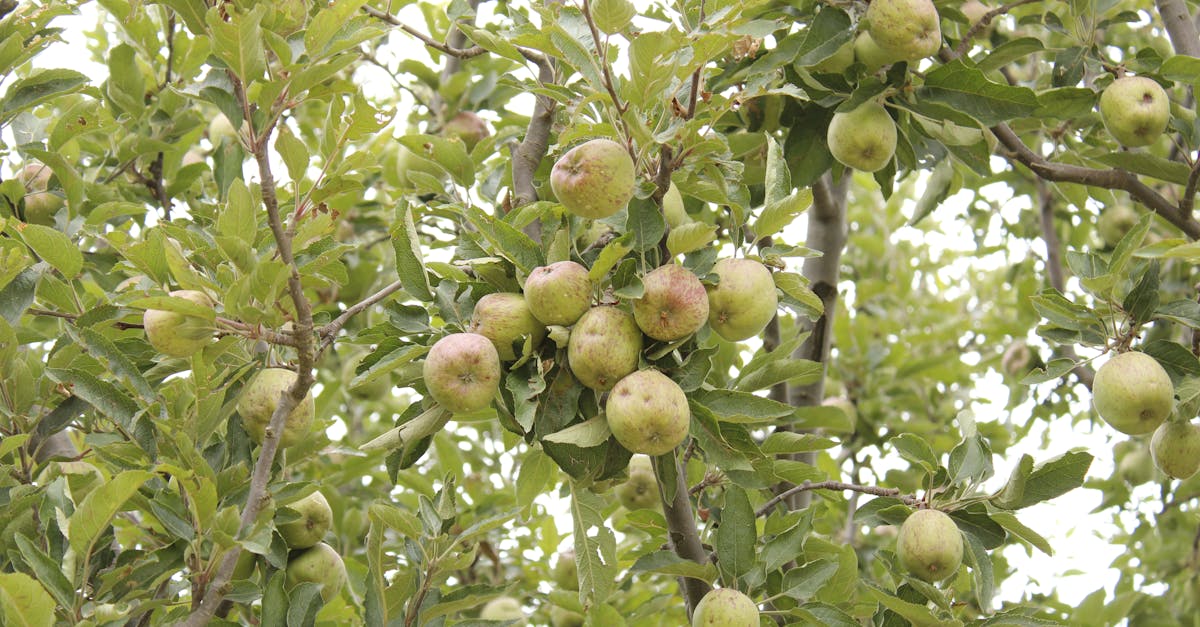
Apple ber (also sold as Thai apple ber) is a large-fruited grafted jujube that works in hot, dry and semi-arid parts of India, including West Bengal, Telangana, Andhra Pradesh and Maharashtra, with little water once established. Brochures report first fruit within the first year, but the selling price at the farm gate is low and market gluts are common, so income depends on pruning on time, fruit fly control and a reliable buyer.
Several brochures quote 30 tonnes per acre and ₹4 to ₹5 lakh net per acre. The only official package of practices found, from Assam, puts yield at 300 to 400 quintals per hectare (about 12 to 16 tonnes per acre). Budget on the official range.
Where it grows in India
- Regions: apple ber is reported from West Bengal, Telangana, Andhra Pradesh and Maharashtra, and ber in general is grown across the dry belt of Haryana, Punjab, Uttar Pradesh, Rajasthan, Gujarat, Madhya Pradesh, Bihar and Tamil Nadu.
- Climate: TNAU says ber suits arid and semi-arid conditions and tolerates salinity and alkalinity.
- Soil: any well-drained soil, better with organic matter (Assam package of practices). Avoid waterlogged pockets.
- Season in the field: Assam's package gives January to February for yellow fruit, with 4 to 5 pickings. Timing shifts with region and prune date, so ask the local KVK.
Varieties and planting material
| Variety | Source | Notes | Where suited |
|---|---|---|---|
| Apple Colour | Evaluated by BCKV, West Bengal | Most flowers per cluster (31.25), highest TSS (10.5 degrees Brix) and sugar (9.30%) among six cultivars; better yield and quality in red laterite soils | Red laterite zone of West Bengal |
| Madhav Kool | Evaluated by BCKV, West Bengal | Highest yield per plant in that trial, 7.10 kg | Same zone |
| Apple, BAU, Thailand types | Listed in Assam package of practices | Cultivars recommended for Assam | Assam and similar humid areas |
| Umran, Gola, Banarasi, Kaithali, Goma Keerthi | Listed by TNAU | Traditional Indian ber varieties | Tamil Nadu and dry regions |
- Plants are budded on a ber rootstock. Choose a nursery that gives the variety name, and ask for plants of the type tested in your district. "Kashmiri apple ber" and "Thai apple ber" are sales names, not released varieties, so ask for the actual cultivar name.
- Remove sprouts from below the bud union regularly.
Spacing and planting
- Assam's package of practices gives 5 m x 3 m (about 270 plants per acre, 667 per hectare) and 3 m x 2.5 m for high density (about 540 per acre, 1,333 per hectare).
- TNAU gives wider spacing for traditional varieties, 7 x 7 m for the standard type.
- Pits of 45 cm each way, filled after 7 to 10 days with 5 kg FYM or 2 kg vermicompost; planting April to September in Assam, July to August in Tamil Nadu. Support young plants with a stake and keep the trunk clear of branches up to 40 to 50 cm.
Nutrition, irrigation and pruning
- Manure from the second year (Assam package): 10 to 12 kg FYM with 200 g N, 250 g P2O5 and 100 g K2O per tree, given in March after pruning and in October, plus 25 g borax per tree. At 5 x 3 m this is about 133 kg N, 167 kg P2O5 and 67 kg K2O per hectare (54, 68 and 27 kg per acre).
- TNAU for traditional ber: year 1, 20 kg FYM, 200 g N, 100 g P, 200 g K per tree; year 2 onwards 50 kg FYM, 500 g N, 200 g P and 500 g K, and three sprays of 2% KNO3 monthly in January to March.
- Water: water new plants until established. Assam's package says irrigate every 2 weeks, and that water stress during flowering and fruiting cuts yield. See drip irrigation.
- Pruning: ber fruits on new shoots, so pruning decides the crop. After harvest, head back branches to about 30 cm above the graft union (Assam); TNAU prunes in February to March and thins crowded branches. Choose 4 to 6 well-spaced side branches for the frame. Keep the exact date for your district from the local KVK, since it depends on when the rains end.
Pests and diseases
- Ber fruit fly: methyl eugenol traps at 20 per hectare once fruits are pea-sized (Assam). Pick and bury fallen fruit.
- Leaf-eating chafer beetle: light traps for adults; the Assam package also lists thiamethoxam sprays.
- Powdery mildew: sulphur dust at 150 to 200 g per tree, repeated 2 to 3 times at 15 to 20 day intervals.
- Alternaria and Cercospora leaf spots: chlorothalonil 2 g per litre, two to three sprays 15 to 20 days apart. TNAU also lists scale insects and black leaf spot.
- Follow the label and your KVK for doses and waiting periods before picking.
Harvest and yield
- Pick when fruit turns yellow, in 4 to 5 pickings over the season.
- Official yield range: 300 to 400 quintals per hectare (about 12 to 16 tonnes per acre) in the Assam package, depending on spacing, variety and care. TNAU quotes 70 to 80 kg per tree a year for traditional varieties at wide spacing.
- The BCKV cultivar trial recorded up to 7.10 kg per plant, which shows that young plants give modest early crops. Brochure claims of fruit in months and 150 kg per tree come from secondary sources and refer to mature, well-managed trees.
💡 Tip: Fresh ber floods the market in the same weeks. Fix a buyer or mandi route before planting, and ask your KVK for the prune date that suits your rain pattern so fruit arrives when prices are better.
Cost and returns
- Price: one brochure gives ₹15 to ₹20 per kg to the farmer and ₹40 to ₹80 retail. Check current rates at mandi bhav before using any figure.
- Arithmetic (illustration): 12 to 16 tonnes per acre at ₹15 to ₹20 per kg gives ₹1.8 lakh (12,000 kg x ₹15) to ₹3.2 lakh (16,000 kg x ₹20) gross per acre at full bearing. The brochure's ₹5.25 lakh income assumes 30 tonnes.
- Cost: the same brochure gives ₹65,000 per acre as an upper estimate, which is not from a government source. Plants, pits, drip, fencing, labour for pruning and picking and crates are the main items; get local quotes.
- Yield rises over the first two to three years; early years pay less than the full-bearing arithmetic.
Market and risks
- Fruit is sold fresh through local markets, wholesale mandis and city fruit sellers. It is soft and bruises, so use crates and sell within days.
- Large crops in the same weeks pull prices down; a farmer who cannot sell quickly has few options because ber is not stored easily.
- Be wary of nurseries promising fixed buy-back or very high returns. Ask for the cultivar name and a written guarantee.
- For loans see KCC; for support check subsidy finder and your state horticulture department. No current ber-specific subsidy rate was verified.